
Metal, Hardcore, Indie, Rock
“Sadness combined with hope is what gives us the strength to continue being artists” — Interview with Lovely Paradox
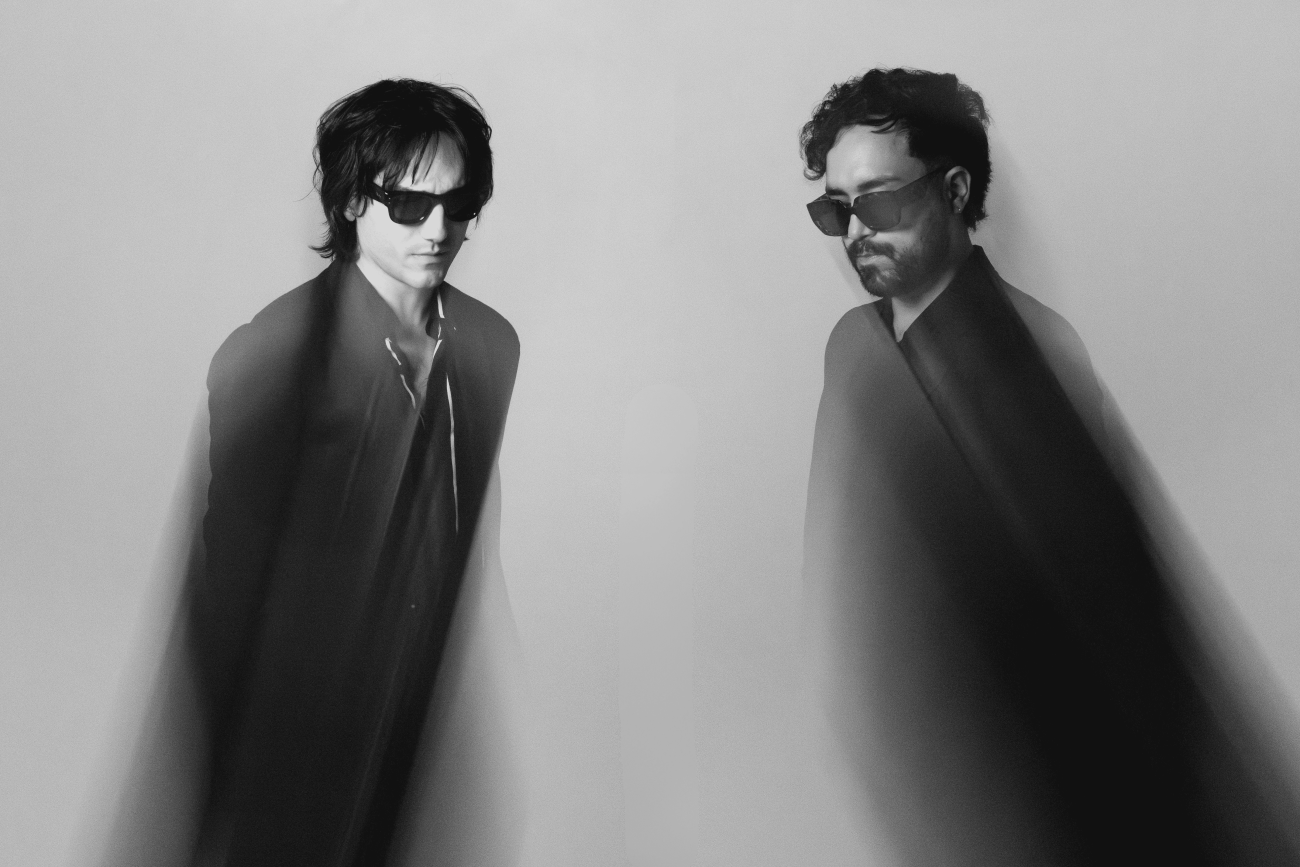
Based in Mexico City, brothers Diego and Omar Orozco lead an indie rock band that draws inspiration from various musical genres and other art forms (acting, film and literature), creating a distinctive sound that stands out for its uniqueness and for an artistic exploration that goes beyond what you might expect to hear.
In this new phase, following the release of their new single “No me hagas esto”, which features playful saxophone phrases that weave their way through the track, they are seeking to establish the band’s position both at home and internationally. Some time after the release, Chaozine spoke to Diego and Omar from Lovely Paradox via Zoom. Here’s what they had to say:
Let’s talk about “No me hagas esto”. Musically speaking, I’d like to ask you why you included a saxophone in the song. It gives the track a special flavour.
Diego Orozco: We grew up with rock; we’ve always loved rock. But we wanted to step away a bit from the formula of what “Dime algo especial” was. The initial idea for “No me hagas esto” was for the saxophone groove to be played by an electric guitar, but it was like, “OK, that’s what a normal band would do; 95% of bands would do that.” The sax gives it a more jazzy feel. It’s not jazz; the groove and the beat are very tight. The only changes are the interlude, the outro and the chorus, but the sax was fundamental for us when it came to relaunching this project. It’s giving us a sound that’s different from other bands in Mexico. It’s one of the most authentic instruments; it’s like a voice, literally. The saxophone comes straight from the lungs; it’s like a vocalist. We want to incorporate this instrument on the album. For us, it’s incredible to listen to a saxophonist, because it offers a different perspective; it’s not rock and roll. It’s what musical culture conveys—where the voice comes from, the feeling, the present moment.
And what about you, Omar? What were you trying to achieve vocally?
Omar Orozco: It was tricky because it wasn’t at all easy to tackle this, given the rhythm and the saxophone. It’s as if I had to approach it a bit more like rap. It’s phrasing like that, and it just came naturally. The funny thing is that I started writing this song in the office. I’d put on the track for “No Me Hagas Esto“, and in my spare time, I’d picture the tempo and record the vocals in the office. It just felt natural.
The best songs don’t always come when you’re in the rehearsal room or with an instrument in your hand. Sometimes they come out of the blue. It happens to me that it might be 3 in the morning, I can’t sleep, and a melody pops into my head, so I record it on a voice memo on my mobile. Does that happen to you?
Diego Orozco: All the time. There’s a quote by John Lennon, one of our idols, which goes: “You’ve got to keep your antennae up“. All the time, every day – when you’re in the shower, when you wake up, when you’re eating. Ideas tend to come when you’re least thinking about creating. If you’re not going to play it, you have to hum it. Inspiration has to find you whilst you’re working, creating and improving yourself, but knowing that ultimately what you want is a result that makes you feel something and that this feeling is passed on to other people. We artists are blessed; not everyone gets ideas. If you, Hernán, as a drummer, have an idea and don’t capture it, someone’s going to steal it. There was always the debate about Prince and Michael Jackson and who was better. On one occasion, Michael Jackson woke everyone up, went to the studio at 3 in the morning and said: “I have to record this idea because otherwise Prince is going to steal it!“.
Haha, good point.
Omar Orozco: Producer Rick Rubin talks about that. As artists, we have a keener sense of what’s going on. And we need to be open to ideas and not censor ourselves or judge ourselves.
In the case of “No me hagas esto”, I know you worked on the track’s mastering with Joe Lambert, a Grammy-nominated engineer. What can you tell me about him and his work?
Diego Orozco: We came across him through a combination of circumstances and influences. Obviously, we’d seen his work with Animal Collective, Deerhunter, Nicolas Jaar – people we admire. And it turned out that mutual friends had worked with him, but we were the first in our circle to meet him in person. We went to meet him up north in New York, and from the moment we met him, he radiated an energy of peace, love and art. That’s exactly what we’re looking for: to work with people who truly love music and understand our projects. His warmth and approach felt more like that of a Latin American than an American. He welcomed us into his studio in a very friendly way. We want him to be our mastering engineer forever, and he’s always very attentive to us. We trust him completely and already feel he’s part of our project. That’s what we’re looking for: to get on well with musicians, engineers and others—people who have a total love for art.
I think it’s all about connecting with the right people, those you can build something with and who, in this case, love music. You have to work as a team.
Omar Orozco: Yes, absolutely. I’ve always thought that having a band is almost a miracle. You’re sharing your dream with three or four people, and perhaps that dream doesn’t matter as much to them as it does to you. Which can lead to awkward situations. We’ve changed the line-up and are now finalising the crew that will help bring all these songs to life on stage. As we mentioned, it’s about building a family.
I hadn’t thought about it before, but I see a certain parallel between the melancholy of Mexican and Finnish music. Do you see any similarities?
Diego Orozco: Absolutely. We’d never looked at it that way before, but in Finland, Sweden and Europe, there is a sense of melancholy. In Latin America, musicians are often nostalgic and prone to depression and feeling inferior. As artists, musicians, painters, writers, filmmakers and poets, there are many Latin Americans who made a mark on the world, because they speak of a romance with life, not necessarily with a person. It is the romance of feeling weak and dark in the face of life. The dark side is what makes us creative. Sadness combined with hope is what gives us the strength to continue being artists. A true artist seeks to share hope with others, and if that reaches even just two people, then you have already achieved your goal.
Do you have any live performances scheduled soon?
Omar Orozco: Not at the moment. We’re going to use the rest of May to wrap up the live project properly so that we can be back on stage in the near future. The idea is to put together a good live band so we can go out and play.
What other things inspire you outside of music?
Omar Orozco: I’m also an actor, but I’ve given it up. If it hadn’t been for the pandemic, I would have carried on acting. Lovely Paradox came about during the pandemic, which was a stroke of luck for the band. Through acting, I learnt that an artist has to get out and about to gain experiences: take the tube, observe, have their heart broken, fall, pick themselves up; in short, they have to gather experiences. That carries over into music, writing and everything else. Personally, I draw inspiration from conversations and from observing; I’m a very observant person who empathises with people.
What about you, Diego?
I studied film, but I’m a frustrated filmmaker as I’ve never actually made any films. Film and music are my passions. I love watching films, especially experimental ones. If I had to recommend something, it would be something from Latin America. However, I must say that my favourite of Scandinavian countries is Ingmar Bergman. He has taught me how to live, feel, and be a musician. He embraces the dark side and makes it his own. We all have an ego, and it’s the ego that drives you forward. Without a bit of ego, people will take advantage of you. Returning to the question, for me, Ingmar Bergman is the greatest of all time.
Let’s talk about the gear you use. You go first, Omar.
Omar Orozco: I don’t use a specific microphone; I started out playing my bass through my Orange amp and treating it as I would a guitar. We’ve since adapted that approach for this new phase.
Diego?
As for electric guitars, I have a Telecaster and a Jazzmaster. As for acoustic guitars, I have a Martin. For delay, I use the RI20, which is similar to the classic version, but made by Boss. I don’t get too hung up on gear; I’m more interested in melodies. For Lovely Paradox, though, the most important instrument is the Dave Smith Prophet 08. In my opinion, it’s the best synthesiser ever; it’s an eight-voice beast. Our focus is on bass, guitars and drums, but I focus on the melodies.
Omar, to conclude, I would like you to invite people to listen to the band.
To all the new listeners, know that we are two music enthusiasts who do this with a lot of love. We’ve had our fair share of struggles along the way, but if you love music, you’re going to love this Mexican band with a unique sound. Everyone is welcome aboard this ship.