Metal, Hardcore, Indie, Rock
AJ Johansson
Bulgarian artist Victoria Chipova shared her upcoming art project related to Nightwish
Victoria Chipova is a young Bulgarian artist who recently brought to life a large-scale international art project and exhibition dedicated to the 30th anniversary of Nightwish. We chatted with her about this!
First of all, could you introduce yourself to our readers and tell us a little about your background as an artist and your relationship with heavy music?
Victoria Chipova: My name is Victoria Chipova, and I have been working as an artist for quite some time, developing my visual language through various creative explorations. However, heavy music has always been the true driving force behind my work. Nightwish was actually the very first metal band that left a massive, indelible footprint in my soul. Discovering their music opened up an entirely new emotional dimension for me. For as long as I can remember, art and heavy metal have shared the same heartbeat in my world—both capable of capturing profound depth, cinematic storytelling, and raw, untamed power in a way nothing else can.
Your “Three Decades of Nightwish” project consists of 30 paintings celebrating 30 years of Nightwish. When did you first discover the band, and what was it about their music that connected with you strongly enough to eventually inspire a project of this scale?
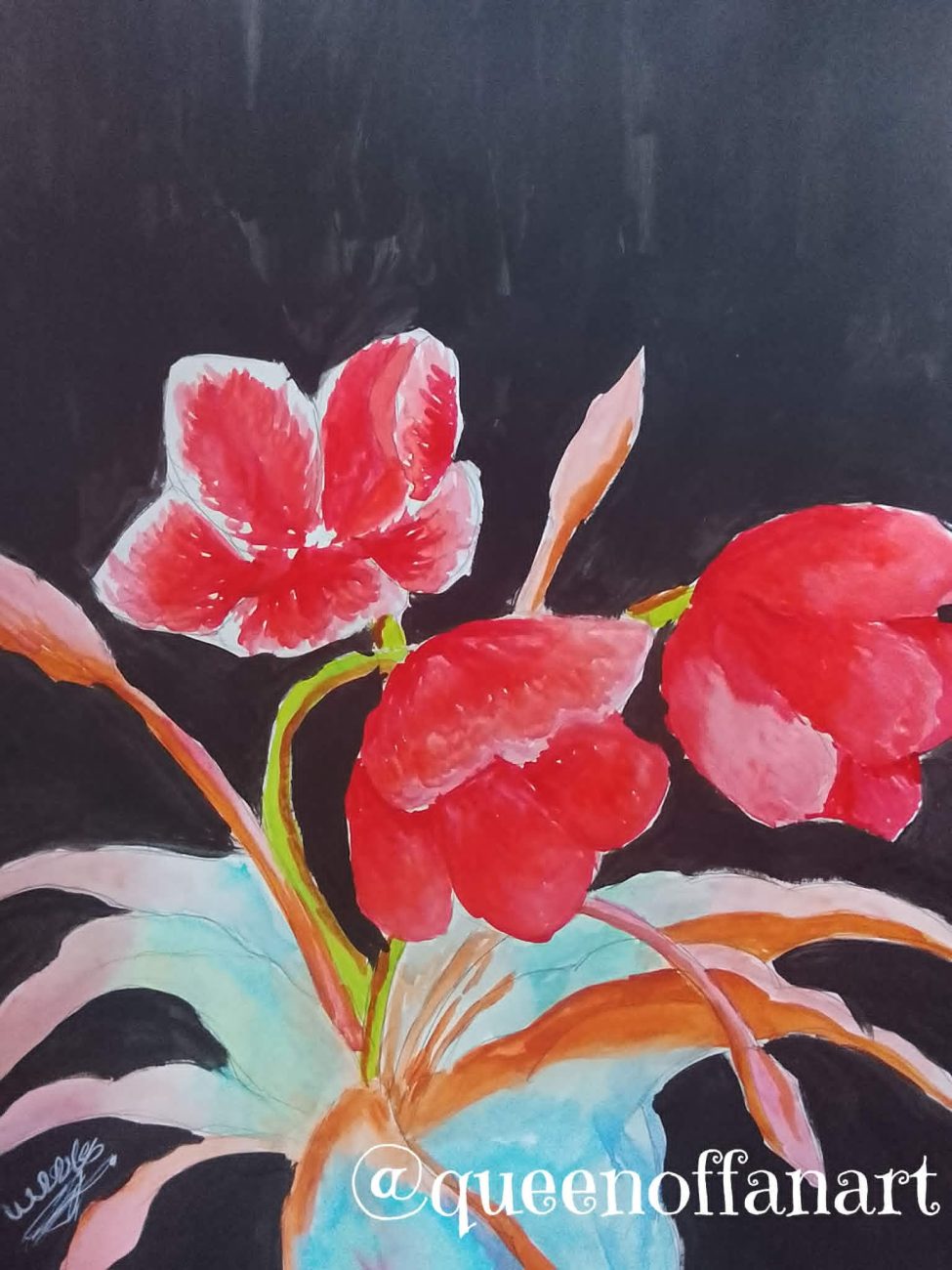
Victoria Chipova: The actual scope of my work is much larger—I created a total of 168 paintings dedicated to the band, but for this specific jubilee exhibition, I carefully curated a collection of 30 paintings to honor their 30-year legacy.
I first discovered Nightwish during my early teenage years when Tarja Turunen was still the voice of the band. Tarja, alongside Marko Hietala, became my absolute idols. Because every era and every vocalist shaped my artistic evolution, I made a conscious effort to represent each of the vocalists with approximately 10 canvases each, as far as that was possible, ensuring that their unique individual contributions to the band’s musical identity were truly felt and celebrated.
As for Tuomas Holopainen’s lyrics and compositions, they don’t just inspire me—they dictate the direction. I don’t approach them with cold analysis; rather, I “translate” his complex, poetic world onto the language of the canvas. In doing so, I am deeply guided by the artistic philosophy of legends like Freddie Mercury, who believed you can do anything with your art as long as you never make it boring. That fearless mindset has truly become my personal creed.
Do you remember the first Nightwish song or album that really made an impact on you, and has your relationship with their music changed as you have grown older?
Victoria Chipova: The very first song that grabbed hold of me and never let go was “Dead to the World” with Tarja, specifically witnessing their performance live at Summer Breeze 2002. Seeing that raw energy on stage, with Tarja’s mesmerizing vocal delivery backed by such heavy, atmospheric instrumentation, was a literal awakening for me. It completely rewired how I perceived music and performance.
As I have grown older and evolved as both a person and a visual artist, my relationship with their music has deepened from pure teenage awe into a profound appreciation for its structural and emotional complexity. While those early foundational years defined my creative roots, the later chapters showed me how a band can continuously mature while keeping that core soul intact. Today, listening to Nightwish is less about just enjoying a song and more about experiencing a living, breathing masterclass in composition, poetry, and artistic endurance that continues to fuel my own work every single day.
When did the idea of creating one painting for each year of Nightwish’s 30-year history first appear? Did you immediately know that you wanted to create 30 individual works, or did the project gradually grow into something much larger?
Victoria Chipova: It all started with the very first painting inspired by the song “7 Days to the Wolves.”
As for why I decided to embark on such a massive endeavor, it grew out of a very natural momentum in my artistic journey. At the time, people were showing a lot of interest in my work as a new artist. I started doing exhibitions almost on a whim—back when I was attending an art school, they organized group shows, and I participated, which led to my very first solo exhibition in 2021. The following year, I had another one. In total, I have held six physical solo exhibitions and one virtual one, and because there was such strong interest from people in what I was creating, I began brainstorming what big project I wanted to tackle next.
I realized that I constantly listened to Nightwish—they are a part of my everyday life, playing in the background of absolutely everything I do—so I thought, why not create something dedicated to them? I never imagined it would balloon into 168 paintings; I initially thought it would be a much smaller, modest collection. But the project just kept expanding until it naturally grew into a massive series of 168 works, inspired by literally every single song they ever made. It didn’t matter if it was an original track, a cover, or even part of the soundtrack they released back in 2012 for their movie—every piece of music found its reflection on the canvas.
How did you approach translating music into visual art? Were individual paintings inspired by specific Nightwish songs, albums, lyrics or eras, or were you more interested in capturing the emotions and imagery their music creates in your mind?
Victoria Chipova: Every single painting is directly inspired by a specific, exact song, and each piece carries the exact title of that song. No eras, albums, or vocalists were left out—every single chapter of Nightwish‘s history is fully represented in the collection without any limitations.
The music and the lyrics written by the maestro Tuomas Holopainen practically dictate the vision themselves. As I listen, the songs whisper and guide the brush, telling me exactly what they want to express visually on the canvas, transforming his poetic words directly into form and color.
Nightwish has changed considerably throughout its three decades, both musically and through different line-ups and vocalists. How did you approach representing such a long and diverse history without focusing too heavily on just one particular era of the band?
Victoria Chipova: Yes, the changes throughout their history have been total and unmistakable. Change has always been visible in every aspect of who they are, whether through shifting line-ups whenever necessity demanded it or through the radical evolution of their musical architecture. Despite those internal transitions, what keeps them grounded is something far deeper: for me, Nightwish transcends being merely a musical entity—they are an absolute cultural phenomenon.
In fact, throughout my academic research and papers within my field of Cultural Studies at the Faculty of Philosophy of Sofia University St. Kliment Ohridski, I have frequently highlighted this exact dimension. I have argued that Nightwish represents a profound cultural paradigm alongside their musical mastery. No matter what creative turn they take, they remain fiercely original in both spheres.
Their ability to weave classical literature, ecological philosophy, mythology, and heavy metal into a cohesive artistic language creates a legacy that extends far beyond the stage or the studio. They touch upon collective human psychology, history, and poetry in a way that academic cultural studies can endlessly deconstruct, yet never fully capture because of its raw, living essence. That unwavering originality is what makes their thirty-year journey so extraordinary to study, experience, and honor through paint.
You have described bringing this exhibition to life as a major challenge and mentioned having to push through institutional walls. What were the biggest obstacles you faced between having the original idea and finally opening the exhibition in Sofia?
Victoria Chipova: Organizing an event of this scale was an exhausting, relentless marathon that consumed me entirely from March 27th straight through to the very last day. Throughout that entire period, I didn’t stop writing emails, making phone calls, and coordinating every detail—even calling all the way to Finland. In fact, I am in contact with a foundation that Nightwish actually supported back in 2012 when they released their calendar, and I am arranging to donate one of the paintings from the exhibition to them, letting them decide whether they prefer a specific piece from the gallery or another work.
The biggest obstacles, however, came down to the suffocating bureaucracy here in Bulgaria—and I will state that directly without hiding it. The system is plagued by corruption and endless red tape. Realizing a project like this independently is fiercely difficult. You have to stand entirely on your own two feet, pull yourself together, and live by Friedrich Nietzsche’s words: what doesn’t kill you makes you stronger.
From March to July, I was in a constant whirlwind of communications, phone calls, and non-stop logistics. Yet somehow, I managed to balance all of that intense pressure with my university exams without letting my academic work slip.
Ultimately, the hardest wall to break through was the complete lack of financial support. No one ever extended a helping hand when it mattered. I constantly heard excuses about how the investment was supposedly too high or how various technicalities stood in the way—which were never real obstacles, just hollow excuses from people gatekeeping the arts. Realizing that nobody was going to help me, I stopped waiting, pushed past the rejections, and organized the entire exhibition completely on my own. Just as I have always done.
The exhibition opened in Sofia on July 6th. What was it like to finally see all 30 works displayed together after spending so much time creating them, and what kind of reactions did you receive from visitors and Nightwish fans?
Victoria Chipova: The initial wave of emotion was pure, profound relief. When you carry a massive project entirely on your own shoulders, pouring every ounce of your soul into it through countless obstacles, seeing it finally materialize leaves you with a deep, quiet satisfaction that you actually pulled it off. It felt like an immense weight finally lifting off my back.
Above all, the Nightwish fandom provided the absolute greatest pillar of support throughout the entire journey. Their backing was staggering in the best possible way. I have always maintained that the Nightwish community is wonderfully tight-knit and united. In fact, I haven’t encountered a single drop of toxicity from any of them throughout this entire process. I love this fandom dearly, and the level of backing they showed for the project was extraordinary. I am endlessly grateful that they stood shoulder to shoulder with me behind every single aspect of what took place.
You are creating this tribute to a Finnish band from Bulgaria, which makes the project an interesting cultural bridge between two countries. Do you feel that music – and Nightwish in particular – has the ability to create connections between people and cultures that might otherwise have very little contact with each other?
Victoria Chipova: This is an exceptionally powerful message that captures the true essence of art as the highest form of human connection. When official diplomacy runs up against bureaucratic and political walls, it is the language of culture—raw, honest, and stripped of hollow negotiations—that continues to resonate on a deeply human level.
Succeeding in building such a bridge between Bulgaria and Finland, using the scale and poetry of Nightwish, proves that sincerity always carves its own path. When political and social structures begin to fracture, art remains the sturdy frame that holds a community together, reminding us of our shared empathy. This project reaches far beyond the boundaries of a standard art exhibition—it transforms into a living testament of how one person, armed with unyielding sisu and pure creative inspiration, can leave a lasting mark and change the way we experience the world around us.
Out of the 30 paintings, is there one piece that is especially personal or meaningful to you? If so, could you tell us the story behind it and why it stands out from the others?
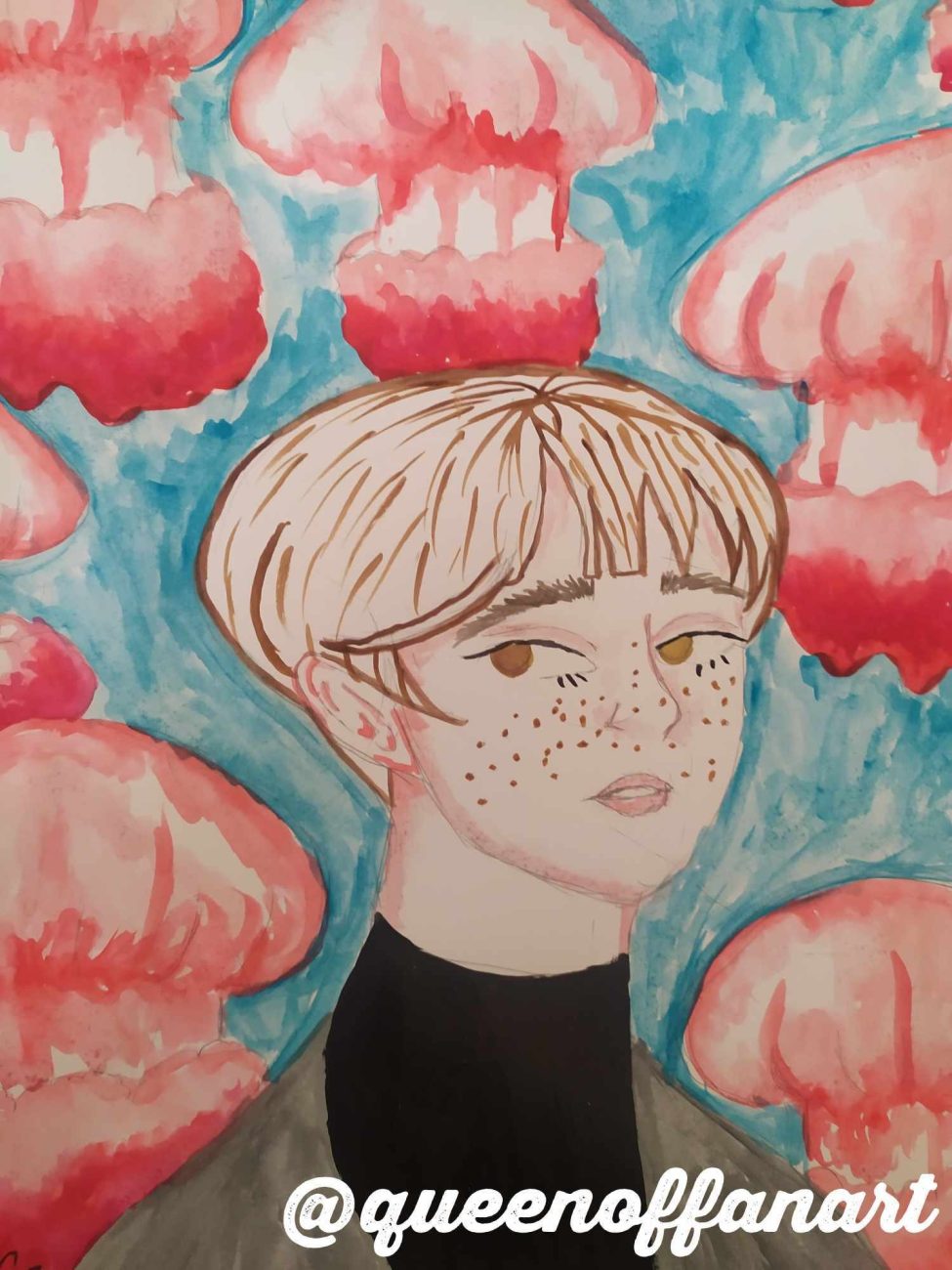
Victoria Chipova: While the collection features a recurring, striking sub-series of works centered around jellyfish—imagery that deeply captures the ethereal, floating melancholy of certain soundscapes—there is one particular canvas that stands entirely apart in its emotional weight: the piece dedicated to “Creek Mary’s Blood.“
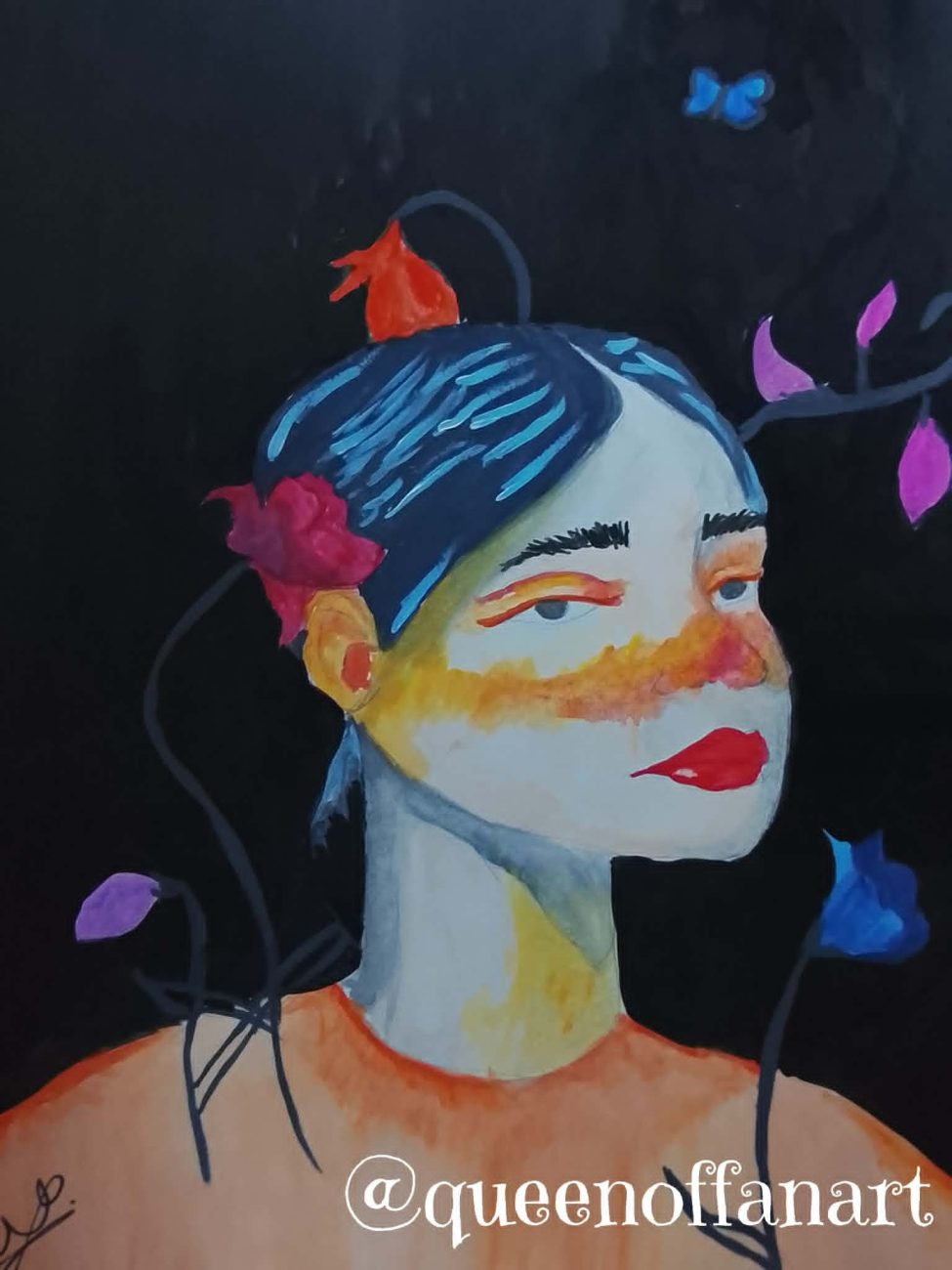
Unlike roughly ninety percent of my portfolio, which predominantly features human figures—both men and women—this specific work is deeply personal. It serves as an idiosyncratic, stylized self-portrait that acts as a bridge to someone who is no longer with us. It is dedicated to my grandmother, who was the absolute first person to champion my creative path and encourage my ambition to organize exhibitions.
Even though she is gone, painting this piece became a sacred act of preservation. The canvas absorbs her memory, transforming grief and absence into a tangible form. It stands out from all the rest because it transcends mere musical interpretation; it is an intimate monument to the person who gave me the foundational courage to step into the art world, ensuring that her unwavering support echoes through the heart of the entire collection.
Nightwish have now reached their 30th anniversary while also looking toward the next chapter of their career. After spending so much time artistically exploring their past, what do you personally hope to see or hear from the band in the years ahead?
Victoria Chipova: Right now, of course, all of us fans are eagerly awaiting maestro Tuomas Holopainen’s solo album but beyond those incredible horizons, my deepest and most sincere desire is tied to a very specific return. What I am truly waiting for, and secretly hoping for in the depths of my soul, is Marko Hietala’s return to his role as bassist and male vocalist in Nightwish. Even though many people openly claim that it will never happen and that the chapter is permanently closed, I carry that unwavering hope that their paths will cross again and that he will reclaim his place on the band’s next studio album.
Marko possesses a unique vocal timbre, stage presence, and creative energy that are absolute, irreplaceable parts of Nightwish‘s golden era and true identity. His absence left a void that is difficult to fill in quite the same way, and his presence on a new musical creation would be a triumph not just for them, but for the entire community of loyal followers.
This upcoming chapter of their musical journey will also hold an entirely different, deeply personal dimension for me. Looking back at the past months—the sleepless nights, the lonely battle against bureaucratic walls, and the exhausting organization of my massive project—I feel that in my own way, I managed to stir the waters, awaken the energy surrounding Nightwish right here, and enter into a kind of spiritual dialogue with their art.
Seeing my art come to life in the gallery and watching people recognize that exact same pure passion tells me that the next Nightwish album won’t just be another musical release in their discography. It will stand as a living monument to an entire era defined by my personal battle, the backing of the incredible fandom family, and—hopefully above all—the triumphant return of Marko Hietala to set a powerful new beginning to the sound of the music that forever rewrote our world.
Has anyone from Nightwish itself seen the exhibition or any of the paintings yet? And if you could personally show Tuomas Holopainen just one of the 30 works and explain its meaning to him, which painting would you choose?
Victoria Chipova: Yes, members of the band’s inner circle have indeed seen the artwork! Floor Jansen’s manager actually saw the work, and I managed to establish direct contact. Reaching out was a bit of a challenge—I searched through her official website, sent a message into the void, and then suddenly opened my inbox to find a reply from her manager. Her manager is genuinely such a sweet person, so a huge shoutout to Floor’s management for that wonderful connection.
As for showing just one painting to Tuomas Holopainen, that is an immensely difficult question because when you are looking across a collection of 168 works, choosing just a single piece feels almost impossible. Every single canvas has its own distinct character, face, and soul.
If I absolutely had to pick one to present to him, it would likely be the piece connected to “The Greatest Show on Earth” or “The Poet and the Pendulum,” though works like “Slaying the Dreamer,” “Dead Garden,” “Sway,” “The Antikythera Mechanism”, or “An Ocean of Strange Island” hold an equally powerful pull for me. Each of those captures a different tectonic layer of his compositional genius—from the raw, aggressive catharsis of metal to the vast, philosophical expanse of evolution and existence. But if I had to sit across from him, perhaps laying out the cosmic sweep of “The Greatest Show on Earth” would be the ultimate way to reflect the sheer scale of the musical universe he built.