
Metal, Hardcore, Indie, Rock
“We realised we had to do everything on our own” — Interview with Chilean dark metal outfit ATER
Alongside Mawiza and Decessus, they are at the forefront of a new wave of Chilean metal, earning full international recognition through relentless hard work and a DIY mindset. Rather than being confined by limits, they turn them into strengths, propelling their success.
ATER, the band led by multi-instrumentalist, bassist, singer, producer and sound engineer Fernando Bühring, played more than 100 shows across Europe in 2025 alongside icons such as Cradle Of Filth, Possessed, Venom Inc. and more, and has just released “Sleep”, their new single, accompanied by a brutal, dark and top-class music video.
As if that weren’t enough, the Chilean band will kick off 2027 with the release of “Everlasting”, their third studio album, produced by Bühring, mixed by Dan Lancaster (Muse, Bring Me The Horizon, Blink-182) and mastered by Tony Lindgren (Opeth, Sepultura, Dimmu Borgir) in Sweden.
Bühring and the band are ready to take the big leap, and at one point, their interview with Chaoszine makes this clear: “We’re realising that we have to take matters into our own hands“. Do it yourself. The micro leads to the macro. That’s how this band from Santiago de Chile sees it. We’ll see what fate has in store.
Let’s start by talking about “Sleep“, the band’s new single—a very dark track with a lavishly produced music video. What’s this song about? What can you tell us about it?
We had a brilliant time making the video. The song itself is incredibly sad; it’s about experiencing total despair and depression after losing someone deeply important. It explores that limbo where you don’t want to go to sleep because you’re dreading the next day, but at the same time, you want nothing more than to sleep all day—just to avoid being awake and confronting your feelings. That state of insomnia and emotional suspension is exactly what the song tries to capture.
“Sleep” is part of “Everlasting”, ATER’s new and third album, due for release in January 2027. You were in charge of producing the LP, and I know it was mixed by Dan Lancaster (Muse, Bring Me The Horizon, Blink-182) and mastered by Tony Lindgren (Opeth, Sepultura, Dimmu Borgir) at Fascination Street Studios in Örebro, Sweden. I’d like to ask you how long the songwriting process took, and how you came into contact with Dan Lancaster and Tony Lindgren.
The process of writing and producing the album was actually very fast. After we returned from our first international tour in 2024 with Batushka—before their name change—we came home to Chile, and I felt incredibly motivated to write new music after releasing “Somber”, our second album. Playing that material live really allowed me to move on and start with a clean slate. Within three months, I wrote all the music and instrumental parts, while the lyrics came together gradually and spontaneously in the studio. The inspiration for the music itself really emerged during those studio sessions.
What about the vocals?
That part took much longer because, as you know, there are far more clean vocals on our album, and for me, that was completely new—a huge challenge. Once the demo version was ready, with all the songs and lyrics, I wasn’t happy with the vocals and the singing; it just wasn’t working. So I got in touch with Thomas Geiger, a producer in Berlin, and spent a week there focusing solely on the clean vocals. We reinterpreted everything from scratch, reworking parts and adding some new sections he suggested. It was a really brilliant, creative, and intimate process that pushed me to record some incredibly honest vocal takes. After that, all that was left was to send the album off for mixing. Initially, I planned to do it myself, but with a tour coming up, we discussed it with the band and agreed to send it out. I already had someone in mind for the job.
Tell me about it.
While we were in the middle of that tour, I discovered Swallow The Sun and their album “Shining” (Century Media Records, 2024). The music, the songwriting, and the production blew me away. I started looking into who was behind it all, and found out it was that duo: Dan Lancaster on mixing and Tony Lindgren on mastering. So I thought, “I’m going to aim for the stars and reach out to them, just to see if they’re interested.” Honestly, I didn’t expect anything to come of it. But later, Dan Lancaster’s manager got in touch, and we got to work. It felt like a miracle. It’s incredible that they even considered us. Dan mixed the album beautifully—the whole process was super natural and incredibly quick.
You have your own studio and record label, Torque Records, and you’ve also worked in studios in the US. I imagine that being surrounded by music all the time quickly influenced the composition and creation of the new album. It’s like a scientist who spends all day in the lab, completely immersed in their work. Am I wrong?
No, you’re absolutely right. It’s a state of total immersion. At home, I have a basic home studio where I write and jam on the guitar. But when I need to work on the music, I go to the recording studio and spend the whole day immersed in it. It really is the only thing I know how to do. Obviously, that made things easier, because you wake up thinking about it, have breakfast, and then get straight to work on the songs. Being in a place that allows for that kind of immersion helps a lot.
The band sounds dark – I’d even say ‘Nordic’ – and your genre is, in fact, dark metal. I see certain parallels between Chile and Nordic countries such as Finland, Sweden, Norway, Denmark, or the Faroe Islands, in terms of the number of rock and heavy metal bands there are, and even the geography. They’re relatively small countries in terms of land area, with lots of mountains and lakes. On the other hand, I think this is Chile’s big moment in heavy metal. You’re touring the world with ATER; Mawiza, a Mapuche metal band, is also touring Europe; and Decessus, the outfit led by Ignacia Fernández – winner of Miss World Chile 2025 – was the latest Chilean metal hit on the global stage. It’s a great moment for Chile, isn’t it?
It’s a very interesting and unique moment; I don’t think anything like this has ever happened before. Chilean bands are awakening. We’re realising that we have to take matters into our own hands. Here, we’ve always waited for a saviour to come along – a foreign label like Century Media or Nuclear Blast – to launch us onto the world stage, and that’s it. That doesn’t happen. The international heavy metal music industry is currently in a slow and stagnant state. What’s more, for those labels and others, signing a band from afar and establishing them on the scene represents a major investment, whether it’s down to touring, visas, or additional costs. The owner of a very major label told me this himself. So we realised we had to do everything on our own: the music, high-quality music videos, production – everything. So the other bands started doing the same, and we all began to join forces. It has to be high-quality for the Chilean audience too, so that they can identify with it as well. That’s what happened with Mawiza, because here the Mapuche people had never had that kind of representation before. So they really connected with the public and are proving very successful both nationally and internationally.
What you’re saying really strikes a chord with me. It’s important to have your own identity, as in the case of Mawiza that you mention, but you need to shift your perspective: you have to go out and seek things out, create them and even invent them. Just look at Finland: it managed to make a name for itself on the global heavy metal scene thanks to Spinefarm Records, the label that put Nightwish, Children of Bodom and the country itself on the world map. The same can easily be done with Latin American countries.
I couldn’t agree more.
Tell me about Torque Records. Where is it based? How many studios does it have? What services do you offer there?
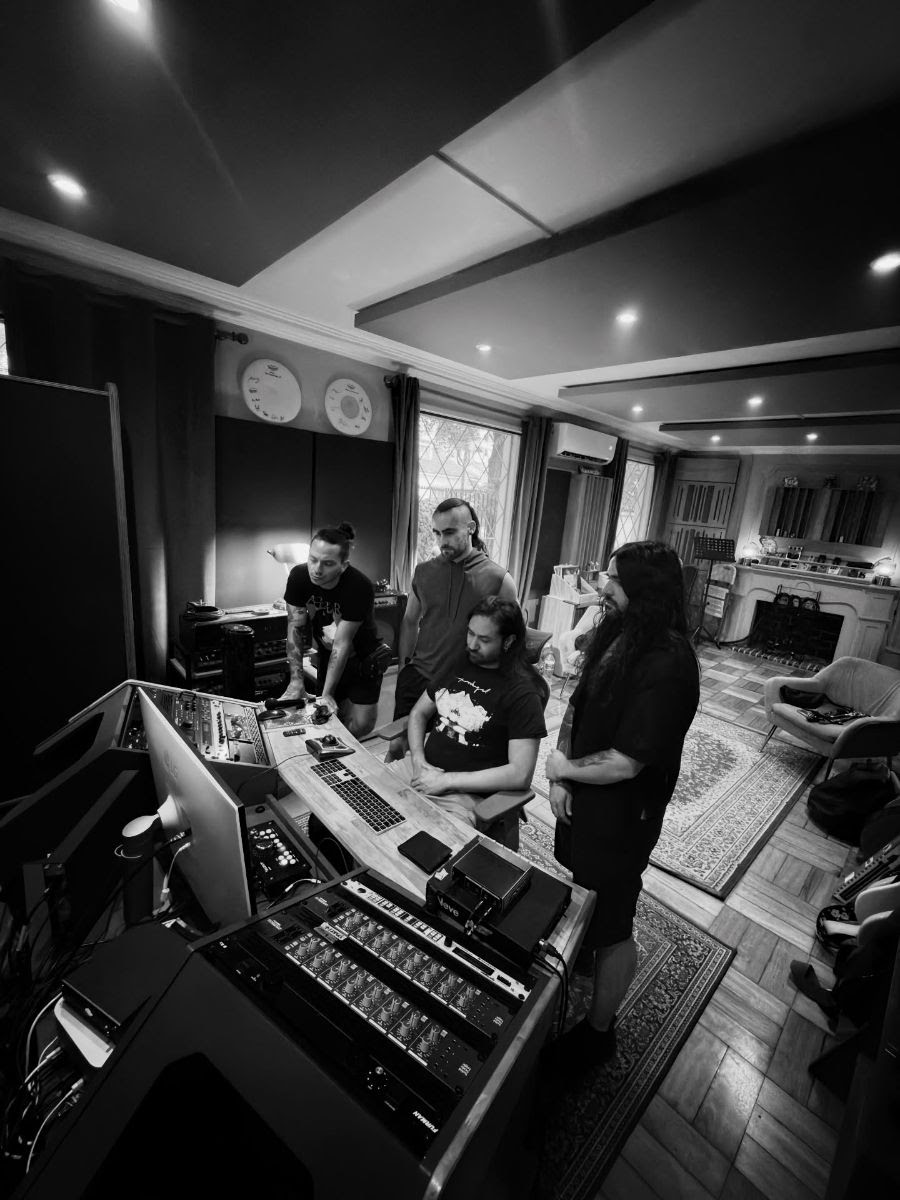
Torque Records is based here in Santiago de Chile, in the heart of the Ñuñoa neighbourhood, a very central area just a stone’s throw from the underground station. We have two studios – a control room and a live room – both of which are quite spacious. The control room is very comfortable; we’ve even done full recording sessions there, because it’s actually a large room, 8 metres long. We have all the necessary high-quality backline equipment, and it’s all geared towards metal; it’s the entire collection of gear I’ve acquired over twenty years of working in this field, things I bought whilst living in Mexico and the USA. I had to make several trips to bring it all over, but I’ve managed it now. So, in mid-2024, we officially opened our doors. As for the services we offer, there’s a bit of everything: of course, mixing, mastering, remote sessions and more, as well as album recordings, live recordings, etc. I’ve also partnered with an audiovisual producer, and we’re offering playrooms, sessions for YouTube and we’ve got content on our YouTube channel. We’ll be doing more things soon, and a Polish band is coming to record at our studio next year.
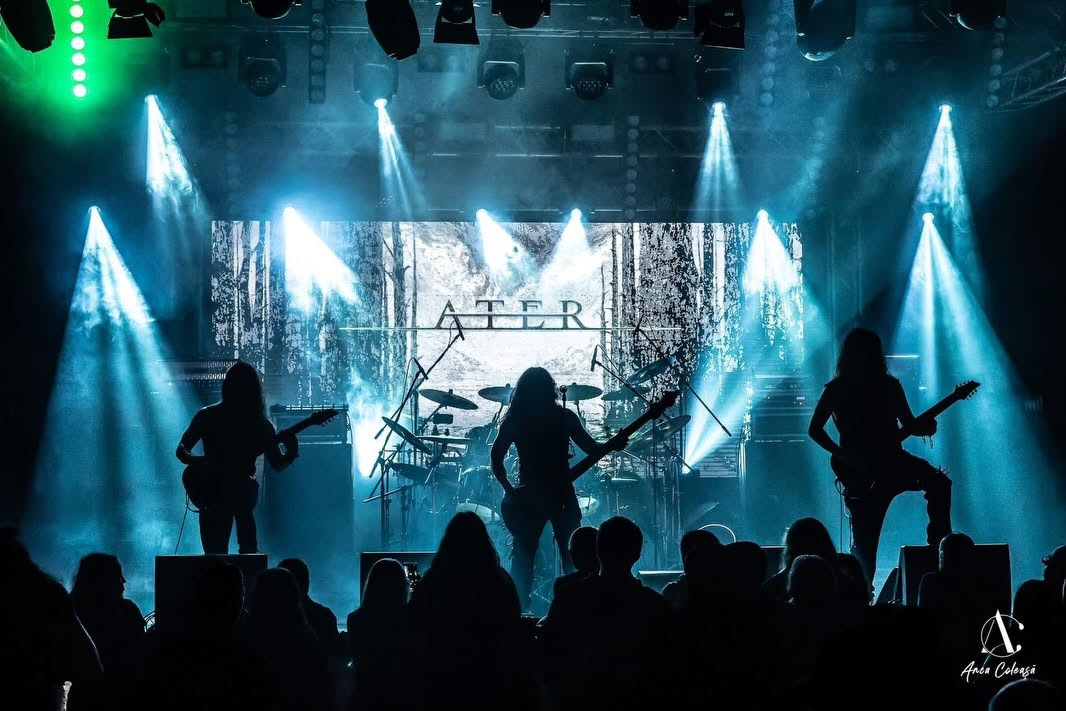
In 2025, ATER played over 110 shows across Europe and toured alongside icons such as Cradle of Filth, Possessed, Venom Inc. and more. Tell me a few stories from those tours and trips.
There’s plenty to tell. Our first tour was for Batushka; they were getting a lot of media attention at the time, so the shows were packed. Straight after that, they changed their name to Patriarkh. One story I can tell is that we realised everything was different from what we’d expected. We were driving a motorhome, sort of following the tour bus, and we were doing the driving ourselves, sleeping for two hours and then carrying on. On this sort of tour, there are no roadies, no crew.
You had to set everything up yourself.
Yes, in that case, the support act is the roadie. We started working really hard for all the other bands, not really understanding how it all worked at first. After a week, the tour manager, called Daniel, came up to us; he called me into his office and said, “We need to talk.” I thought something was wrong – especially as Poles can be quite cold at first. I went up to his temporary office at the venue, and, looking very serious, he said: “ATER are a really solid band; you sound great, and you work incredibly hard. Keep it up.” That day we were having some internal issues within the group, and that call was a huge relief. Because it validated the band. It was the boost we needed to finish the tour on a high. On every tour, whether we’re the support act or not, we always approach things with a positive attitude, having a laugh. Sometimes it’s a lot to take on, very demanding, but that’s how you learn.
What gear do you use for live shows?
We’ve got a very simple and very different set-up. We use guitar modellers; we don’t use amplifiers. To get on and off stage as quickly as possible, we use XLR cables to the mixing desk and Cortex guitar modellers; I have an Anagram for the bass, and we use the tour’s standard drum kit with triggers. We all have in-ear monitors, but we don’t have wireless systems or a mixer. From our laptop, we play the backing track on one channel, and on the other channel we listen to the metronome and a brief vocal guide.
What drew you to music? Which albums had a big impact on you as a child?
When I was a child, I had an experience that really shaped me – it was a real turning point in this regard. In the 90s there was some brilliant music – there was grunge and alternative rock. My mum listened to R&B and hip hop, and she was really into Jamiroquai’s first album. When I heard Jamiroquai’s bass line, I went mad. I said, “I want to play that.” Later on, my parents gave me a bass when I was nine. A friend of my mum’s – a real hippie – came to visit us. He saw me playing the bass and sat down at a drum kit we had at home to play a Primus track, “John the Fisherman”. Note for note. I couldn’t believe it. That’s when I realised that was what I wanted to do. Les Claypool was my first bass hero.
What advice would you give to those who want to pursue a career in music?
That’s a tough question. The music industry has changed so much over the years; breaking into it now can feel overwhelming. My advice—whether you’re pursuing music or any other field—is to strive to be the best version of yourself. Invest in your education: take lessons, seek out mentors, study formally, and, if possible, go to university. All of these steps matter when building a career. I attended a jazz college, studied audio engineering, and eventually became a producer. I had to take my craft seriously and dedicate myself to learning. To bring the music in my head to life, I needed to develop both the skills and the tools. Ultimately, you have to put in countless hours with your instrument and never stop learning.
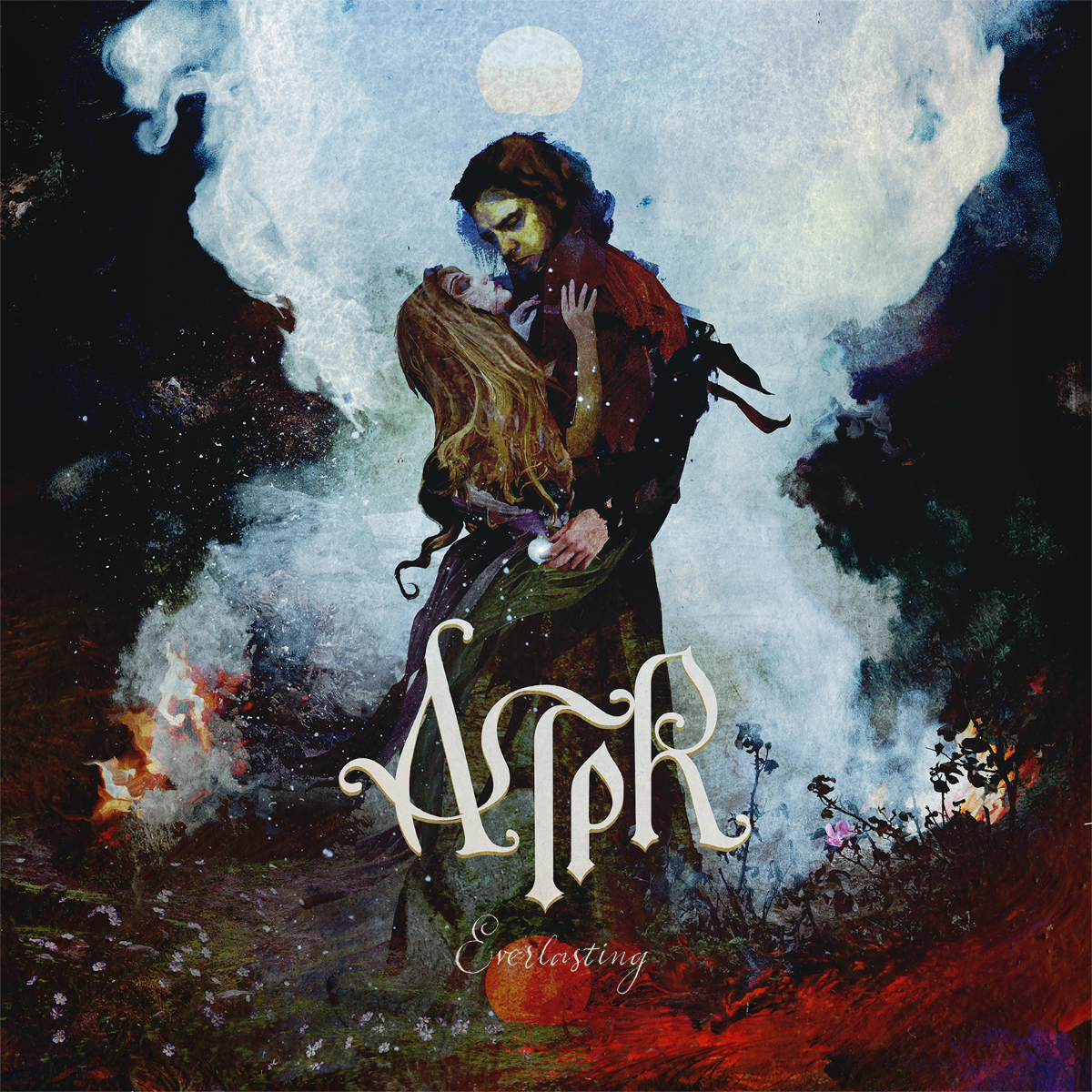
Pre-order “Everlasting” here.
More info about ATER here: