
Metal, Hardcore, Indie, Rock
“AI evolves, but you need this human heart” — Interview with Estonian indie-alt rock outfit Sibyl Vane
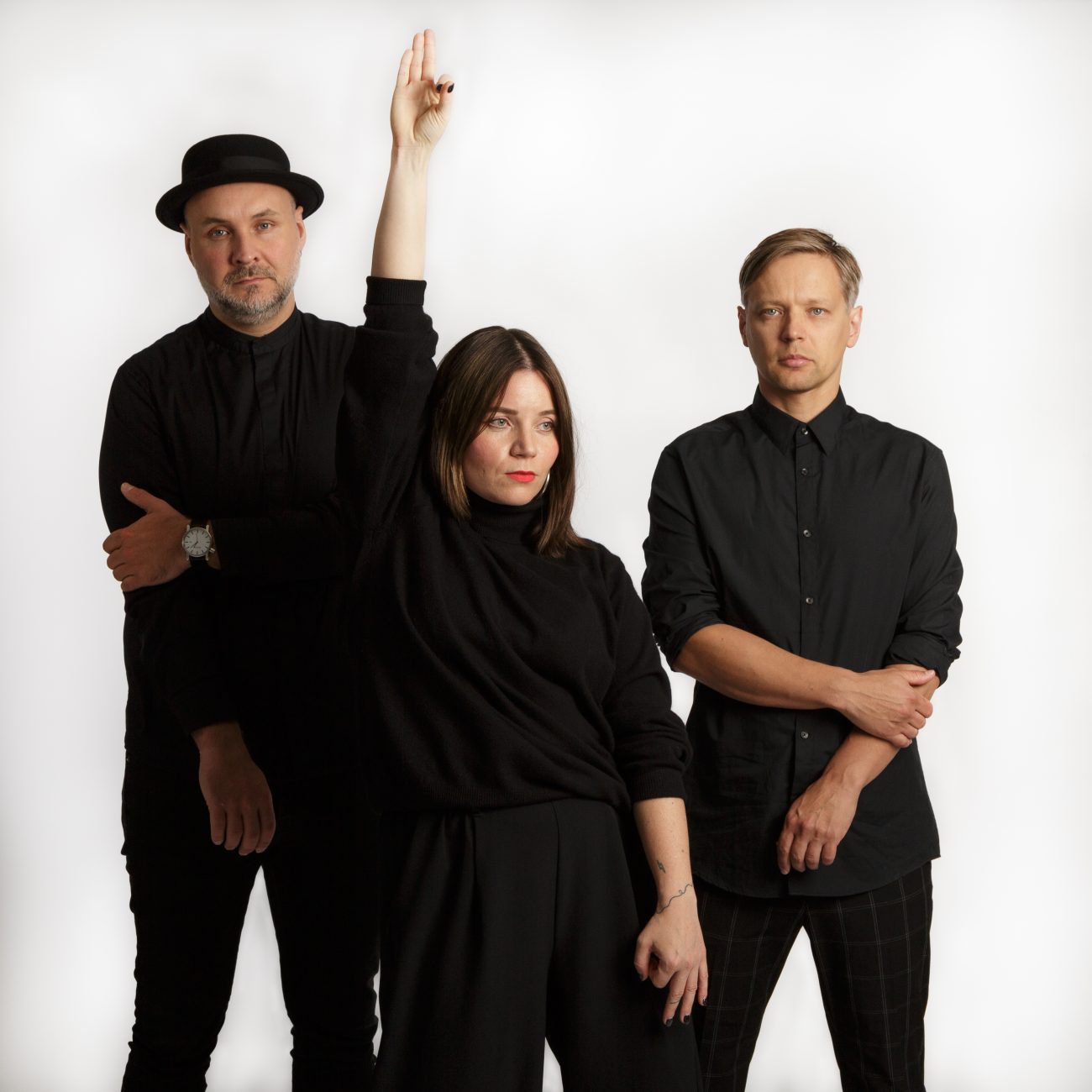
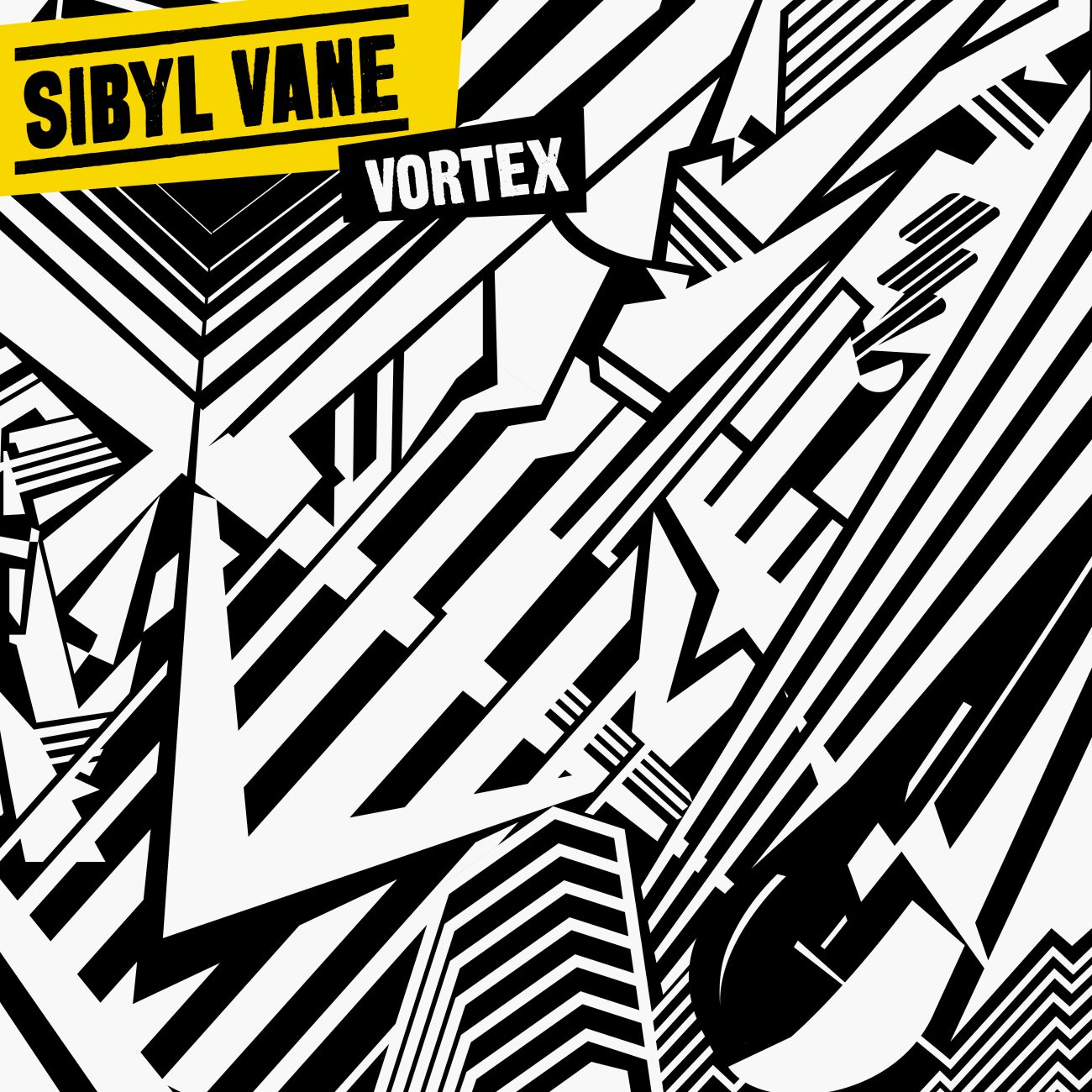
Ten tracks with a sound that blends alternative rock and indie with a touch of vintage flair. Hailing from Pärnu in Estonia, Sibyl Vane have recently released their new album, “Vortex”, which sees them at their most well-established and mature, both musically and personally. Lead vocalist and guitarist Helena Randlaht, bassist Heiko Leesment, and the band’s new drummer, Kristo Otter, have reached their compositional peak with this captivating LP.
Released on March 27, “Vortex” was recorded between 2024 and 2025 in various locations across Estonia. The album was engineered by Siim Mäesalu, while the mastering was completed in Finland by Henkka Niemistö. Vocal arrangements were overseen by singer Haldi Välimäe, under whose direction the vocal recording and production process also took place.
“Vortex” is about refusing to get stuck in a world that seems to function, yet leads nowhere. To find out more, Chaoszine spoke to bassist and manager Heiko Leesment and singer Helena Randlaht. Here is a summary of the conversation:
You recently released your new album “Vortex”. What was the songwriting and recording process like?
Heiko Leesment: I think it was kind of similar to writing the previous album, but somehow different as well. The similar part is that we are recording or writing the material as an old-school band; we are going to a place, putting things up, and then starting to play together, feeling the music and trying to understand what works out from some parts or the older recordings we have. So that’s how we started again. It’s our fourth album, so we can’t do it as we have done things previously, because it should be something new, or we kind of have to reinvent ourselves. We started to focus more on melodies and vocals, like trying to find new sounds, new ways- that’s how to like go through this process- and maybe Helena can elaborate.
Helena Randlaht: Yeah, we had the same experience, but maybe to add that being a three-piece is kind of limiting for the fourth time. So we had to find something new, and the reinventing part comes from there. It gets harder every time, but it’s also more exciting. You have to up your game, and be aware of that is a gift, actually. So if we hadn’t been able to vocalise it or talk about it beforehand, I don’t know if we would have been able to do it.
Heiko Leesment: The starting position for writing each album is actually that we make an agreement: we come together, we have, like, usually, some years that we don’t do anything, so after that we come together and have collected different thoughts, listened to different kinds of music. We have different visions and ideas, so we meet up, and then we actually agree on what’s going to be. We don’t mess around with irrelevant things. We don’t know how we are going to write it or how things are going to happen, but in general, the borders of the album are always there.
The LP talks about finding ways to avoid getting caught up in problems and heated arguments. It seems like everything tends to go that way, doesn’t it? I mean, there’s a lot of aggression on social media. Anyone behind a keyboard or a mobile phone can hurl insults almost anonymously.
Heiko Leesment: The concept was actually there for many years, because the song “Vortex” was composed in 2013, so it’s quite old. But it wasn’t at first that we started to work with “Vortex” as the song, because it was a strange cut. We didn’t know how to make it work. So we started writing other material, and then, I remember I was going through the demos, and we had just bought the Suzuki Omnichord…
It’s a great instrument.
Heiko Leesment: It’s like a vintage synthesiser out of the half, actually, which was a huge game changer. Then I remembered that song, and I said that the chorus was so strong that we should rearrange it and try it again, and then the “Vortex” was in our rehearsal room. It didn’t go away anymore.
Helena Randlaht: It kind of defined all the other things that followed. When we got the “Vortex” done, it set the whole tone of the album.
You presented the album in Pärnu and then shared the stage with The 69 Eyes in Tallinn. Tell me about the album launch and what it was like to play the show with The 69 Eyes at the Paavli Kultuurivabrik.
Helena Randlaht: They were similar but different shows, because The 69 Eyes are a darker gothic/classic rock outfit. They have a really strong presence, and they’ve been doing it for so long. I really love the band, and I was really excited when we got the opportunity. But presenting our own album and then supporting somebody can be quite different. It can be tricky because sometimes your mind starts to play tricks on you, and then you get that inner conversation: “Oh, my God. Do they even want to see me?” But we were having a conversation with Heiko before going on stage, and he told me to be myself. We are here to play our songs; we cannot be anybody else. I think that being a good ally is also really important in those situations. I hope we were really supporters for them.
Of the new songs, I really liked “Cat Zarathustra’s Space Odyssey”. What’s the song about?
Helena Randlaht: I’m really into animals as I have two cats and a dog, and I’ve always been an animal lover. Years ago, my pet passed. The way we see pets nowadays is a little bit different, and the position they hold in our household and families is much more different than it was like 20 or 30 years ago.
Sure. They are companions, family members.
Helena Randlaht: When you lose one, the grief is really strong, and I didn’t know what to do with it. At that time, I found a poem by Astrid Reinla about cats and what will become of them if they are gone, if they are not with us anymore. And it really stayed with me for years. I saved it to my phone, and it was as if somebody was talking about grief that was caused because the pets or their companions were dying. So when we were writing this album, I just knew that this is something I wanted to write about. And this poem really inspired me to write it as a big cosmic journey: the cat and our pets who are fighting for our souls. They are almost like Greek gods, like those mythological creatures they’re fighting with demons; they’re keeping all our souls safe.
Guys, what are the plans for the rest of 2026?
Heiko Leesment: We are continuing the tour in Riga, Latvia. Latvia has been our second primary market because we had a record label there for years, and we still have good relations with them. We still have a great following in Latvia, and we have always been there, so we need to go there as well and see the fans.
Go on.
Heiko Leesment: In the summer, we have some festivals in Estonia coming up. And in autumn, we start the venue tour in Estonia and Finland. Finland is the third most important market for us. We have been playing there for years now, and that’s definitely a great rock nation.
How do you see the current musical scene in Estonia nowadays?
Heiko Leesment: Developments are actually similar to other countries. The main change is that when the Soviet Union collapsed, everybody started to sing in English even though they didn’t know anything about English. Because everybody was trying to get out of Estonia or get heard in the West, but nobody actually succeeded totally, like I think that the main star that actually succeeded was Arvo Pärt, but he’s a composer. In popular music, it didn’t go so well. We had some highlights like Vanilla Ninja and others. But something changed in recent decades, and nowadays we can say that the most popular music is done in Estonian and less in English. Estonia’s strongest export article in recent decades has been folk music, and of course, the Estonian language gives it an interesting and exotic touch. Check out Puuluup or Duo Ruut, for example. And of course, there are some pop acts as well, like Tommy Cash.
I also know NOËP is from Estonia, and he plays arenas in your country.
Heiko Leesment: Yeah, NOËP definitely is a success story of its own, but part of a wider wave of great electronic music artists from Estonia. Cartoon, Syn Cole and Madison Mars, for example. And pioneers, Rulers of the Deep.
Great. I’ll check them.
But my point is that the language and even cultural shift is influenced by other factors. I see that the music in general is more oriented to the local market, not to the global market anymore. The same trends can be seen in other Baltic states. Exporting music is expensive, it’s hard work, and of course, it still doesn’t have strong connections outside of the world. Finland has the export experience from the 1970’s and Sweden as well. So there are strong connections; they know how to build up the global artists at different levels. But in Estonia it’s hard, and it’s like more hectic and more individual.
Nowadays, of course, Music Estonia is working pretty well, but they have their limits, and after all, the budget always sets the limits. And the second biggest change is that there are fewer and fewer bands, and this trend is global and strongly related to the shifts in the industry; there are artists because record labels prefer it, and it’s financially more reasonable to be a solo artist with hired musicians, or even more effective doing it solo. After all, one person’s career is cheaper and easier to build up. And of course, music is being done more digitally, which means you don’t need people around you to play. I don’t agree, of course – because being in a band and the energy that you can create together is different. But in Estonia, there has been a huge hip hop revival, and we have a revival of punk. There are so many new great punk bands singing in Estonian and doing really quality hardcore punk. Same actually in Latvia! Punk is back, and that gives hope – young people are rebelling and not satisfied; this gives strength to democratic processes in the future.
Speaking of the music industry and the rise of AI, what are your thoughts on the matter? Personally, I believe the positive aspect of all this is that human connection will never be replaced and that live music will play an even more prominent role. Do you see it that way?
Helena Randlaht: Do I think we will be replaced? I don’t think so, actually. I think that there will be a genre, maybe in the future. Some people prefer to see things live, fans who prefer to watch it from the screen or there are people who prefer to see nothing at all or see something artificial. But AI can never create something that has not already been created. So it will never be as original as a human thought, or it will never have the real touch of a human. So they are just repeating everything that has been done, yet I don’t think so because it gets boring fast, you know. After all, people are already recognising the songs, the art, the videos that are created by AI. AI evolves, of course, and it might get harder, but there is something different. You need this human heart.
Heiko Leesment: I think one important thing is that we should make clear what we are talking about when we are talking about AI, because AI has been in the music industry for many years. All the pitch shifters that they’re doing are automatically AI-based smart tools, and it has helped a lot of people to express themselves musically, because otherwise they maybe wouldn’t be able to sing, for example. AI is a game changer for the music industry on an economic level as well because years and years ago, you had to study, you had to have a skill, for example, an actual singing skill, to be able to perform live. Remember the case of Milli Vanilli? Nowadays, we have lots of artist being supported by live AI tools that are helping them to sing live and be accurate in their singing. Nobody burns their CDs or takes back their Grammys. This means that the meaning of real talent is being shaped. This shapes the industry and, of course, changes who will survive in this new environment of competition. Interesting times indeed, and I am not sure where it takes us, but the journey has already started.
Regarding the album, one more question: Another song that I really liked a lot was KIDM. It sounds melancholic but vintage, like it’s straight out of the seventies. What can you say regarding that specific track?
Helena Randlaht: It was the first one we did together for this new album. Also, we worked quite a lot on it to get it where it is. It’s about death and what becomes of us, especially the human body. And when I die, I have marked that my organs will be donated and my body will be donated to science, and eventually it will be cremated. I hope to be buried somewhere to become part of nature. You are from dust, and you will become dust. And KIDM actually stands for kissing is a dance move. That’s where it started for us.
ALBUM PRESENTATIONS:
2.07 – Vana-Vigala – Läburint 2026
18.07 – Kõima – Kuurebaste festival 2026
24.07 – Kuremaa – Jõgeva Treff 2026