
Metal, Hardcore, Indie, Rock
Photo credit: Jens Kristian Rimau
“We write all kinds of stuff: both happy and dark and put together an album that makes sense as a whole” – interview with Audrey Horne
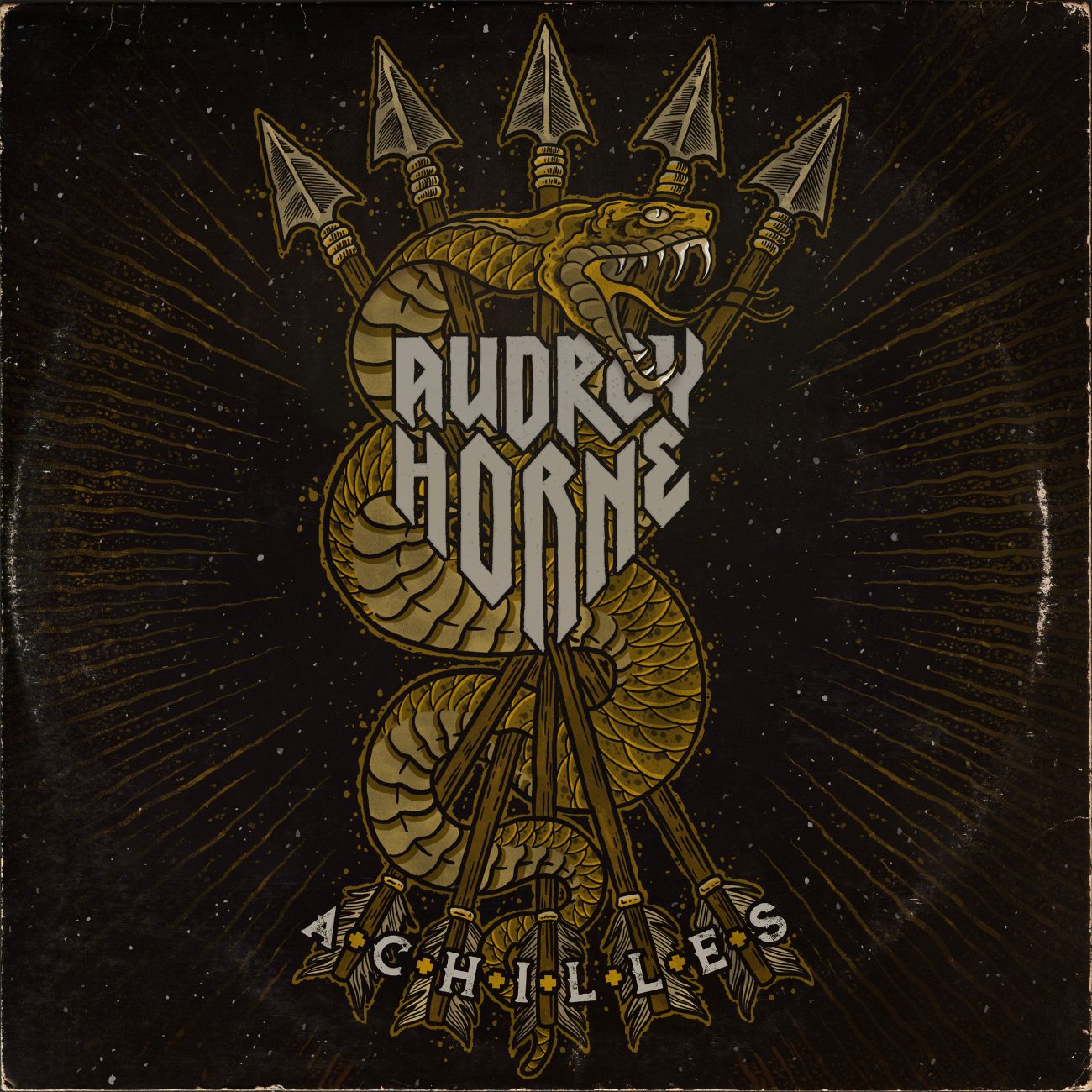
Norwegian hard rock band Audrey Horne are about to release their new album, “Achilles”, out on September 4, via Napalm Records. The Bergen-based quintet, who received a Spellemannprisen (Norwegian equivalent to a Grammy) for their 2005 debut album, strike again with a masterpiece. Darker and deeper than their previous albums, “Achilles” brings a mix of great riffs, brilliant vocals and fun vibes.
Having started their career making a more alternative style of metal (even labelled as post-grunge by some), with “No Hay Banda” (2005) and “Le Fol” (2007), followed by a transitional sound with the amazing self-titled album “Audrey Horne” (2010), the band’s 2013 full-length “Youngblood” brought new life to their music: classic rock inspired, yet very original sounding. A never-ending succession of cool riffs, fun grooves and twin guitar-solos ensued in “Pure Heavy” (2014) and “Blackout” (2018). Then, along came “Devil’s Bell” (2022), dark and charmingly grim, with a pristine production and a progressive edge to it.
Now, with “Achilles” (2026), the band takes the darkness up a notch, with a never-before-seen intensity from track one. What ensues is a parade of great songs, with highlights “Insanity”, “Hell Is Eternity” and “Running Through The Night”.
Chaoszine had the opportunity to catch up with Audrey Horne’s guitarist and producer, Arve “Ice Dale” Isdal directly from Bergen, Norway. In this interview, we discussed the new album in detail, including the track “God Damn Beautiful”, which brings their bass player, Espen Lien’s debut on vocals. We also talked about missing old-school album hunting in youth, Audrey Horne’s high-energy stage presence, and the challenges of coming up with a setlist for their upcoming tour.
You can check out the full interview below:
Audrey Horne has a new album to be released on September 4th, “Achilles”. It’s been four years since your last release, “Devil’s Bell”. How excited are you for your audience to hear it finally?
We are very excited because we’re really happy with the album, how it turned out. From the songs to the production and mixes and everything. And it’s been a long time. So, we really look forward to getting it out. And also, of course, playing the songs live in front of the audience.
Your previous album, “Devil’s Bell”, sounded to me like Audrey Horne’s darkest album to date. But now with “Achilles”, you guys have outdone yourselves – it’s even darker. This album portrays how difficult it has been to navigate this world that we live in these days. But with all that, always keeping the music very light and fun, even with such heavy subject matter. How are you guys so good at keeping that balance?
I don’t know. I guess especially me, I like a lot of darker stuff. But I also like happy music, even pop music. And so, I can find good things in all kinds of music, all genres. But we don’t want it to be too dark or only dark, especially in a band like Audrey Horne, because that would be strange. But I think we probably always want to have the contrasts. And this time it works very well with the kind of concept, even though it’s not like a strict concept album. But “Achilles” as a person was also a character, a warrior with a lot of contrasts and a lot of different emotions. So that also kind of works well with the music. But we don’t really think about that when we write. So, we write all kinds of stuff: both happy and dark stuff and then put together an album that we think makes sense as a whole, because we always write more songs and record more songs than the ones that actually end up on the album. But we’re old school. We grew up listening to albums as a whole. You buy an album, you sit down, you listen to it from start to end, look at the artwork and stuff. Then you have to have a balance and a flow to it. So that’s how we put together the album.
And what you just said about albums, I really miss when I was a kid going to the record store and going through all the stacks of albums and looking at the artwork, and going “I’m going to buy this one!” Sometimes you didn’t like the album the first time you heard it, but you made yourself listen to it because you spent your all your money on that. Streaming apps are very practical, but it’s no fun anymore. Do you know what I mean?
Yeah, I totally agree because I feel the same as well. The streaming stuff is very good for discovering new music and listening to a lot of different music to check out if you like it or not. But like you say, often even some of the best albums that stick with you are maybe the albums you need to listen to like three or four times to kind of get into and get it. I also like albums that you get immediately, but sometimes those that need some time last longer, I guess. And yeah, I also miss that because I’m like that, too, because I feel I don’t have the time as much, of course, as when you were young and stuff. Mostly now I listen to a whole album, maybe on the airplane or if I take a walk in the mountains or else I just check out songs. And of course, if I like it, I go back and check out the album. But it’s not that often. Unfortunately, I can’t sit down and OK, now I’m going to have an hour. I’m just going to listen to this album, look at the artwork and stuff.
The song “Achilles” opens the album with a chorus that says “Cease fire”. It’s one of the more pessimistic songs on the album with a hint of hope, maybe somewhere there. It’s a great album opener and it sets the tone perfectly. And I felt a slightly different soundscape from the previous albums. You produced this album, didn’t you?
Yeah.
What were you going for? I ask that because when I heard the album, it brought me thoughts of your self-titled album (2010) – its soundscape.
I didn’t produce the self-titled, but I was strongly involved in it, of course, because I did all the pre-production for it and demos and stuff. But then I worked very close with Joe [Barresi] (Apocalyptica, Queens of the Stone Age, Tool) who produced it and mixed it. But yeah, in the end, he had the final word, you can say. So, I haven’t thought of it that way, but I agree, actually. The last album was a little more produced, but also because of the time when it was recorded and written, which was in the covid period. So, we had a lot of limitations on that one, which made it difficult – or different, at least. So, for this one, I wanted a lot more energetic and raw sound and more the sound of us playing together. So, we didn’t do that much editing or use autotune or that kind of stuff. Every verse and chorus is played differently throughout the song and not just copy and paste like a lot of music is today, which is fine for different genres and different bands. But I wanted it to be a little more alive and get the sound movements, if that makes sense. So, I had the live concept in mind when producing it and recording it. I think you can hopefully hear that also on the album, that it has that kind of energy and rawness to it. And I think that’s going to be even more important now with all the stuff also getting into the music productions – so many tools and computers and stuff these days. So, to keep as much as you can of your personality in the playing and singing is going to be more and more important. I hope that’s a good thing.
And Audrey Horne has always had this live music quality to the sound from “Youngblood” onwards, at least. I hear a lot of that in your music, and it keeps a good level of energy. I think that’s what sets you apart from most other bands. It gives an old school feel to it, but in the best possible way.
Yeah. Thank you. That’s kind of what we’re trying to do.
And why is the album called “Achilles”?
Well, it was a working title I had for the demo of the song. I just went back and this is the main riff I think I wrote a couple of years ago. So, it was one of the last songs we got ready for the album, actually, because I was just looking through old stuff and suddenly found that. And I was like, well, this could be a really cool song and a bit different from the others we had ready for the album. It was just called that. But when we started writing lyrics and talking about the concept for the album, it kind of made sense to keep the title because the lyrics for that song, like you say, it’s pretty dark, but with some sense of hope. It’s like an observation of a lot of the stuff going on in the world today, people struggling and a lot of wars and bad leaders and all of that. When we start to look into the word Achilles and the meaning behind it, it made perfect sense because you can split that up in layers, which means grief and people. So, it can be seen as like the grief of the people, which kind of fits very well with the lyrics.
Achilles was so angry that he would get the body of Hector every night and go around the walls of the city and destroy it, over and over again – that’s what stuck with me the most from his story.
Yeah. So, even though it’s not a strong concept album, you also got songs like “Pretty Little Lies” and especially “God Damn Beautiful”, which also fit in the character like we talked about it because he had a lot of different emotions from anger, wrath.
“God Damn Beautiful” with Espen Lien singing is a really cool song. And the music video is so funny with Toschie just vacuuming. And you guys always bring this happiness to the fan’s lives, with all these music videos. So, how did that come up? Why is he singing the song? It’s brilliant, by the way.
Thank you. Well, first of all, he wrote that song and sent me a demo for it, with just him singing some made up lyrics on an acoustic guitar. And he had that chorus line, “God Damn Beautiful”. So, I was like “yeah, this is a really good demo”. Then we worked on it. I think at least his idea and ours was that Toschie was going to sing it. So, we actually recorded it first with Toschie on vocals. But then I felt like, I don’t know, there’s something not quite right there. So, I was like, “what if we tried using it just for fun?” And he [Espen] was like, “yeah, but I’m not a singer.” “I mean, just try it, sing on a demo when you don’t think about it and just do it for fun.” So, we did that. And we were like, “yeah, this was the missing piece.” And Toschie was like, “ why not? Yeah, it’s really cool.”
And so on the next album, is it going to be you singing?
I very much doubt that! But maybe Espen will get two songs on the next album… We’ll see how it works out live. I think it is going to be a cool and fun thing live also.
And let me talk about Audrey Horne live: you guys go into the audience and play in the middle of everyone. You started doing it one day and just said, “hey, let’s do this”? It’s wonderful. So how does that happen?
Yeah, we’ve always been a very energetic rock and roll band live and we always interact with the audience and try to get them to be like a part of the show because we don’t use a big production and have a distance from the audience. So, from early on, I don’t know, we just did it. And it was a cool thing. People reacted very well to it and enjoyed it. So, yeah, we do that a lot, especially on the small stages. We can’t do it on big festivals. It’s a bit hard.
Now, let’s talk about your single, “Insanity”. I noticed that before the song, on the album, there is like a prelude to it called “Prodrome”, which is a very scientific word that you guys used. Is anyone a health care worker in your band?
Yeah, actually, the drummer is! Well, we had the intro and to be honest, in the beginning, it was the intro for “Vampires”, but then when we put together the order of the songs, it didn’t work there because we wanted that song to be early on the album. And it wasn’t right to have a long intro that early on. So, we moved it to right before “Insanity”. And I was like, OK. I was like, I don’t want it as an intro. I want it as its own kind of song, a little thing to start the side B, which is the way we think of an album: side A and side B. And I’m like, what are we going to call it? I don’t want to call it “Intro”. That’s boring. So, we talked about it. And OK, we have the song “Insanity”. So, “what about this? This is the early stages of insanity.” So yeah, that fits perfectly.
And “Insanity” is a brilliant song, based on Iron Maiden’s “Hallowed Be Thy Name”. How did you come up with that?
To be honest, I’m not sure, because Toschie wrote those lyrics on his own. I think that song is actually a few years old. We recorded a version of it on the last album that was alright, but it didn’t quite make it, or there was something missing. So, it didn’t end up on that album. But then when we started on this one, I was like, well, I really like that song, and I think it we should finish it now. And because we worked a lot on the chorus, tried out different lyrics and stuff. And the word “insanity” was the one thing we got stuck with. I think Toschie just had an idea, “what about connecting it to that song and make it like what could have happened before that story”.
Let’s talk about the artwork, there is a snake pierced by arrows. And this one was done by Toschie as well, just like “Devil’s Bell”. So, how cool is it to have such a gifted designer in the band? And how do you usually come up with the artwork?
Yeah, we always talk about it. And like you say, it’s cool to have him actually do it. I always push for it because I think that gives it more personality than just find a designer that can do cool stuff. And we tried both. And so yeah, I prefer that he does it because it will have that personal feel to it. But we always talk about the design. It was difficult, this time. We spent a long time finding the right thing because we didn’t want the concept to be too obvious, definitely not towards the Greek mythology thing. We didn’t want an Achilles character on there. We went back and forth on it. And then we suddenly thought, “OK, but what about the snake?” And then we came up with the idea of the arrow. And Toschie said, “what about three arrows?” And I was like, “yeah, OK, that’s cool.” Because one would be too connected to Achilles. And I was like, “what about if you make it five?” It can have a lot of symbolism: that could represent the five of us being strong together. One arrow breaks easily. But if you have five connected, it’s unbreakable. And it adds a lot of symbolism to it, like Hinduism and aspects of love. And the snake can represent so many things from the Bible, too. There’s a lot of symbolism and you can kind of choose what to add to it.
Yeah, do you know when I first saw it, I thought it looked like a tarot card, especially Alistair Crowley’s Tarot.
Yeah, I guess it does kind of look like a tarot. Actually, it was even more like a tarot in the beginning. It was too direct. So, I was like, “what if we just put that out in the universe or looking at outside the Earth, which also kind of fits with the concept, I guess, looking at the whole world from outside.
Audrey Horne has eight albums, and so many fan favourites because your audience is really, really faithful to you. How will you come up with a set list that pleases both your fans and you guys as a band?
To be honest, I’m not sure how it will happen. Maybe I have to be strict with people. We started to talk about it because we’ve played a lot of the same songs for years now. So, of course, you get tired of playing the same stuff. Some of us are like “we should change a lot of the songs and play different ones.” And some of us are like, “but we kind of need to play the fan favourites because we’re not touring that often.” So, people are going to be disappointed if we don’t play the best-known songs. And we also want to play a lot of the new songs. We’re gonna have some interesting discussions about this in the next weeks, I can assure you. We’re not gonna agree on everything. So, let’s see.
One of my favourites is “Blaze of Ashes”. That one is brilliant. It’s angry and it’s fun at the same time. Is it fun for you guys to still play it after all these years?
It’s actually been out of the set list for some shows now because since that album came out, I think we played it more or less on every show. So that was one of the ones we changed. So now, we’re putting it back in again.
And there’s one I don’t know if you guys ever played live, from “Devil’s Bell”: “All Is Lost”. That track, I think it has Toschie’s best vocals of all the songs that I’ve heard. He always sounds great, of course, but he sounds so brilliant in that song. What happened there? Some divine inspiration on that day?
I really like them also. We actually worked a while on that because we had vocal lines and stuff, but he wasn’t sure how to sing it more or less because he didn’t feel comfortable. And so, I talked to him “OK, I have this vision. If you think more like you’re telling a story than actually just singing lines, just tell the lyrics with energy.” And so suddenly it turned out great.
Yes, that is really cool. So, thanks for talking to Chaoszine, Arve. And I wish you all the best for your future.
Thank you. It’s been a pleasure.
Lineup:
Torkjell “Toschie” Rød (vocals)
Arve “Ice Dale” Isdal (guitar)
Thomas Tofthagen (guitar)
Espen Lien (bass)
Kjetil Greve (drums)
For more information and tour dates, click here.