Metal, Hardcore, Indie, Rock
Marton Bodnar
“To make authentic black metal, you must push the limits of sound” – Interview with Misþyrming
Misþyrming (pronounced Misthyrming) is an Icelandic black metal band that broke through internationally with its acclaimed 2015 debut, “Söngvar elds og óreiðu” (Songs of Fire and Chaos). It followed with the mysticism of “Algleymi” (Oblivion) in 2019 and “Með hamri” (With Hammer) in 2022, a record that lives up to its title with crushing force. Blending black metal ferocity with atmospheric, cinematic passages, the band reflects the stark intensity of its difficult-to-translate name, often associated with abuse or mistreatment (We leave the meaning up to you). Misþyrming have also pursued several collaborative projects, most recently joining Nergal Darski for live performances of Behemoth’s debut album, “Sventevith” (Storming Near the Baltic), at European festivals marking its 30th anniversary, including Hellsinki Metal Festival. In late spring, we spoke with lead singer Dagur Gíslason about the band’s upcoming touring plans, the artistic ideas behind the band’s music, his views on black metal, and Iceland’s rise as a global heavy metal hotspot.
First, welcome to Chaoszine! How are you, and what have you been up to?
D.G.: Hi, I’m great. We’ve been working on various projects in Misþyrming this winter. We recently came home after playing two festivals in Germany and Belgium, and it was one of our best trips as a band; we love having concerts over there. Also, one of our main projects right now is the preparation for the anniversary shows of “Sventevith” with Nergal (Behemoth). Besides the band’s ventures, I’ve been fortunate enough to feel inspired to create other projects. I’m very energetic these days, and sometimes I do too much at once.
Who are Misþyrming as a band, and what inspires you to create your music? I’m curious about how the band’s concept is linked with its name, as I had a hard time translating it; sometimes I found it meant mistreatment, and other times it referred to abuse.
D.G.: Yeah, I understand how tricky Google Translate can be with Icelandic! (laughs). It all started when I made the first three songs for our debut album, and they all had a very intense vibe. The band was still just beginning, but I was already figuring out the sound I wanted. I typically create music first, then listen to it and ask myself, “What is this feeling? What lyrics will complement this sound?” After finishing those initial songs, I thought, “This band should have a really powerful name.”
Misþyrming is indeed a strong word in Icelandic; it’s not used casually unless describing something terrible like a serious crime. It relates to dominance, so words like abuse or mistreatment are somewhat accurate translations, but the meaning is broader. The “Mis” part works like in English, meaning wrong or opposite, and the second half of the word means mercy. So, the whole name suggests the opposite of showing mercy. I thought “Misþyrming” was a really impactful idea that fits well with how our band explores themes of violence and the struggles of existence through our lyrics and music atmosphere.
I look inward for what unsettles me and use that as inspiration, which is why I was drawn to black metal in the first place. When I first got into the genre, I kept wondering, “Why does this violent music feel so perfect?” To me, metal music has to push the limits of sound. It has to hit hard—if you hold back, it loses its impact and becomes dull. That’s why I believe it has to be taken to the extreme. For me, that is what violence represents: the far end of the spectrum, and the place where I want my extreme art to exist.
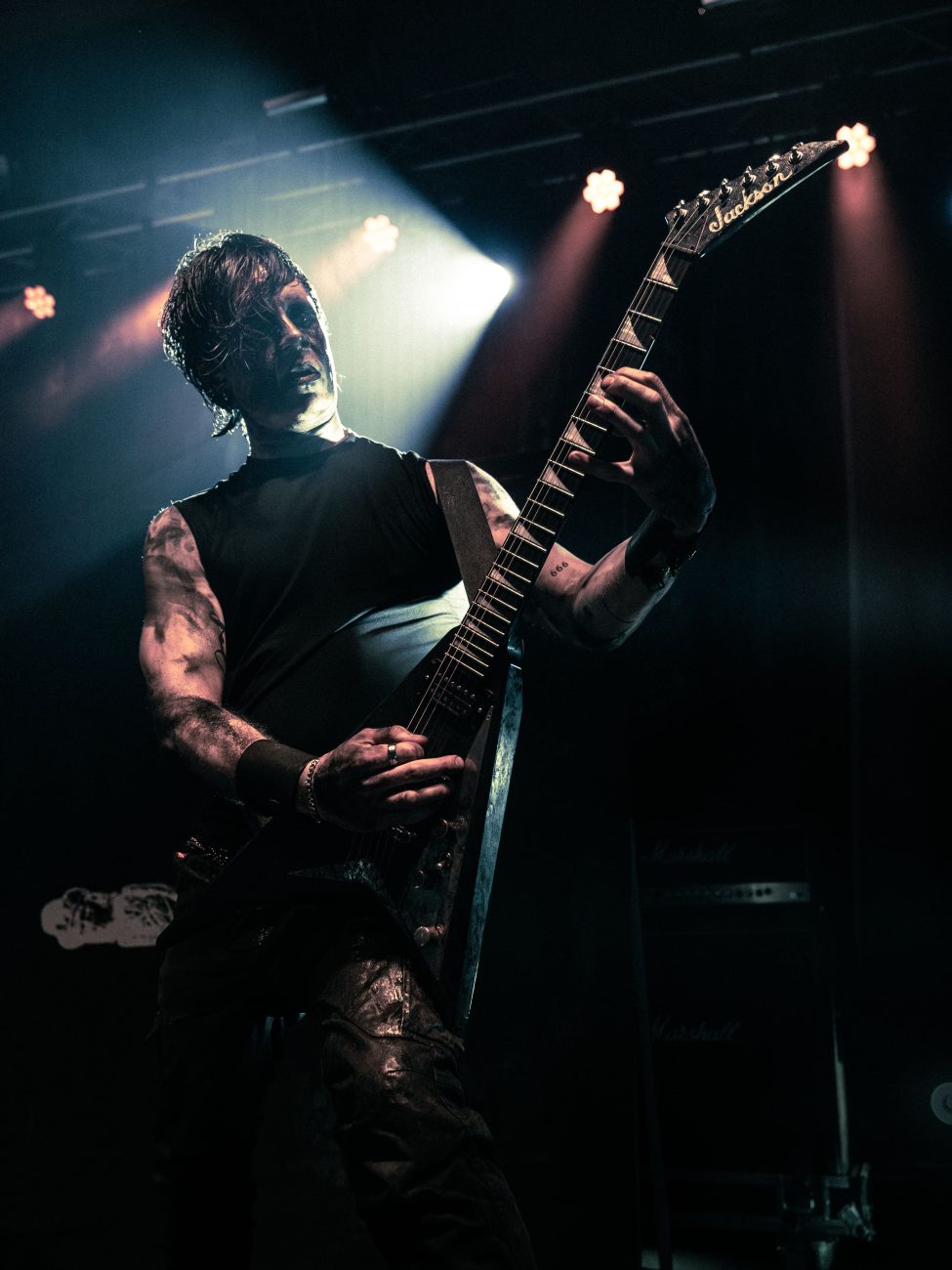
D.G. (Lead Vocals, Guitars) at Sátan Festival (2026)
All Misþyrming’s albums have a very cohesive structure, with songs intertwining as if I were listening to a passage through different steps. Did you create them as conceptual works? Do you develop a storyline to unfold across each album?
D.G.: I’d say yes and no. Our albums don’t follow a strict storyline, but a shared mood holds them together. I try to capture the feeling I have while composing in the album’s overall atmosphere, then build a solid structure from that. The order of the songs is very important to me. I usually like to start with something fast, aggressive, and epic, then shift into a slower piece to change the dynamic before building the intensity again. I think that contrast keeps the listener engaged because something is always evolving. I also use silence carefully, especially between songs, so the album flows naturally from beginning to end. On our last album, “Með hamri,” for example, there is only one pause, placed between tracks three and four, where side A ends and side B begins on vinyl.
Oh wow, that sounds super interesting, like, literally.
D.G.: Yes, it really does. I drew inspiration from my favorite bands for this structure, and I’m also a vinyl enthusiast. I cherish the tactile experience of music when producing Misþyrming’s albums because I believe streaming services will never quite match the magic of listening to an album straight from a physical copy. Nowadays, the culture around singles has become chaotic—young audiences tend to overlook the album format, often discussing music only in terms of individual songs or snippets, especially since social media favors short clips. To me, that’s quite sad, because I grew up when listening to a full album was a special experience, something you invested time in, listening without skipping. Albums are beautiful, cohesive works of art that move through a journey with a beginning, a climax, and a conclusion. I do my best to honor this structure in my work. Despite the challenges facing the music industry, I truly believe the album format will endure. I have hope in younger generations, who are beginning to discover meaningful ways to enjoy music beyond streaming. My goal as an artist is to capture listeners’ attention for at least 45 minutes, allowing them to fully immerse themselves in my music and disconnect from everything else. That’s honestly one of the most wonderful feelings I know.
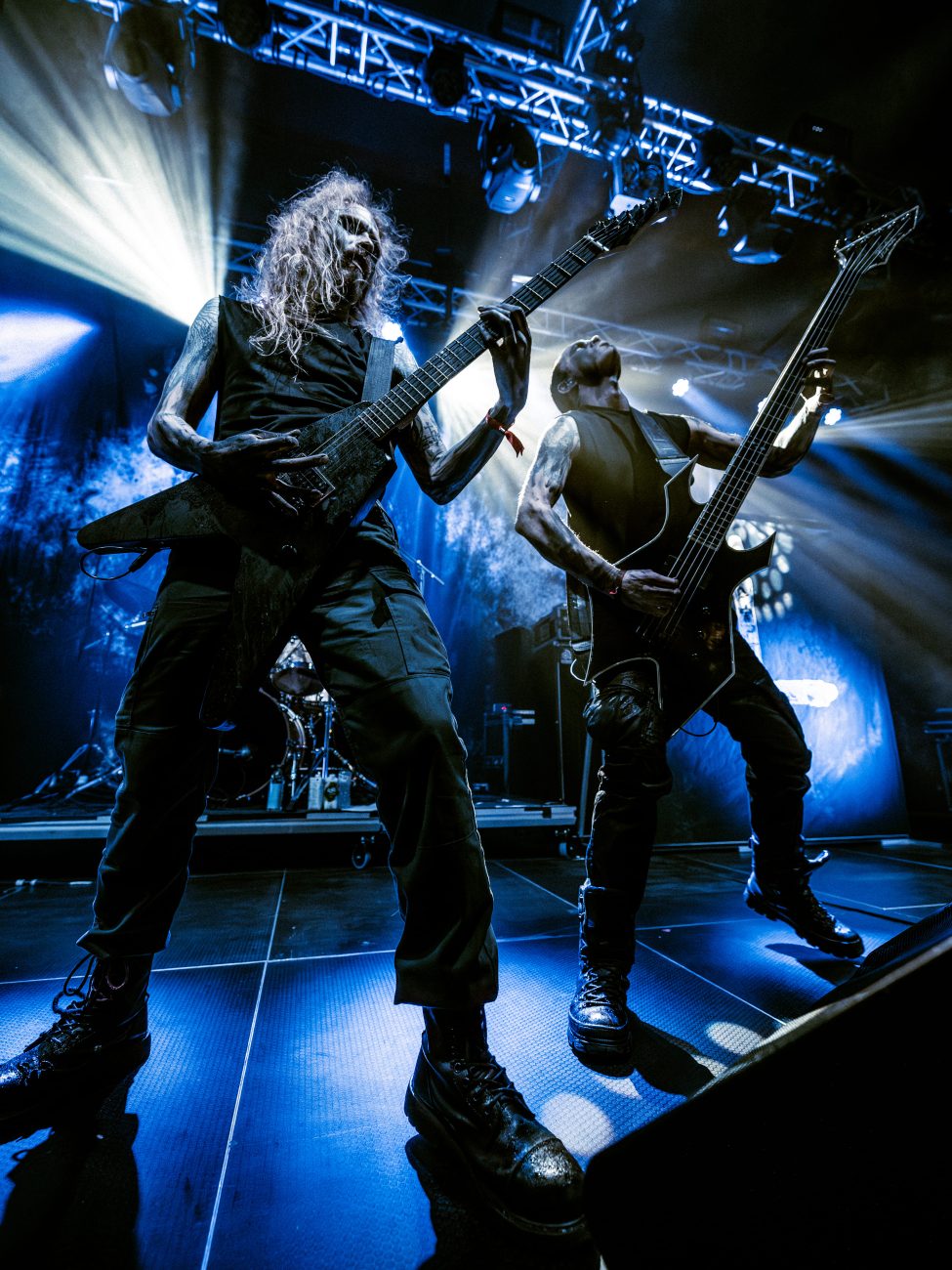
G.E. (Bass, Vocals) & T.Í. (Guitars, Vocals) at Sátan Festival (2026)
“Með hamri” (2022) was a bit different from Misþyrming’s previous works. It sounded more aggressive and closer to black metal’s raw energy. Nonetheless, it still held the atmospheric ambiance the band is known for. How did you achieve a balance that allowed you to have the best of both worlds?
D.G.: I think I approached all three albums in much the same way. When I made the first one, I wanted it to feel epic and monumental. After “Söngvar elds og óreiðu,” I aimed to make “Algleymi” (2019) even more expansive. With “Með hamri” (2022), though, I focused less on grandeur and more on sheer force. I think we achieved that by playing faster, pushing the drummer harder, and making the whole record more explosive. “Með hamri” fits the band’s name perfectly because it is our most violent-sounding album so far. Each record has its own character, but they all reflect our drive to keep growing as a band.
At the same time, there is always an undercurrent of melancholy and sadness in our music. I think sorrow can create real momentum, as if you are fighting something within yourself and turning that struggle into something powerful. To me, sadness is where violence begins—the force that brings out your most extreme side.
Multilingualism is increasingly the norm in metal music. In this context, one of the most enigmatic features of Misþyrming’s music is the Icelandic-language lyrics. Do you see the band playing in English eventually?
D.G.: Certainly not. I don’t see myself incorporating English into Misþyrming’s lyrics in the future. I’ve used English in other creative projects; for example, I was a guest vocalist on Wolvennest’s album “The Dark Path to the Light” (2023). While I feel comfortable with English, I speak from my heart only in Icelandic. My inspiration to stick with my mother tongue comes from my favorite band, Rammstein, who achieved success in German. When I started the band, I aimed to follow their example and stay true to my Icelandic roots. I’m fascinated by languages and how they can expand my creative boundaries. Last year, I recorded guest vocals in Norwegian for Slagmaur’s album “Hulders Ritual,” and that pushed me out of my comfort zone, as I had never sung in that language before. Currently, we’re trying to decide on the title of Misþyrming’s next album, which I won’t reveal now (laughs), but I can say it might be in a new language for us.
Iceland is currently a hot spot for black metal, with many high-quality bands emerging in recent years. How do you think that happened, especially in a country where the metal scene is small?
D.G.: I’ve been asked that question many times, and it has made me reflect on how Icelandic metal bands are appreciated abroad in ways we never expected. For us, though, the scene’s growth felt completely natural.
When I started getting into the local scene around 2010, Svartidauði were already playing great underground shows in Reykjavík, and they inspired me a lot. Other bands like Carpe Noctem, Finngálkn, and Sinmara were also creating remarkable music. The scene was small but exciting, and there was even an active online forum where metalheads shared new discoveries before Facebook took over. Sinmara in particular left a strong impression on me, with their live theatrical shows full of fog, candles, and long, dark songs. The first time I saw them, I knew that was the kind of extreme metal I wanted to make. Once you go black, you never go back! (laughs).
I started Misþyrming in 2013. Around that time, I was spending a lot of time with Tomas from Carpe Noctem, and he introduced me to their drummer, Helgi, who later joined us for some time. We made Misþyrming’s first album, Tomas joined the band, and I also joined Naðra, another band, with him. Gústaf was playing bass in Naðra, so I brought him into Misþyrming as well. We were constantly sharing members between bands, which shows how small the metal community was. Black metal was the style that inspired us most, so more bands started to appear. Because we were all listening to many of the same local and international artists, some common traits naturally emerged in the music.
Iceland produces high-quality music in all kinds of genres, not just metal, and great things are always happening here. The country has also become much more visible over the past 15 years as tourism has grown, and I guess that has given Icelandic bands international exposure.
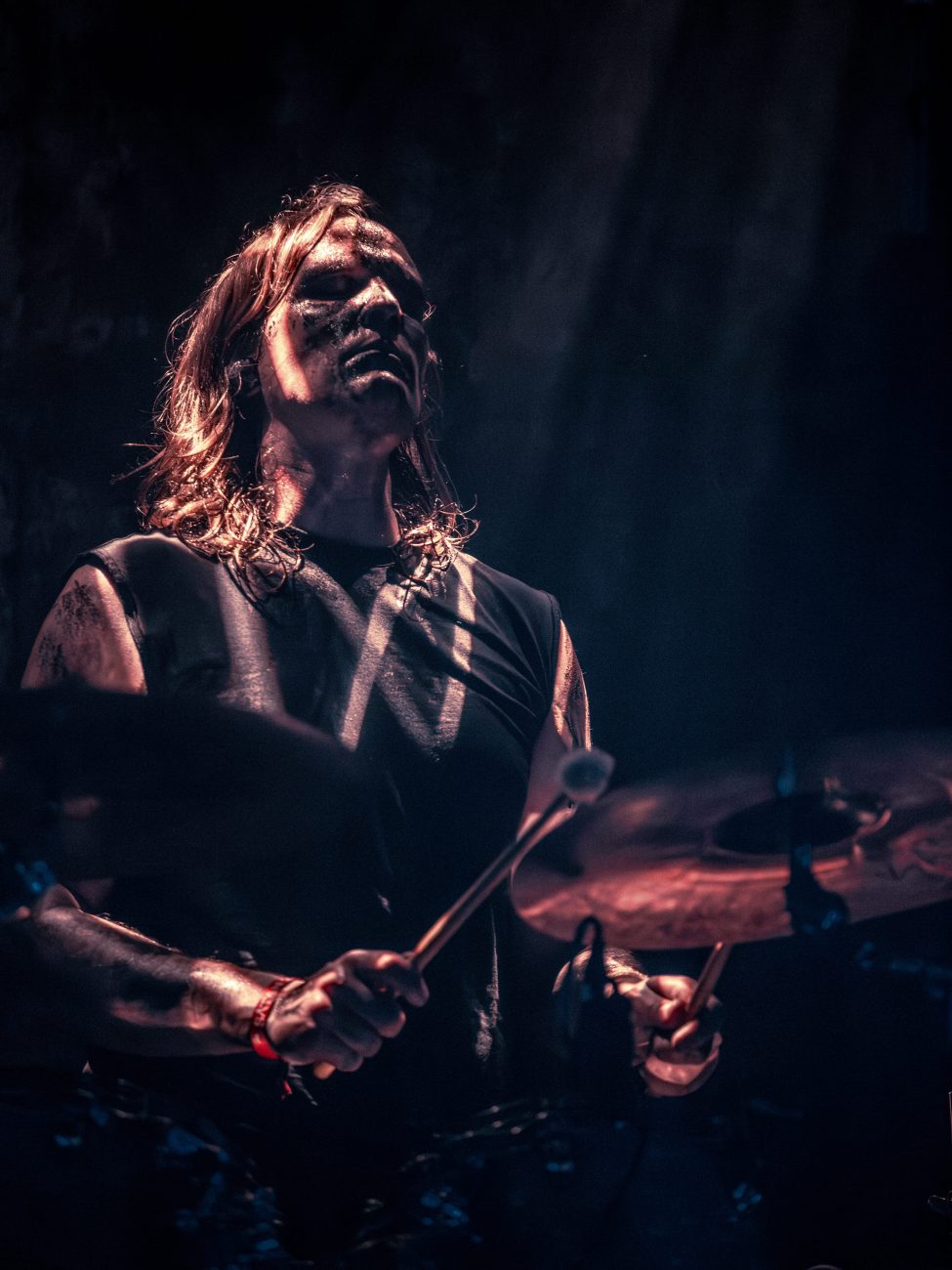
M.S. (Drums) at Sátan Festival (2026)
Misþyrming’s music personality is quite ethereal, and I would even say it has a cinematic ambiance. Do you find inspiration from other music genres?
D.G.: Yes, of course, all the time. I’m quite exposed to different types of music as I work in the sound industry. When I’m working, I always notice if there’s something that inspires me; it could just be the way someone plays their instrument, or how artists design their soundscape, things like that. I also find it interesting how certain genres, like hip hop or punk, prioritize the “less is more” approach and create a soundscape with a limited selection of instruments.
I also take some small inspiration from ambient music, just as you noticed. I’m not a fan of this genre myself, as I can’t stand still and need more speed, but I like to listen to some of it to think about the different sorts of atmosphere I can create. Basically, I experiment with some bits and small parts of other genres and see how they would sound with aggressive guitars.
You started the band at a very young age. What are the advantages and disadvantages of establishing this project as a young adult?
D.G.: That’s a good question. I guess that the only disadvantage is that when you’re still a teenager, you’re an easier target for bullies. When we were doing our first shows abroad, sometimes we got comments like, “Hey, you’re just little kids. Why are you pretending that you are so hardcore?” These comments only showed envy, and we never gave them too much importance.
Conversely, the advantage of having ventured into Misþyrming at a young age is that we started very unpolished and naïve. We were able to grow up with our music when we had enough time to improve as a band, rather than, for example, if we had been in our 30s. By the age of 25ish, we were getting the hang of it and felt already confident about what we do.
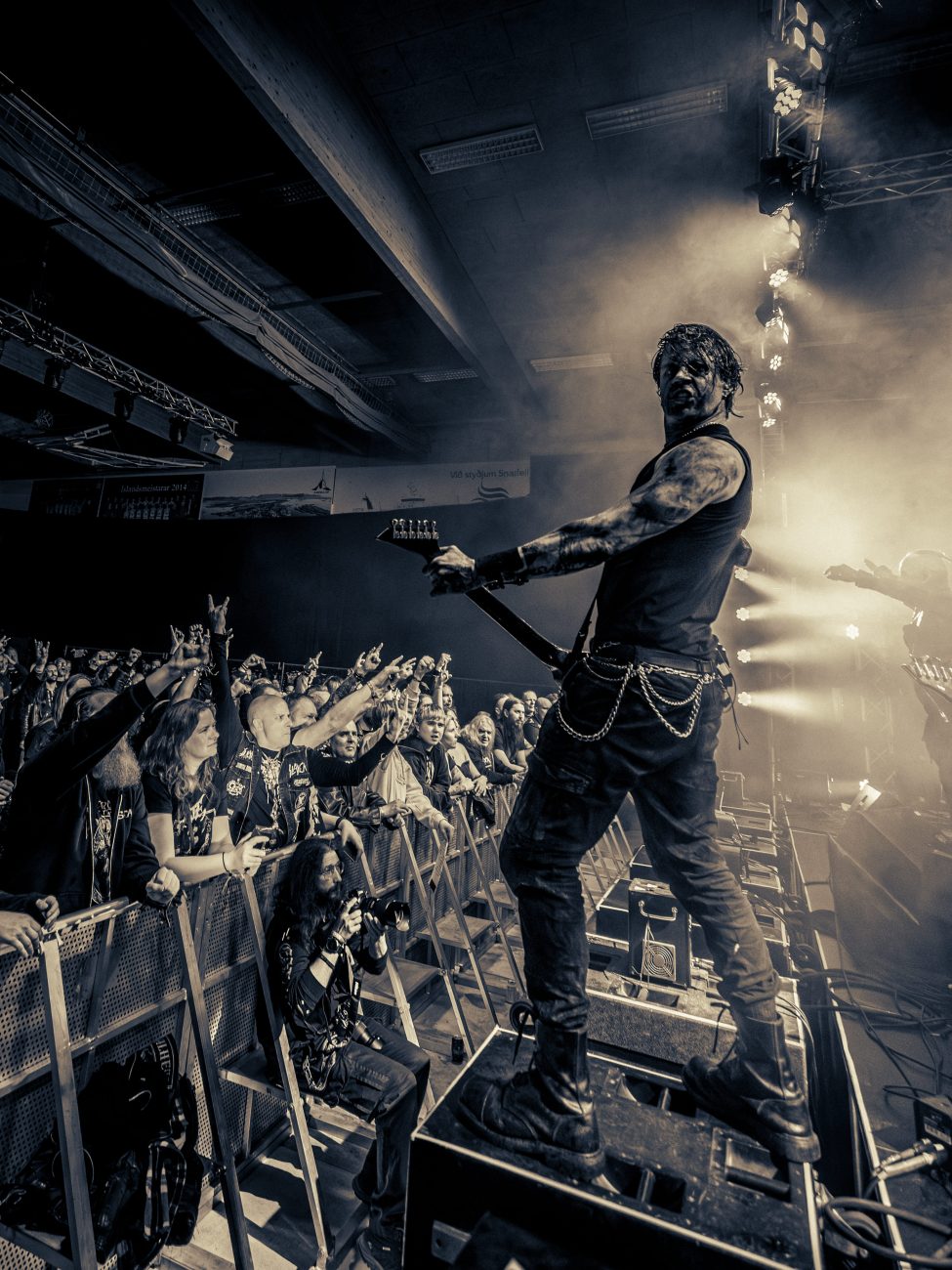
Do you consider your visual artistry to be as important as your music? Considering that black metal is a subgenre where visuals are carefully curated, this is something special to discuss.
D.G.: Yeah, well, we have our ears, our eyes, and our nose. I think art is at its most powerful when it engages several senses at once. That sensory impact brings it back to something deeply human and allows emotion to be physically felt.
We use real blood as makeup on stage because it has a powerful effect and a clear purpose. It symbolizes death, but because it comes from an animal, it also evokes the cycle of life. It puts us in a more barbaric state of mind, which feels right before a performance. Visually, it is also a tribute to traditional black metal corpse paint. But while the early bands wanted to look like corpses, we want to look as if we were dragged out of hell. I want the audience to feel that intensity through every sense.
The same applies to our album artwork and physical editions. It is not just about the image, but the object as a whole. In fact, I’m even curious about how the smell of papers that wrap our vinyl records can impact the experience of listening to the band’s music.
Misþyrming have carried out many collaborations with other bands in the past. What has been the most significant one for you?
D.G.: We’ve certainly done a lot of great experiments and one-off collaborations. The first was performing Funeral Mist’s “The God Supreme” live with its founding member, Arioch (Marduk), at Beyond the Gates IV in 2015. Since Funeral Mist is strictly a studio band, no one expected that to happen. It was our first real milestone as a band, and we’ll always remember it fondly.
We’ve also toured with some great bands. Our run with Mgła, One Tail, One Head, and Kringa led to a collaboration with Bjørn Holmedahl (Behexen) on our second album, as he was playing in One Tail, One Head at the time. Later, we toured with his other band, Darvaza, and performed our joint track with him every night. Since One Tail, One Head had already split up, we also covered one of their songs with him at each show, which made it a great surprise for the audience.
We’ve also collaborated with Icelandic bands, and perhaps the most special project was Sól án varma, a hybrid group commissioned for Roadburn Festival in 2016 with members of Svartidauði and Carpe Noctem. It was highly theatrical: we set out to perform one long piece with no breaks, with every passage flowing into the next in a dark atmosphere.
Speaking of collaborations, the band will play Behemoth’s first album, “Sventevith” (Storming Near the Baltic), with Nergal for its 30th anniversary. This is going to be a transcendent yet very unusual collaboration! What made the idea come to life? Why did you pick Hellsinki Metal Festival as one of the venues for this special set?
D.G.: I’ve known Nergal personally since Behemoth played in Iceland in 2015. We’ve run into each other at festivals over the years, and he has always kept an eye on the Icelandic black metal scene. He even posted about our side project Sól án varma when it came out, which really surprised me.
He wanted to celebrate the 30th anniversary of “Sventevith,” but because Behemoth had already done other anniversary-type events, he wanted this one to feel different. He is very driven when it comes to challenging expectations, and I respect that because it takes courage. When the announcement came out, some people thought it was strange that he was doing this with Misþyrming instead of the rest of Behemoth. But he is the only member of the current lineup who actually played on that album, so he has the strongest connection to it. He felt this anniversary was worth approaching in a new way with different musicians.
The idea did not come together immediately. In our first conversations with him, we were still trying to figure out how this experiment could make sense. After some brainstorming, we realized it should not feel like a Nergal show, a Misþyrming show, or a Behemoth show. It had to be a celebration of the legacy of “Sventevith,” while capturing Behemoth‘s spirit when the album was first made. Nergal trusts us, and he believes we still have the youth and passion to play this music with full conviction. We’ve been rehearsing all winter, and we’re ready to take on the challenge with honor and force.
Finland also has a strong heavy metal scene, and we always enjoy playing for our Nordic neighbors, so including Hellsinki Metal Festival felt like an obvious choice.
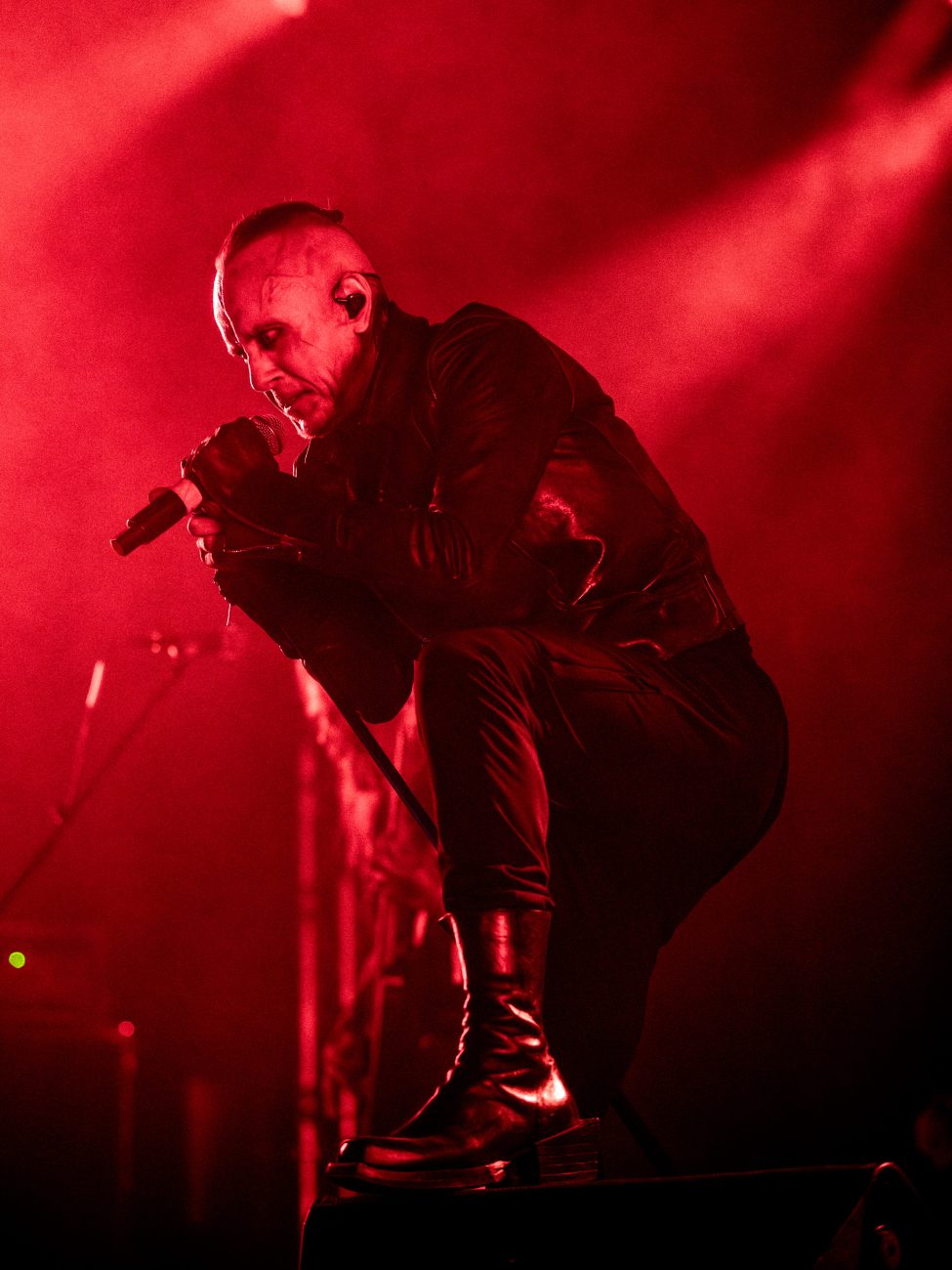
Nergal Darski performing “Sventevith” with Misþyrming at Sátan Festival (2026)
Besides Hellsinki Metal Festival, you will play at Candelabrum Festival in Mexico. How do you feel about performing in one of North America’s leading extreme metal events? Do you have any expectations for this festival?
D.G.: I’m really excited about this festival, and our expectations are high. We’ve previously played in Chile, and that experience was fantastic—more than we could have hoped for. Latin America has a great reputation among bands because of its passionate audience; fans go wild at concerts. I’ve seen this in various band documentaries, where the region is always shown as welcoming. We also know you guys are warm-hearted, so your energy comes naturally during shows. So looking forward to this!
Do you have any plans for Misþyrming’s near future?
D.G.: We’re busy right now and always up for new things, not only as Misþyrming but with our other bands as well. We can’t say that we’re releasing new material soon- maybe yes, maybe no- but once we have something ready, you all will know. For now, we’re eager to see our fans on the road this year!
All photos within this interview have been provided by Aðalsteinn Valur @alli.musicshots