
Metal, Hardcore, Indie, Rock
By: Hernán Osuna & Micaela Martin
Photo credits: courtesy of Sebastián Roascio Goldar
The Argentine rock band led by the Sardelli brothers wrapped up 2025 with no fewer than five concerts at River Plate’s Estadio Monumental in Buenos Aires. 2026 got off to a flying start with shows in Argentina, Chile and Mexico. During a break in the tour, Chaoszine spoke to their drummer about the band’s current situation, the physical preparation required to keep the band’s rhythm section on track, the human factor in maintaining a working team over time, and other topics. An exquisite one-on-one interview with the driving force behind Airbag.
It’s a cloudy day today in Rosario (Argentina), and on the other end of the Zoom call is Sebastián Roascio Goldar, the rhythm section of Airbag. With a powerful beat, Sebastián, who is now a new endorser for Paiste, one of the industry’s leading cymbal brands, nevertheless possesses that extra quality of great drummers: understanding when to play more, when to play less, when to play softer and when to play louder. Dynamics. That is the key word. Playing with discernment, confidence, technique and good taste. And on top of that, something fundamental: keeping your feet on the ground. Anyone’s ego could go to their head after playing to five packed stadiums. Sebastián understands that his mission in life lies elsewhere: making music as a matter of will, a quest and an expression of meaning, in the words of Viktor Frankl. Roascio is in Buenos Aires, so Hernán Osuna (HO), who is also a drummer, and Micaela Martin (MM) took the opportunity to speak with the band’s rhythm section leader. Tours, physical preparation, his favourite tracks and more, in an in-depth chat.
HO: You ended 2025 by playing five shows at River Plate’s Estadio Monumental in Buenos Aires. What comes next after that? How did you feel after the concerts?
Although playing at a stadium like the Monumental is iconic, I don’t see it as a case of “I’ve made it”. I still have the same passion; I keep pushing myself. Of course, it’s a huge milestone in a musician’s career to play at a stadium like River Plate’s, where so many legendary bands have performed, but personally, I still feel the same as before (laughs). I’ve got the same drive to work, play and improve as much as I can, day by day.
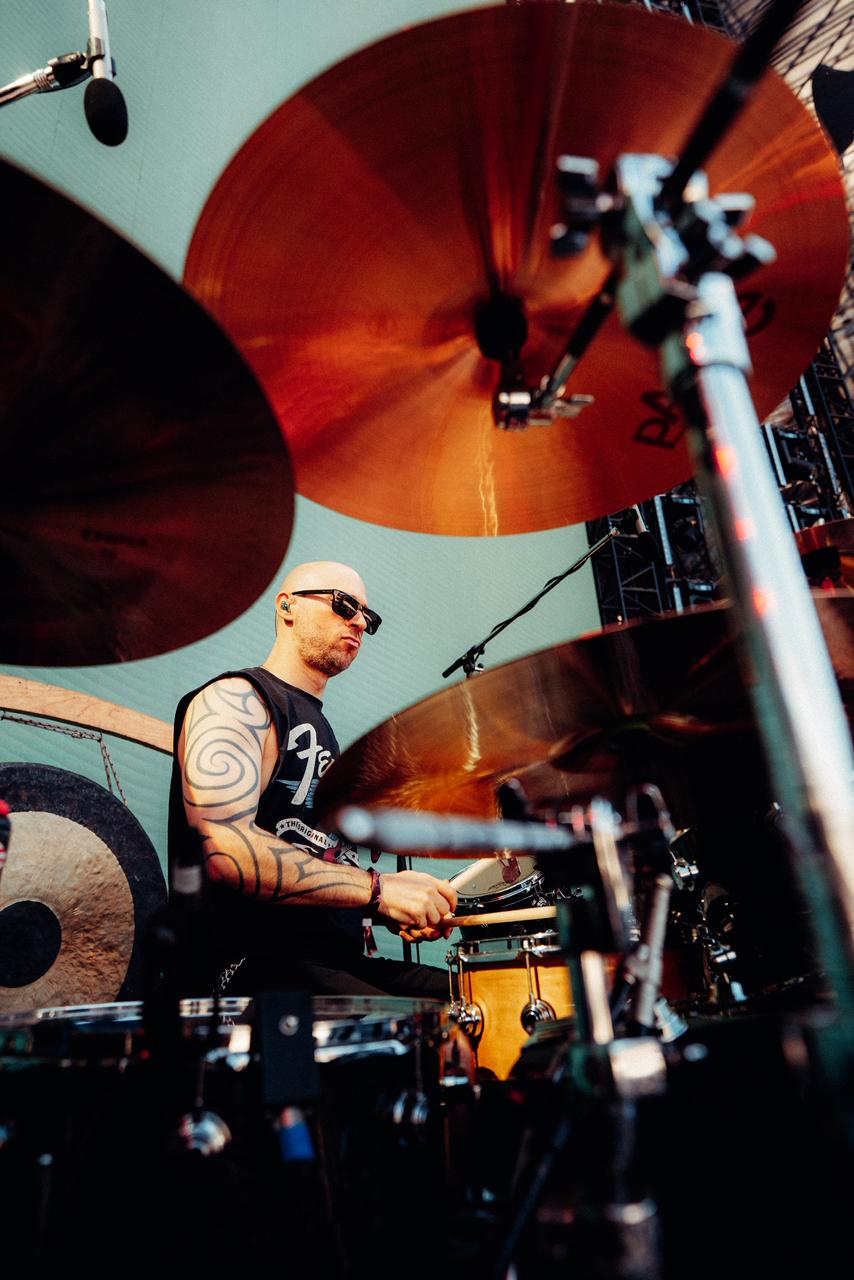
HO: Musicians are warriors; we have to keep going.
Absolutely. When you love your instrument, you enjoy playing in a small pub just as much as in front of thousands of people. Or even on my own, in my rehearsal room. With a bass drum, a snare drum and a hi-hat, I’m happy.
MM: There are a lot of people who don’t know the full story behind Airbag and wonder what’s happened to make the band grow so much recently. I think one of the key moments was when Guido Sardelli stepped down as drummer and took on an active role as singer and guitarist, supporting Patricio Sardelli. Are you aware of that evolution as a band, or do you ever feel the ‘pressure’ of always having to be the band’s metronome?
First of all, thank you for your kind words. Before I joined the band, there were other drummers, but as for the change, it’s quite crazy. From the inside, I couldn’t really say; I think the world is moving in the opposite direction—that is, analogue music isn’t exactly mainstream these days. I couldn’t tell you what happened. I love that suddenly so many young people are connecting with this kind of music. Perhaps at some point it had something to do with the pandemic and the fact that we were all cooped up staring at screens. Maybe people needed a bit of reality or a visceral connection, and Airbag gave them that. At the band’s gigs, there’s a lot of what used to happen in the eighties or nineties – that constant connection with the crowd, where people forget about their phones and social media for a while and get more involved in the show. It might have something to do with that: a real sense of togetherness is created with the crowd.
HO: Of Airbag’s latest singles, I really liked “Blues del Infierno”, because it has that characteristic blues groove, with a shuffle beat on the drums. Does playing a track like that give you a fresh perspective as a musician?
Yes, absolutely. I love anything with triplet beats. The world of ternary subdivision in percussion is beautiful. There’s something special about those kinds of rhythms.
MM: As a drummer, you get a bird’s-eye view of the show. Is there ever a moment when you allow yourself to enjoy the view? Or do you always have to keep an eye on the tempo? Do you ever relax?
When I’m not playing (laughs). There’s a classic bit at the end of “Cae el Sol“, which is when Patricio Sardelli stays up there interacting with the crowd, where I can perhaps relax a bit more and just play quarter notes or eighth notes on the ride cymbal. That’s when I might take a minute and think: “Wow, this is lovely.” It’s what you dreamed of and fought for since you were a kid. It’s beautiful. I won’t deny that at some point I might have shed a few tears. It’s like it finally sinks in: “Look where I am.”
HO: You’ve been part of Airbag for over 10 years now. You’re the backbone of a band that fills stadiums and usually plays more than forty songs live. It takes a lot of stamina, rehearsals and physical commitment. How do you prepare physically, in terms of diet and drum practice, before a tour? I know you train and stretch.
Absolutely. It’s key to be as close to being an athlete as possible. I stretch a lot. Every morning I get up, whether or not there’s a gig ahead, and I stretch my back, wrists, waist, neck – everything. I’ve always paid a lot of attention to my body. Right now, for example, I’m doing Pilates. It’s fantastic, incredible. For several years, I went swimming as well. I have to practise every day, keep fit and work on my hands and everything to be in top form. It’s happened to me that I’ve let myself go between gigs and then you suffer, because you have to play over 40 songs and you end up completely exhausted.
MM: Backing tracks are used by many bands these days, but Airbag is a group with a more organic approach to sound. Do you feel that the group comes across as more authentic to the audience?
Yes, I think so. The set list is quite organic; you never really know exactly what you’re going to play. There’s a general framework, but things change during the show. Maybe songs you hadn’t planned to play come up, or perhaps the audience requests songs on the spot and we play them. It’s impossible to achieve something like that with machines or other technical aids. Airbag’s approach generates a real connection with the audience, and people enjoy that.
HO: As of this year, you’re an endorser for Paiste, one of the world’s leading cymbal companies and a brand used by John Bonham, Alex Van Halen, Vinnie Colaiuta and many others. What can you tell us about that? How did it come about?
It’s a real thrill. The first thing that springs to mind is all your idols who use those cymbals. Being part of that family is mad. That first week, I felt like I was at a party the whole time; nobody could bring me down (laughs). The contact came about through the folks at Import Music, specifically Rodo Aquino. We made contact and it was all smooth, hyper-organic and fluid. The people at Paiste are the best and that’s something I was looking for, because I’m very interested in the human side of things. I want to work with people who have human qualities and those at Paiste have that. I’m absolutely delighted. Plus, I took a whole load of cymbals home (laughs). I wanted to try everything and play everything.
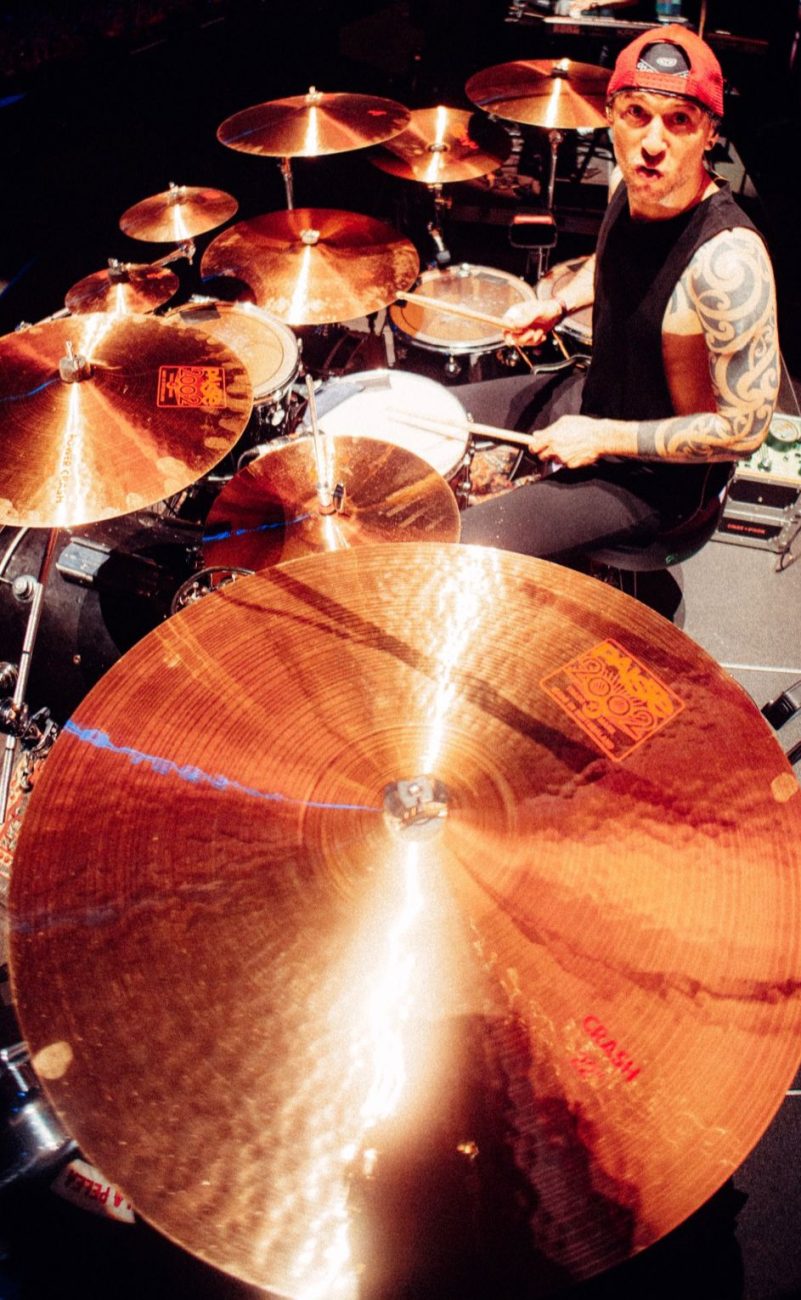
HO: In March, you played on a Friday at Lollapalooza Chile and the following day, Saturday, at the Vive Latino festival in Mexico City. How do you cope with jet lag?
Oh my gosh, it’s awful. Exhausting. You just want to sleep all the time, but the music makes it all worthwhile. You might be sleepy, hungry or in a bad mood, but in our case, as drummers, you pick up the sticks, start playing and it all goes away. The sleepiness and hunger disappear, and you’re not tired anymore. If we have to play for three or four hours, we give it our all. It’s worth it. But yes, the travelling is tough.
MM: Speaking again about physical conditioning, do you have any specific tools for when you’re on tour? Do you follow any particular diet?
Diet is key. We gave up pizza, empanadas and beer ages ago – the standard diet for all musicians (laughs). Now we’re more strict about ordering healthier food, because the reality is that you just don’t perform well. I don’t see a professional footballer eating a Neapolitan-style breaded schnitzel and then going out to play the match.
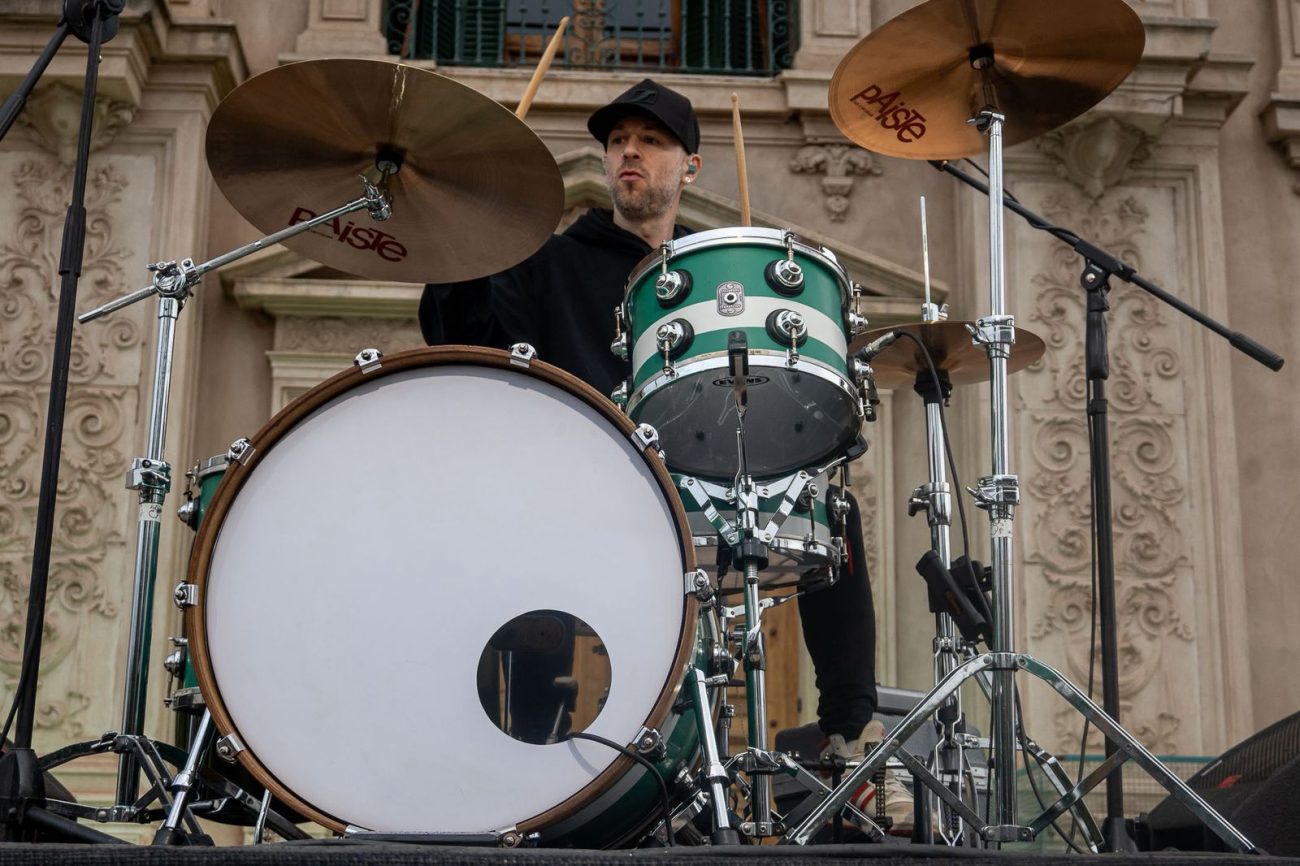
MM: OK, and do you do any physical routine before a show?
I stretch. I get up in the morning wherever I’m staying and start stretching on my own.
HO: You just mentioned the human side of things, which is absolutely key. From the audience, you tend to think the musician is having a great time, but what happens on those days when you suddenly aren’t feeling up to it? Maybe you’ve got a fever or you’re just not feeling well, and I imagine that at times like that, the bond with your bandmates is crucial, as is feeling grateful for how far you’ve come…
As you say, the team at Airbag is brilliant, and we all get on perfectly. Sometimes one of us is in a bad mood and the others step in to lift the mood. There’s a real bond within the group. Several of us have been here for a few years now, and if someone isn’t feeling well, we give them a bit of space and try to help them relax and make them laugh. It’s a group where we joke around a lot. There are lots of jokes and laughter. Sooner or later, if you’re in a bad mood, someone’s going to make you smile, and that’s that.
MM: OK, and do you do any physical warm-up before the show?
I stretch. I get up in the morning at whichever hotel I’m staying in and start stretching on my own.
MM: Which Airbag songs do you most enjoy playing?
I connect with the music not so much because of the lyrics, but because of the feeling it gives me. I’m often drawn to those songs that remind me of the younger Sebastián listening to AC/DC, Aerosmith, Kiss – that sort of band. I really connect with “Huracán“, for example, or “Donde vas“, which is a mid-tempo, rather melancholic track. I also like “Intoxicarme“, which has some more interesting grooves; it’s a track that lets you play around a bit more. Of the new ones, “Blues del Infierno”, as we’d mentioned. This song takes me back to my early days, when I first started playing the drums.
HO: Can we expect the second part of “El Club de La Pelea”, Airbag’s latest album?
I think so, but if I say yes, I’d be lying. We’ll have to wait and see, but I think so.