Metal, Hardcore, Indie, Rock
Pioneering Brazilians Azul Limão talk to Chaoszine: “When you sing in Portuguese, metal becomes something else”
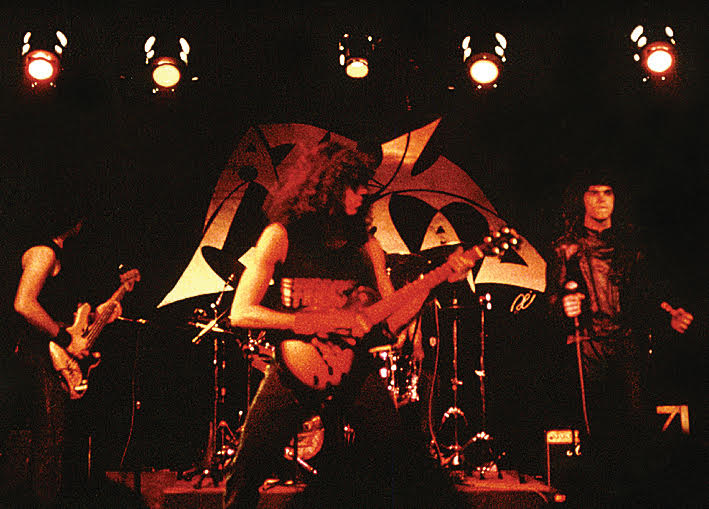
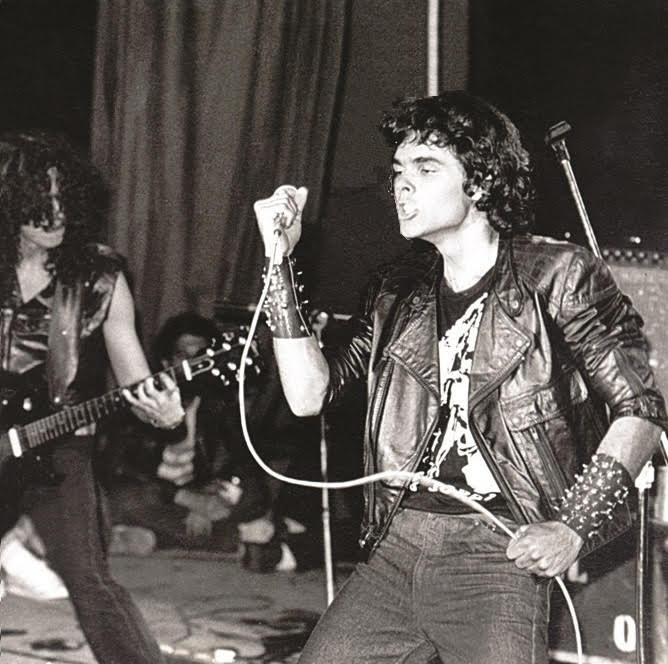
Azul Limão was formed in Rio de Janeiro, in 1981, by Marcos Dantas (guitar) and Vinicius Mathias (bass). Rodrigo Esteves (vocals) and Ricardo Martins (drums) soon joined the lineup and recorded the demos “Pegasus” and “I Won’t Talk Anymore”. The latter was played on FM Fluminense radio (the legendary “Damned” Radio), making the band well-known in the area.
In 1984, Azul Limão recorded the demo “Artists on Stage”, performing a series of shows across the country and becoming one of the standout bands in Brazil’s metal scene at the time. Their first full- length came in 1986, “Vingança”, one of the classic Brazilian heavy metal albums of the 1980s, including the hit song “Satan Clama Metal”. “Ordem & Progresso”, was released the following year and shortly after, Alexandre Reis took over on drums.
In mid-1989, Azul Limão went on hiatus, returning in 2013, with “Regras do Jogo”, including “Coração de Metal”, a song that helped give the band their cult following. Marcos and Vinicius were later joined by Trevas (vocals) and André Delacroix (drums) and full-lengths “Imortal” (2018) and “En Acción” (2020) were released.
“Em Quarentena” (2021) celebrated the 40th anniversary of the band’s creation and “Na Pressão” (2022) included a version of Obús’ song, “Dinheiro Dinheiro”. Vinicius Mathias was replaced by Laercio Rocha (bass) before the release of “Barato Elétrico” (2024).
2026 marks the 40th anniversary of “Vingança”, and Chaoszine had the chance of speaking to Marcos Dantas about Azul Limão’s plans for this celebration, as well as the band’s long history as part of Brazil’s celebrated heavy metal scene.
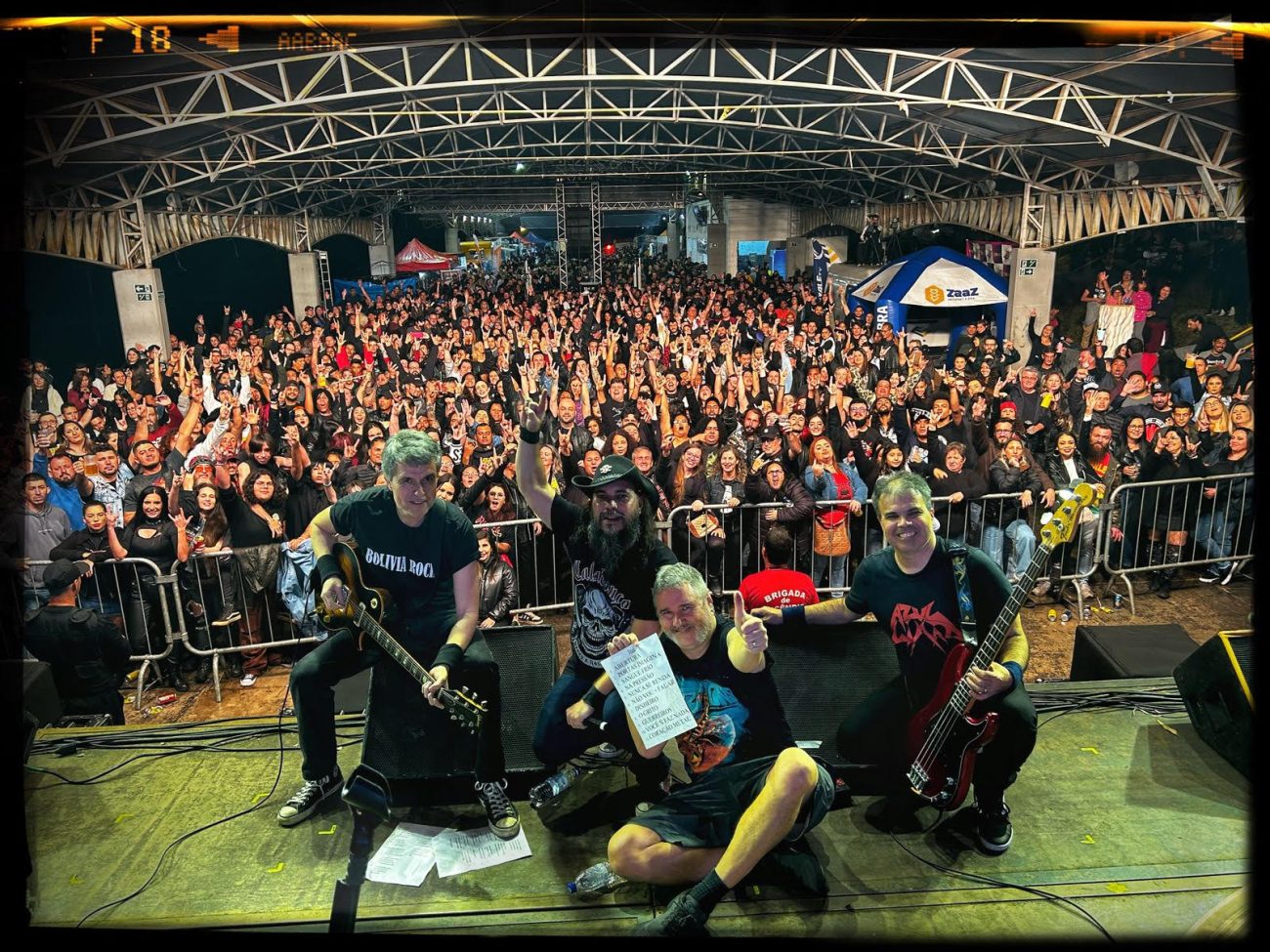
I was at the release concert for “Na Pressão” in 2022, and was really impressed at how much energy Azul Limão brings to the stage and the crowd. That show was interesting, because it was in a concert hall that is usually for Bossa Nova shows, Sala Baden Powell.
Marcos Dantas: For me, that had a very strong meaning, because that place used to be a movie theatre before that—the Ricamar cinema—and I used to go there with my friends to watch “The Song Remains the Same”, the Led Zeppelin film. It was really cool: I would watch Jimmy Page playing his Les Paul guitar, right? I was just a kid, and I’d think, “Wow, one day I want to be like that guy, playing a Les Paul guitar like this,” you know? And having long hair and all that stuff. And then, a long time later, I ended up playing there myself, in the same place where I used to watch that movie.
Yeah, I used to go watch Bossa and Brazilian Folk concerts there, and I never expected a heavy metal show to happen there. And it was really good—I enjoyed it a lot. I thought it was something like a crossover, different things coming together, different styles of music made in Brazil, because your music has lyrics in Portuguese, so it’s Brazilian heavy metal of the highest quality possible.
Marcos Dantas: You are exactly right, because that’s one of Azul Limão’s sources of pride: doing heavy metal in Portuguese. It ends up being something different, because heavy metal performed in English tends to stay very close to its original source. No matter if you’re Brazilian, German, Spanish, or Japanese, when you sing in English and play those songs, it ends up sounding very close to the British original. When you sing in Portuguese, it becomes something else—it adds a different flavor, I would say—and that’s the challenge. And it’s really great that people recognize that it’s different.
And did you think this way from the beginning?
Marcos Dantas: Yes. When we started, we obviously played covers—we didn’t have original songs yet—so we played covers of the bands we liked. But when we started making music, it never even crossed our minds to make songs in English back then. We were already composing—one person would bring lyrics, another would bring music, and we’d put it together. Basically, we built things ourselves and then presented them. When Brazilian heavy metal started gaining success and appearing abroad through bands that sang in English—starting with Sepultura, but there were others like Viper—the owner of the label we were with at the time suggested that we record an album in English during the period of our second record. It would be the same album, just with Rodrigo’s vocals recorded in English. At the time, we felt somewhat uncomfortable with that idea, because “Azul Limão” first of all isn’t even easy to pronounce—a foreigner can’t really pronounce it…
Yes, “Limão” is difficult. The final -ão sound is impossible!
Marcos Dantas: It’s impossible. At that time, the album was “Ordem e Progresso”, so the lyrics only made sense for Brazilians. At the time, the vocalist’s girlfriend, Rodrigo’s girlfriend Kátia, started writing English versions of the songs, but it was very uncomfortable, because it’s one thing to compose a song directly in English, and another to take a song in Portuguese and try to create lyrics in English that say the same thing and still fit the melody. You can probably imagine it didn’t turn out very well… So, for all these reasons—the band name, the lyrics not working in English—we didn’t see any reason to do it. It really bothered us, so we decided: let’s keep it in Portuguese.
That’s great, and it worked out really well, because it’s like your stamp, your trademark. And how was the beginning of the band’s journey?
Marcos Dantas: We used to try to play at schools and things like that, but it was mostly just for fun—there was no real structure. There was one school where we played, and we even had to bring in a girl from that school to sing, because no one in the band was actually from there, so we put her on vocals too, you know? Every month there were different people in the band. The only ones who stayed were me and Vinícius. At one point Vinícius left, and other bassists came in. But the lineup stabilized in 1983, and we started getting paid gigs, charging for shows and all that. So, in 1983 the band became professional, even though everyone still had their own studies and other occupations. But we started taking it seriously, and from that point on the lineup didn’t change for a while.
At that time, did you talk to other bands from different parts of Brazil? Did you already have any exchange with them, or not yet back then?
Marcos Dantas: No, at the beginning we didn’t. We didn’t even have that exchange with bands from Rio de Janeiro. Each band kind of stayed in its own neighborhood. But when we started, we sent a tape to Rádio Fluminense FM, and it started getting played on the radio. The band became known, and we started meeting other bands from different neighborhoods that were doing the same thing. It started to create—I wouldn’t exactly call it a movement—but everyone began forming a big group. It was a really cool moment, because it was the rock boom in Brazil at the time. For example, Beto, a guitarist who also played in Azul Limão before 1983, was one of the first guitarists of Kid Abelha. So everything was very interconnected. The bands weren’t really divided into strict genres or segments: everyone played with everyone. Then when Circo Voador venue came along, it became a huge celebration.
In the meantime, you had a hiatus, after which you recorded “Regras do Jogo”. It includes one of your most successful songs, “Coração de Metal”.
Marcos Dantas: When we came back to record “Regras do Jogo”, it wasn’t really a full return of the band. We had a record label that, in the mid-2000s, became interested in our back catalog and wanted to re-release the old material and they also wanted a live album. We didn’t have any proper live recordings that were good enough to be included in an official release. So, I made a counterproposal, because the vocalist was already living abroad—Rodrigo is now an opera singer, a lyric tenor. The idea was: when he came to Brazil, we would record an album with all the songs we had written in the 1980s, to complete that repertoire. The label agreed. He came to Brazil, we recorded the album, and it was released in 2013. But the band didn’t really come back. We only did occasional shows.
Yes, it was only in 2018 that you properly came back, and when Trevas joined the band.
Marcos Dantas: Yes, we came back in 2018 for real, seriously this time. And since then, we’ve been active and playing.
Are you going to keep releasing new material? Do you already have new songs ready, or are you planning to start working on something new?
Marcos Dantas: We never stop composing. Inspiration comes and we end up writing new songs. There are always ideas in progress. “Barato Elétrico” included some songs from the “Na Pressão” era, for example. But this year, 2026, is going to be a very special year for us. Of course, every Azul Limão record is like our child, so we love them all. But” Vingança” has two important attributes. First, it was our first LP. And second, it is by far the one most beloved by the older fans of Azul Limão—it’s their favorite.
And it’s also the one I listen to the most, to be honest.
Marcos Dantas: The record label people said: “Look, let’s celebrate this.” And you prepare the show, and we’re going to do a commemorative edition, with photos and everything from “Vingança”, on vinyl, to celebrate the 40 years. The idea is to play the album in the exact order of the LP, from beginning to end.
That’s really cool. I look forward to catching you guys live! Thank you for talking to Chaoszine.
Marcos Dantas: Thank you.
You can find Azul Limão´s official website here.
YouTube: https://www.youtube.com/@azul-limao