Metal, Hardcore, Indie, Rock
The festival summer of Finland has kicked off with a real banger. For those who’ve felt that there is a prog-sized hole in the event calendar of the Finnish summer, Ankea festival is here to answer your prayers. The two-day bacchanal on the 5th and 6th of June did not bother with trying to cater to as wide an audience as possible, opting instead to reach out to a very specific niche. That niche being fans of progressive music. For the first weekend of June, the urban factory area of Hiedanranta in Tampere served as the scene of an absolute prog rock bonanza with bands like Katatonia, Leprous, Ihsahn, Green Carnation, Earthside, and many more performing over the course of two days. Strap in as Chaoszine walks you through the highs and lows of Ankea festival, and find out to what degree the event lived up to its name, as ‘ankea’ is Finnish for ‘bleak’.
The trip to the festival grounds from central Tampere couldn’t have been easier. One only had to hop on to the tram from any of the various stops in Tampere, and it took you damn near next to the festival gates. From the city center the tram ride itself was rather picturesque, with numerous scenes and sights of Tampere flowing by at a leisurely pace. At first, the festival area took some getting used to, the former factories and run-down buildings all around seeming somewhat uninviting. Very soon, however, the derelict nature of the place grew on you and provided cozy enough of a backdrop for the twenty one bands performing over the weekend.
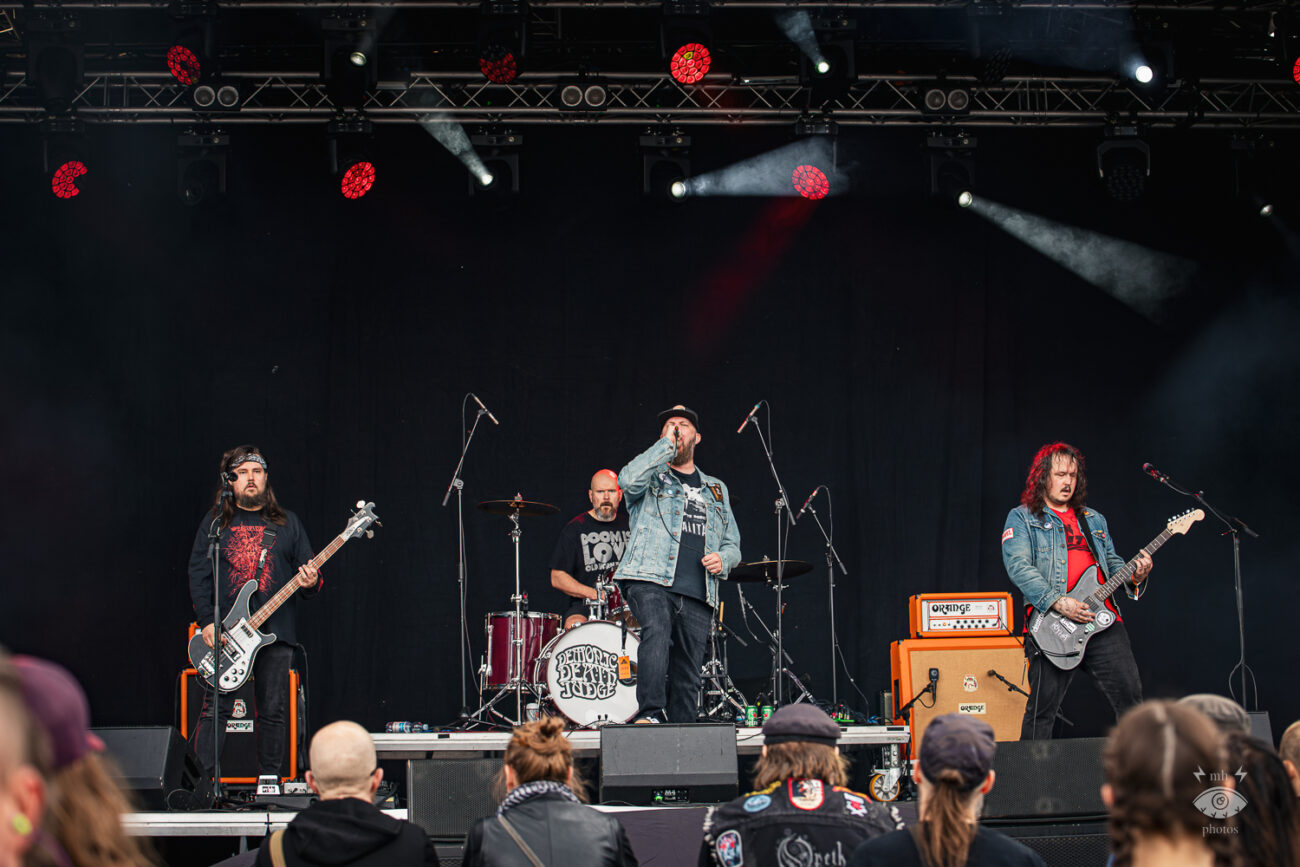
Demonic Death Judge, a band from Kotka representing the various shades of stoner- and sludge metal, had the distinct honor of kicking off the festivities on day one. Even though it was only half past one in the afternoon, a decent crowd had already gathered to witness the first act of the weekend. Demonic Death Judge made the most of their forty-minute set, serenading the crowd with churning riffs, groovy drum beats and a compelling vocal performance from Jaakko Heinonen. Demonic Death Judge delivered their fares in quick succession, opting for a no-nonsense approach instead of begging the early afternoon crowd for moshpits or whatnot. A killer opening for a festival that was only going to get better.
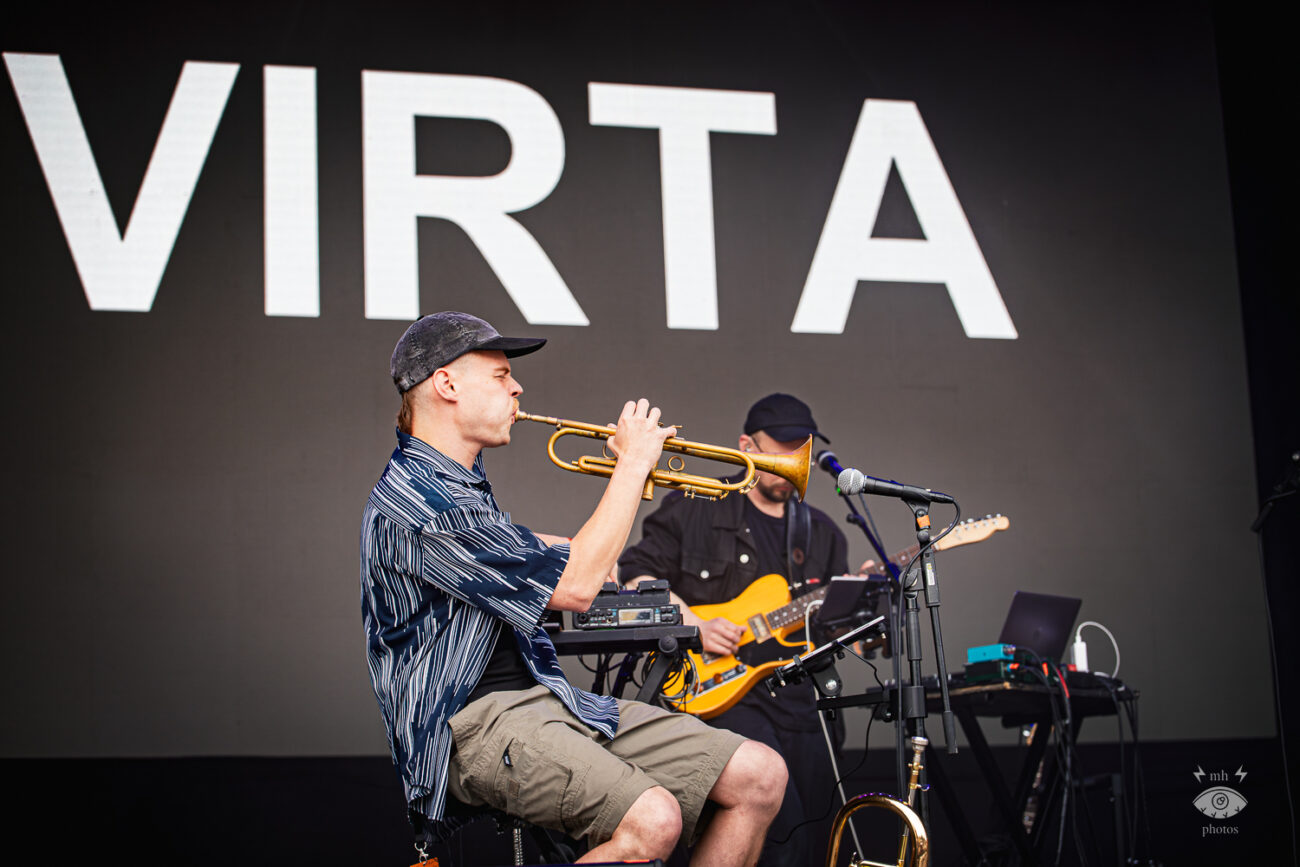
The festival included many firsts for yours truly, as most of the bands performing I’d never before seen live. One of these firsts was VIRTA, a trio of musicians performing instrumental pieces blending styles such as Nordic jazz, post-rock and electronic music. The stage set-up was a bit unique as the trio faced each other instead of the crowd. I’m usually not one for instrumental music, but what are festivals for if not sampling at least something new, right? After the initial confusion, the trio’s free-flowing instrumentation laced with psychedelic sound effects won the crowd over. Antti Hevosmaa, who plays the trumpet and provides some very rudimentary vocals, humored the crowd with glowing thanks and a fitting dad joke for good measure. VIRTA devoted the entirety of their set to “Hurmos”, an album they released in 2016 to much praise.
There were two open air stages at the festival, and a minimum of five minutes between each band, so there was no particular rush from one stage to the next between the sets. This was all well and good, as the next act to perform on the festival’s main stage was Circle, whose show turned out to be one for the books. I had no prior knowledge of the band and no idea what to expect, which left me open to be completely and pleasantly surprised. Circle was formed in 1991, and have produced an impressive catalogue of music to this day. The six musicians on stage put on an hour-long show of experimental rock that you would have to see to believe it. The downright manic performance of singer-keyboardist Mika Rättö was at the forefront, and the remaining group did not remain mere wallflowers either. The crowd observed with equal fascination and excitement, and many drifted closer to the stage for a better view. Circle was one band from the festival I will be revisiting at the next opportune moment, and I would encourage anyone still unaware of them to do the same.
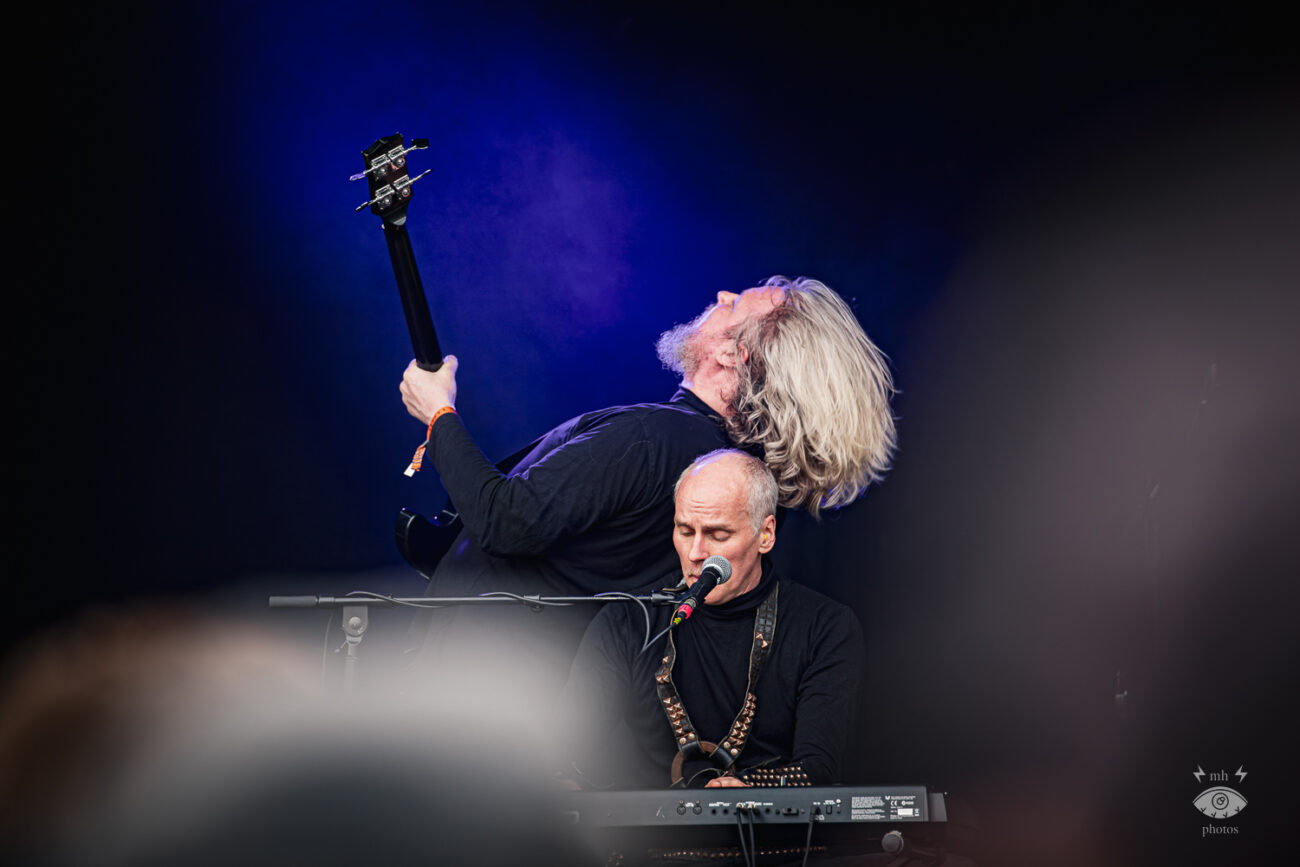
The day’s second instrumental band, Earthside, was up next on the factory stage. Formed in North America and active since 2015, Earthside have released two albums to date. While the band did not have a vocalist on stage, some songs featured vocals via playback, in addition to a background screen showing visuals to accompany the music. In the absence of a singer, keyboardist Frank Sacramone became the focal point on the stage, his intense performance helping to keep the crowd engaged. Raphael Weinroth-Browne, a frequent collaborator with Norwegian prog band Leprous, provided additional depth to Earthside’s sound by playing cello. Earthside riled up the crowd to the point that the weekend’s first moshpit formed during their set.
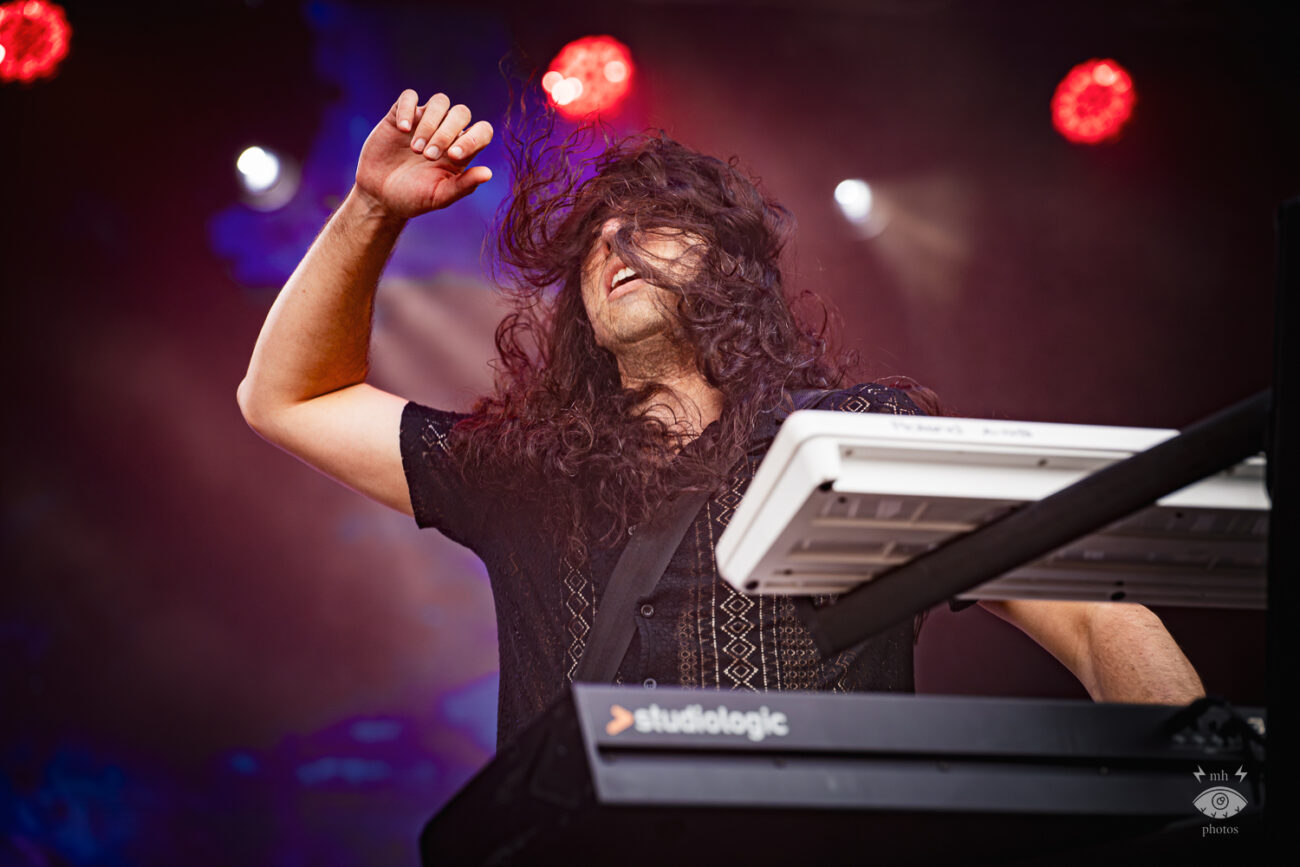
Hailing from Ireland, God Is an Astronaut represented a more mellow take on instrumental rock compared to Earthside’s intensity. Admittedly, two back-to-back instrumental bands was a bit too much for me, and I couldn’t quite get into the Irishmen’s set. Founded in 2002, God Is an Astronaut have twelve studio albums under their belt, and they performed with the skill and professionalism to match their miles. All of the band’s keyboards came from a backing track, which affected the performance only a little bit. Even though my experience of the band this time around was a bit lacking, I’ll be sure to give them another chance at home with my headphones.
Just as I had not seen before many of the bands playing at Ankea, the festival was for many bands their first trip to Finland. Slift, coming all the way from Toulouse, France, was another first-timer to the happiest country in the world. The group released their fourth studio album, “Fantasia”, on the same day as their performance at Ankea, so naturally most of their set was devoted to this record. Psychedelic rock and metal were what the trio of Slift was all about, and driving the point home were the trippy background graphics on the video screen. Despite the band delivering an agreeable enough show, there was a certain disconnect between the band and the audience that wasn’t fully shaken during their hour-long set. Perhaps this show was an icebreaker, and the next time Slift returns to Finland, the band and their fans will be more at ease with one another.
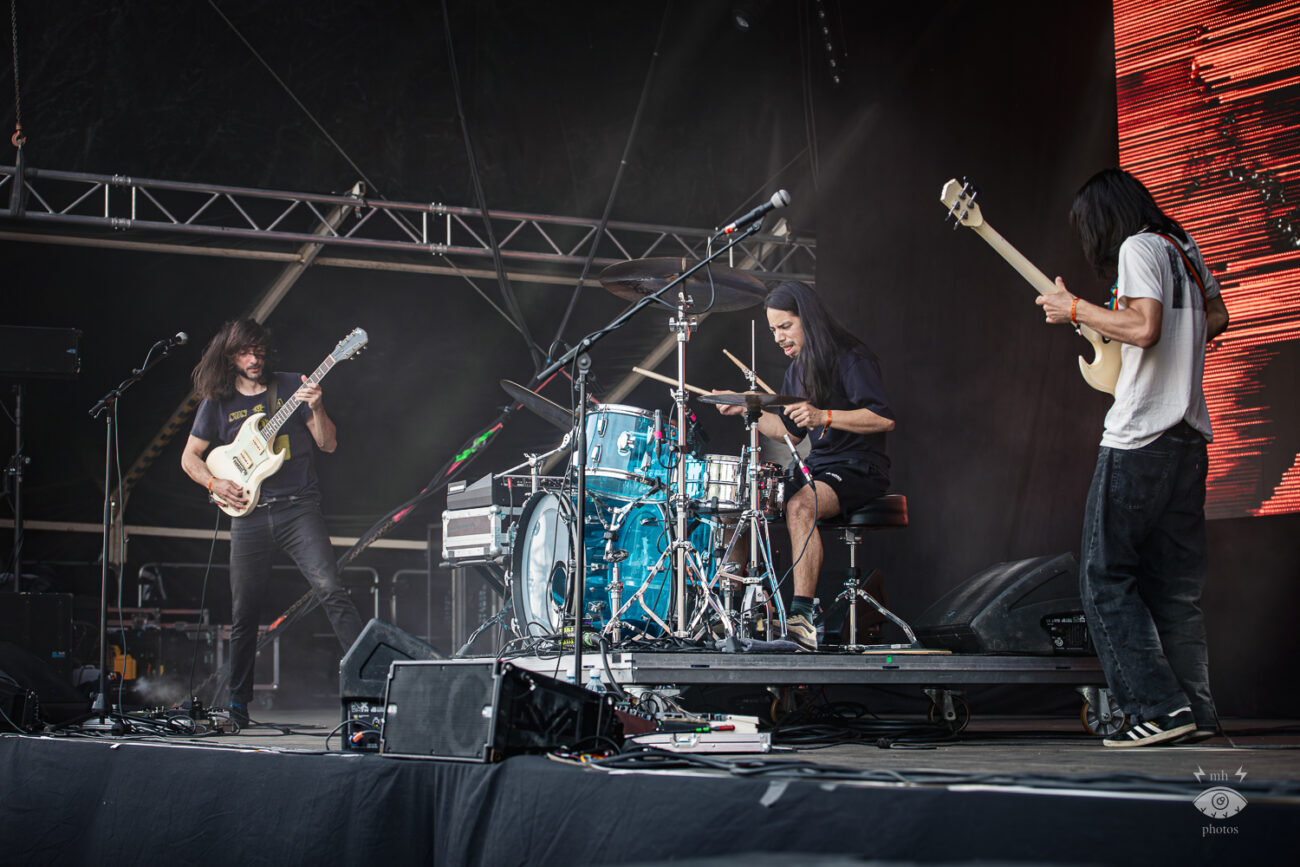
Next up on the main stage was presumably for many the main event of the festival. Ihsahn, the Norwegian musician known for Emperor and his solo efforts, delivered a ten-song set of one banger after another. Unfortunately, whether due to wind or technical difficulties, the sound quality was rather poor at times at the beginning of the gig. These troubles were overcome soon enough, and Ihsahn’s hour on stage flew by in a bliss of northern melancholy. Most of the musicians performing with Ihsahn were from Telemark; a fact that the charismatic frontman noted with pride. Undoubtedly the most interesting moment of the concert occurred when Einar Solberg of Leprous, who also happens to be Ihsahn’s brother-in-law, joined the band onstage for the song “Celestial Violence“. A captivating collaboration, and one that would be recreated in a different setting later in the evening.
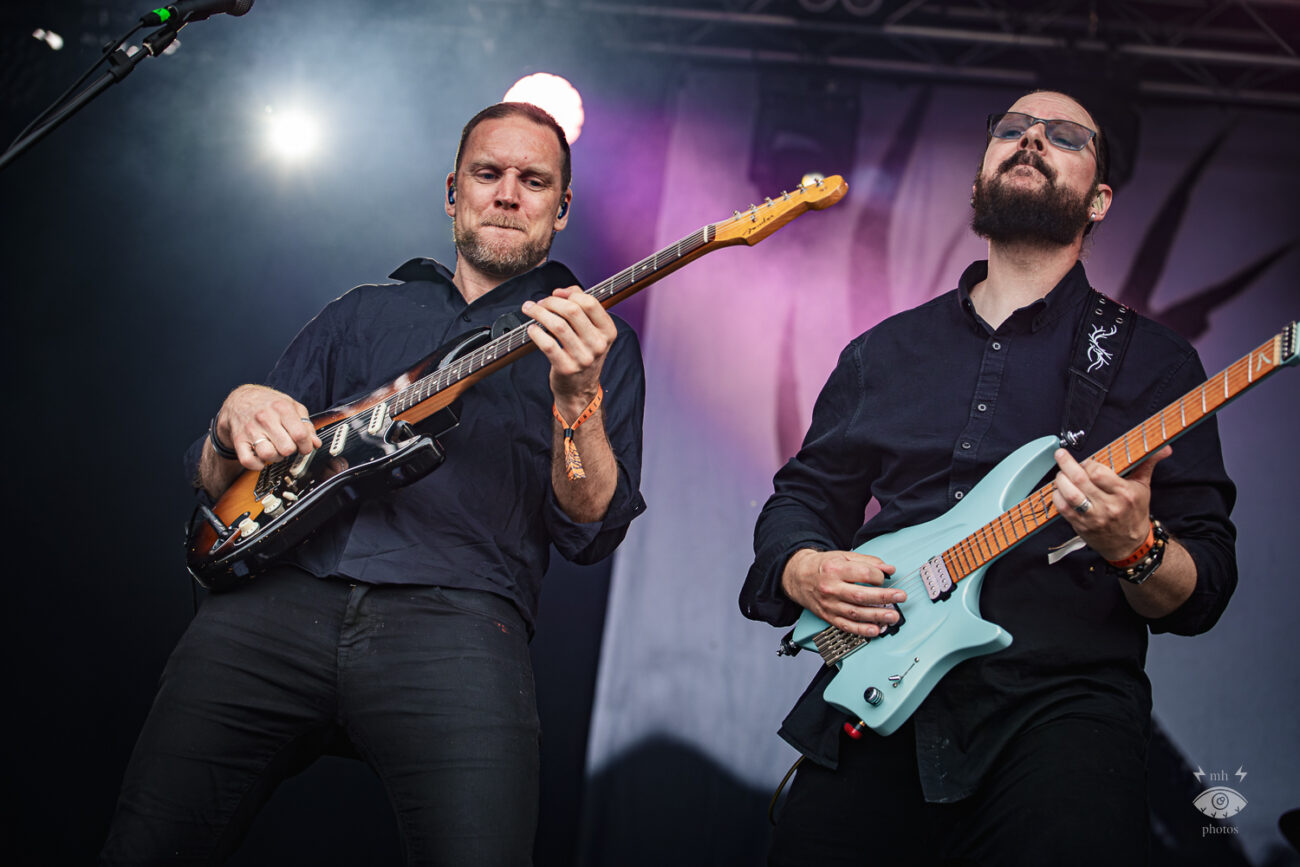
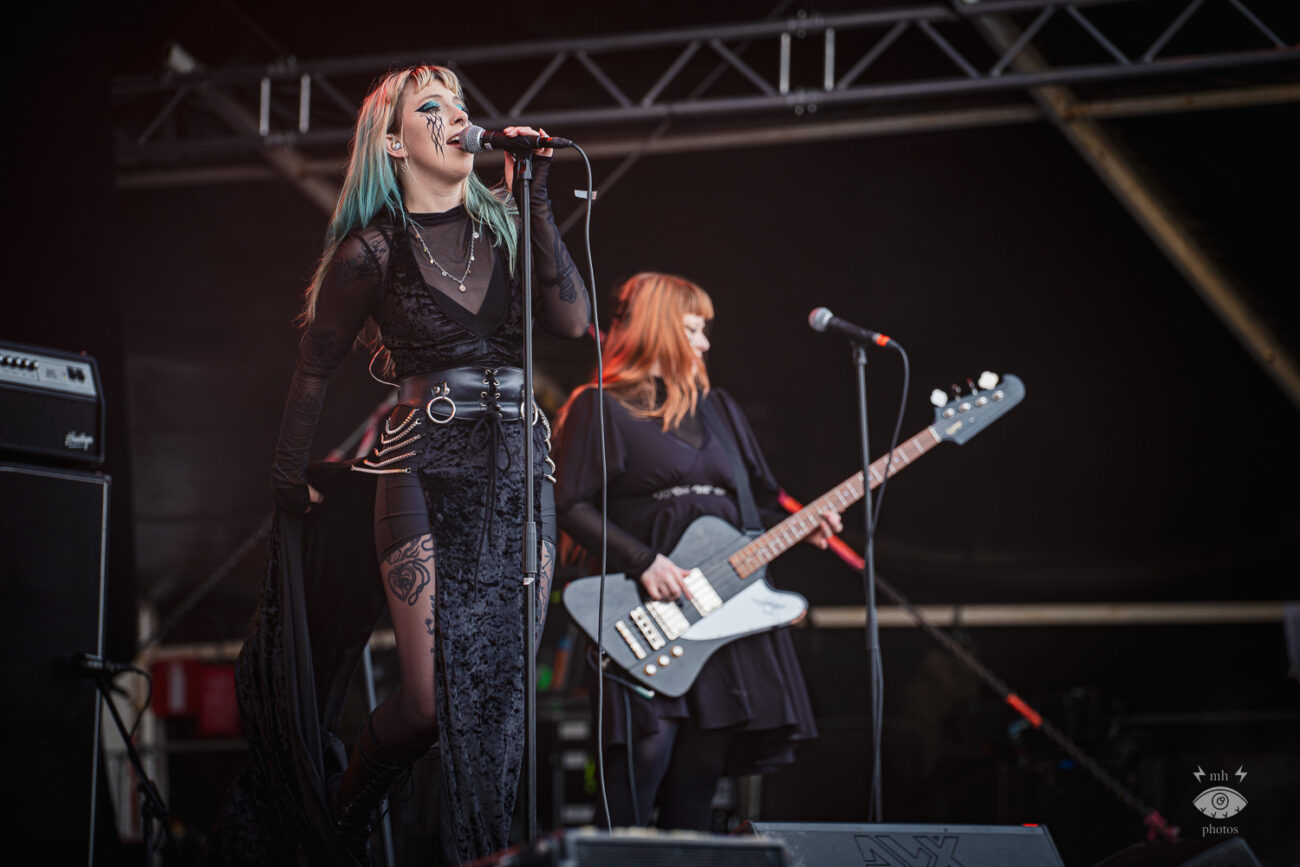
After Ihsahn it was time for me to grab a bite to eat. Earlier in the day, I’d heard murmurs among the festival-goers that there was an hour’s waiting time at the burger joint. I decided to give it a go, and despite the lady at the counter warning me of the long wait, it turned out to be only thirty minutes. I waited for and enjoyed my food while watching Kælan Mikla, a gothic rock band from Iceland. Sadly I couldn’t get a proper read on them this time around as hunger and a slight festival fatigue were starting to kick in.
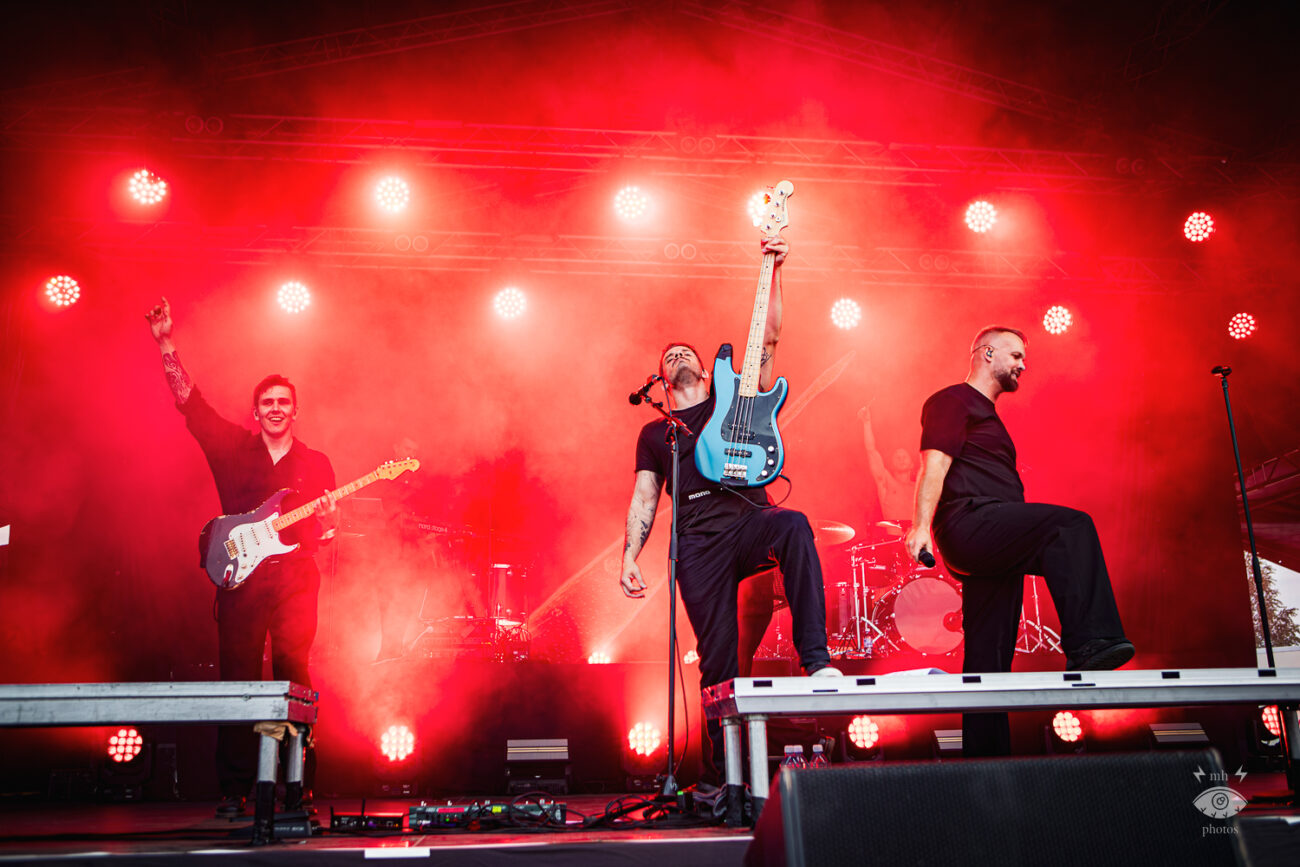
Whatever fatigue I might’ve felt, Leprous did away with all of that beginning at 21.40 p.m. I missed their show the last time they visited Tampere back in February, and boy did their performance at Ankea more than make up for it. The band, helmed by the ever energetic and charismatic Einar Solberg, were on fire from the opening notes, and their steam did not run out at any point during the next ninety minutes. The crowd, on the other hand, took some warming up. Solberg joked that maybe the happiest people on Earth were only happy on the inside, but before long, the audience did warm up to match the band’s vibe. As was to be expected ever since Solberg featured on Ihsahn’s set, the latter returned the favor by joining Leprous for the song “Contaminate Me“. In addition to Ihsahn, former Leprous guitarist Øystein Landsverk reunited with the group for this one song, which truly was something special to behold. Whereas some bands at the festival played shorter gigs than they were allowed, Leprous did ten minutes overtime with “Atonement” and “The Sky Is Red“. A treat for all the Leprous fans, though maybe a slight disservice the last band of the night, who had their set cut a bit short.
That last band of the night was This Will Destroy You, an instrumental post-rock band from the United States. Throughout the day I debated with myself whether I should stick around for them, and ultimately I did. This Will Destroy You was a perfect atmospheric closer for the night. Their ethereal instrumental pieces were mesmerizing in their own right, and provided a perfect backdrop for processing the events of the day, as well as what the next one might hold. The only downside to staying until the end was that the trams back to town were crammed full after midnight, and I was anxious to get home to rest and recuperate for the final day of Ankea festival.