
Metal, Hardcore, Indie, Rock
Photo Credit: Penumbrart
“What interests me is the message: music has to have something” — Interview with Incandescentes’ Hernán Ullo (Argentina)
What does a South American band that combines heavy music with literary and film influences, alongside an introspective, positive message, sound like? Something is brewing on the Argentine coast, and Chaoszine went to find out.
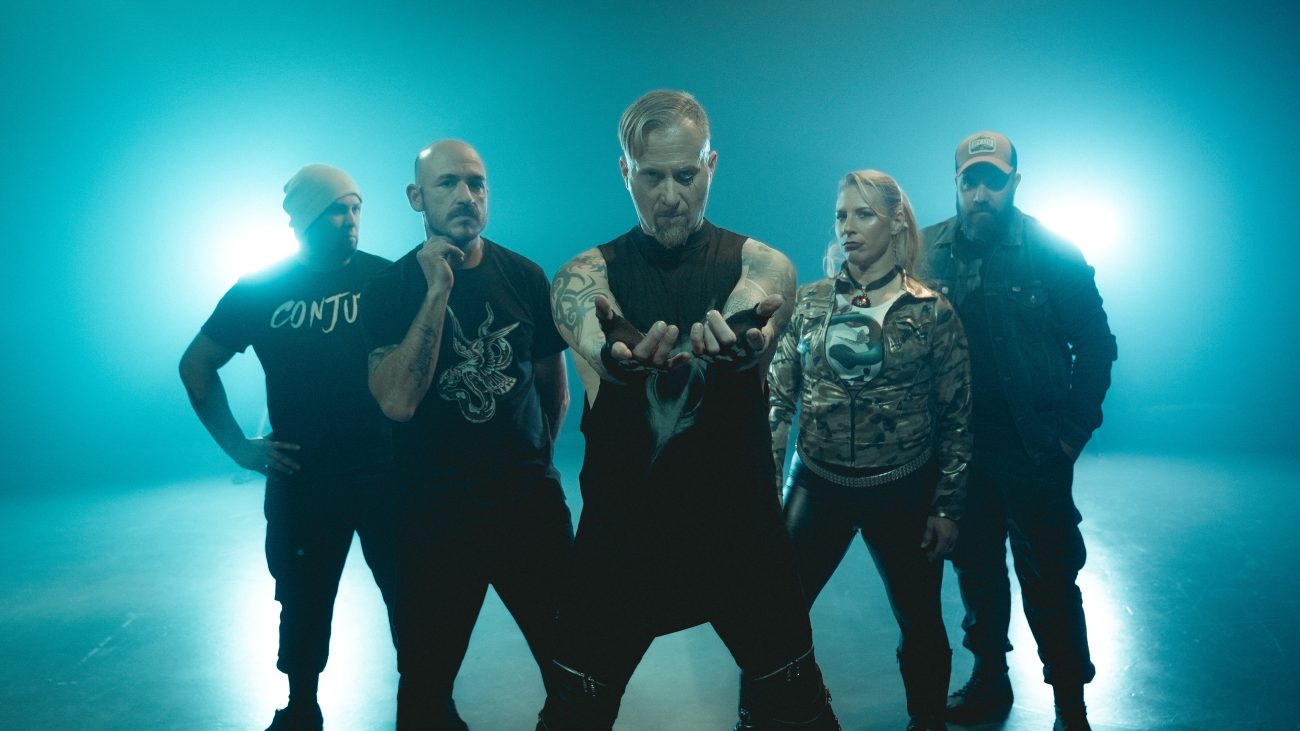
Incandescentes is an alternative post-new metal outfit from San Clemente del Tuyú, Buenos Aires, Argentina, comprised of Hernán Ullo (vocals), Carlos Long (guitar), Nilce Buszczak (guitar), Pablo Ciccolalo (bass, vocals), and Hernán “Kratos” Pasin (drums). They blend intense, guitar-driven energy with emotional, cinematic atmospheres. Fusing a raw, coastal spirit with modern indie influences, they deliver powerful live performances that ignite every stage.
In the last days of January, Chaoszine spoke with vocalist Hernán Ullo via Zoom to learn more about the band, what it was like to leave the hustle and bustle of Buenos Aires to live on the Argentine coast, their plans, influences, and more. A conversation between riffs, the scent of the sea and the beach, and heavy/alternative music as a common denominator.
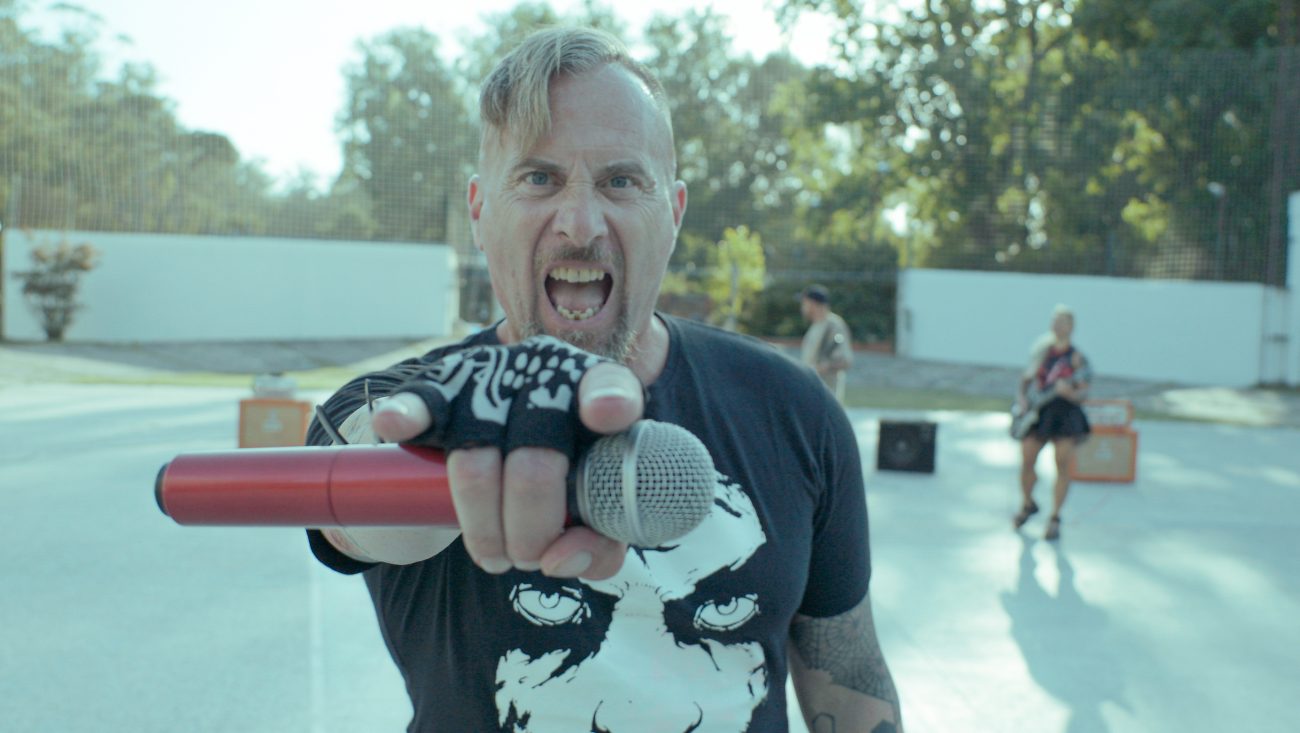
Let’s start by talking about “Máscara“, the band’s new single produced by Penumbra (the group’s producer and filmmaker). What can you tell us about the song and your collaboration with Penumbra? What were you looking for artistically?
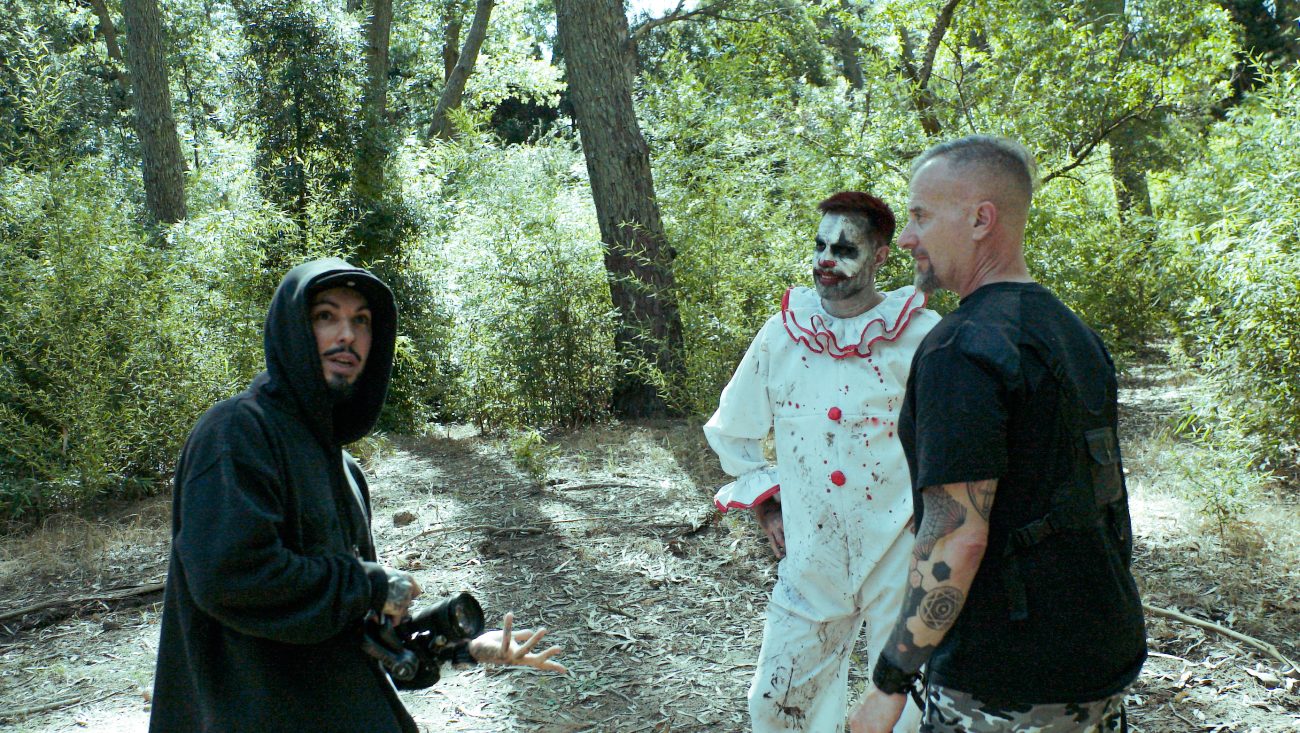
The song is more profound and came about when I was throwing around some riffs at home in the middle of winter here in San Clemente del Tuyú. Winter is harsh on the Argentine coast. The song is introspective and talks about what we hide and what we don’t dare to say. It’s a continuation of “Conjuro“. Although that tune is a tribute to a deceased friend, it’s a theme that the band and I are exploring. That’s also why the protagonist is a clown. We shot the video a block away from my house and ended up setting the story in the Cosme Argerich Municipal Nursery, a large nature reserve with beautiful forests. It’s full of mystique and fabulous vegetation. The filming captures the forest’s ability to create an unreal world. I think it made the song’s meaning a little deeper.
A dual world. On the one hand, the forest is an enchanting place and a meeting place; on the other hand, it is something mystical and scary.
Exactly. The clown character represents us all: our desires, fears and madness. That’s why the video contains so much symbolism. Penumbra is a genius. We spent two months putting the video together. First, I told him that I wanted a clown to be the protagonist of the clip. He liked it and chose how to make the clown’s costume. Then we came up with the idea of having a girl in the video to create that duality. The song was recorded here, and Penumbra was in charge of mixing and mastering it. So, when it came time to shoot the video, he was already familiar with the track.
The band’s sound is a mix of post-nu metal and alternative rock. You came from well-known bands such as Chrisallys and Skinmask. How did Incandescentes come about, and when did you move to San Clemente del Tuyú?
I moved here eight years ago. To be honest, I had given up music. I had been playing for 20 years. I started in a band influenced by Fear Factory, and then we evolved into Skinmask, adopting a style similar to Slipknot, Tool and Deftones. After that came Chrisallys, which was more oriented towards gothic, darkwave and industrial. All of our songs were sung in English. The band broke up, and a lot happened in between. I gave up music and came to San Clemente del Tuyú with my partner Nilce Buszczak, who is the guitarist in Incandescentes. Incandescentes started out just for fun — we played 1980s songs with Nilce on acoustic guitar. The music scene on the Argentine coast is very different from that in Buenos Aires.
Of course, it’s another world.
It’s like two different countries. Here, there’s hardly any metal scene at all. At first, you don’t know anyone or the area, but then you start to understand what it’s like to live here. I love living here. Buenos Aires was overwhelming for me at one point. Still, there are many things here, too. Ultimately, everything evolved. We gradually recorded things, and at a certain point, Pablo Ciccolalo joined the group as the bassist. He likes nu metal and Tool, and together with the other guys, we began to shape the outfit ‘s sound.”‘Conjuro” was a tribute to Nicolás Díaz, who made our first videos and also worked with Penumbra. He was a much-loved person, so his death came as a shock to everyone. We wanted to pay tribute to him, so we made the song, filmed the video, and got started.
You started the year with a show at the Viejo Skill venue on January 24. What are your plans for 2026?
We’re going to put on shows, but right now, the most important thing is focusing on our own material and continuing to compose. That’s what matters most. Then we plan to present the material in Buenos Aires. We have offers and contacts. On the other hand, we are organising a large alternative music festival on the coast for Halloween in October. We’ll continue composing and releasing singles, and the idea is to have a full album ready by the end of the year. Obviously, we will also perform live, but first things first.
I was surprised by your version of “Basket Case” by Green Day. Are you intending to perform in English?
I’m not ruling it out. I’ve always sung in English. Perhaps it’s not the priority right now, given that the scene in Argentina has changed a lot. I can sing in English easily, and I love it, but for now, I want to perform in Spanish and see what happens. The idea is that people in Argentina can hear the message without having to guess what I’m saying. I’m also an English teacher, so I wouldn’t have a problem doing it. We’ll see. If we go abroad, I have no problem singing in English!
Name three albums that influenced you and brought you into music.
I can’t leave out the first one — it’s “Dynasty” (1979) by Kiss. When I was eight, I asked my mum to buy me “Dynasty”. She got it wrong and gave me “Unmasked” (1980) instead, but I still wanted “Dynasty”. She bought it for me later, though (laughs). “Dynasty” is the album with songs like “I Was Made for Lovin’ You”, “Magic Touch” and “2,000 Man”. In other words, my love of music began with that album. Three albums are not enough!
I made the question complicated for you!
Another could be “Far Beyond Driven” (1994) by Pantera. It’s the band’s best. I could also mention Korn’s first album, some by Rammstein, or “Wish” (1992) and “Pornography” (1982) by The Cure. All those worlds live inside me. What interests me is the message. Music has to have something. I ended up mentioning a lot of albums, but another one that had an impact on me was Pink Floyd’s “The Dark Side of the Moon” (1973). Why? Because it’s an LP that makes you think from start to finish. That’s also why our songs “Máscara” and “Conjuro” have a message. The basis of “Conjuro” is related to The Divine Comedy, while “Máscara” is inspired by Alien and a story by the Argentine writer Julio Cortázar called ‘No se culpe a nadie’ (Blame No One). It’s about a person who puts on a sweater and can’t take it off; the harder he tries, the more trapped he becomes. That’s where the connection in “Máscara” comes from.
You live on the coast of Argentina. How do these landscapes influence your songwriting?
I love the beach and the sea. Obviously, they influence me! Beyond the introspective nature of the songs, there is a positive spirit. You can see that in a lot of bands. Kyuss were from the California desert, and you could tell they came from there. Hopefully, we can achieve a similar identification with the sound of the Argentine coast.