
Metal, Hardcore, Indie, Rock
“We have been giving it our all since day one” — Interview with DARLOTODO
DARLOTODO. The band’s name translates as “give it your all”. Like Ozzy Osbourne, singing in Birmingham on 5 July 2025, battling Parkinson’s disease and leaving his soul on stage, just three weeks before his death. Like David Bowie, releasing “Blackstar” on 8 January 2016, his 69th birthday, knowing that the end was near (Bowie died two days later, on 10 January). Give it your all, like Dibu Martínez, making an epic and incredible save from Kolo Muani in the 120th minute of extra time in the Argentina-France final at Qatar 2022. In short, in life, you have to give it your all. On and off the pitch in this battle, sometimes beautiful and sometimes hard, called existence.
The members of DARLOTODO embody the spirit of their band’s name. Life presents challenges, difficulties, lessons, setbacks, joys and sorrows. That’s life. What’s important is that when you look back, you feel inside that you gave it your all.
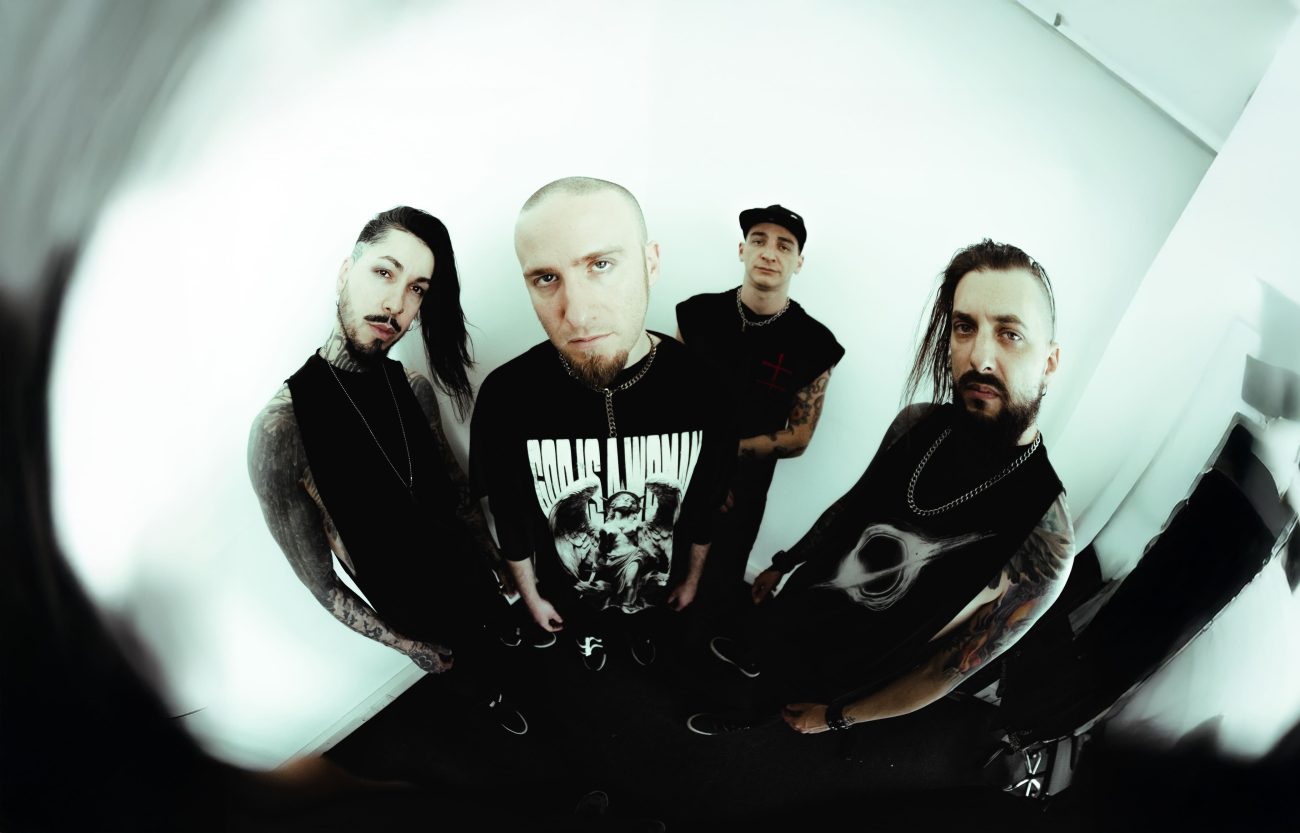
The Buenos Aires group is certainly giving it their all. In just three years, they have released two albums (the self-titled LP in 2023 and “Crisálida” in 2025), over a dozen music videos and singles with renowned artists such as O’Connor (Hermética), Corvex (Carajo, Arde La Sangre), Andrés Giménez (A.N.I.M.A.L.), Knario (Plan 4), León (Nvlo) and Matamba. They have also received press recognition as Best New Artist and Album of the Year, and have opened for major artists at the Estadio Obras and Teatro Flores. As if that were not enough, they are also the regular backing band for the iconic Claudio O’Connor.
During the Argentine summer, just days before their performances at Niceto on 24 January, Teatro Flores on 7 February with O’Connor and La Quadra de Ramos Mejía on 21 February as part of S1ckfest, Chaoszine had the opportunity to speak with Penumbra, the drummer, producer and filmmaker of DARLOTODO (you can view his work here). The conversation covered the band’s current situation, their plans for 2026, their work ethic, values and more. Penumbra also revealed his musical, drumming and audiovisual influences and shared details about his drum kit, cymbals and accessories.
You are both a drummer and a filmmaker. Drummers often have to take on many roles, like Mike Portnoy, who had a lot of responsibilities beyond playing in Dream Theater, or Vinnie Paul from Pantera, who was in charge of finances and interviews. Tell me about your beginnings.
In the early ’90s, channels like MTV and MuchMusic in Argentina offered a glimpse into the global music industry. I was drawn to heavy rock and metal artists such as Korn and Marilyn Manson, as well as bands from other genres like Depeche Mode and The Cure. They drew me into a darker, more visual world. It was also at this time that I started my career as a drummer, which later shifted more towards general band production.
How old were you back then?
About fourteen or fifteen. I loved going to the studio with my band to write songs, but I always had a broader vision for the visuals and everything else. It was like, ‘OK, let’s write some songs.’ How are we going to do the cover? Are we going to take photos?” Back then, we made posters and stuck them up with a paste made from flour and water. I always had ideas about how to present the band and its aesthetic. Later, I studied film and audiovisual communication. It was there that I discovered the wonderful world of film directing and editing. You also learn a little about lighting and so on. I’ve always been fascinated by all things visual in video and music.
Who were your earliest influences in the audiovisual and music fields?
Dark bands like Marilyn Manson, Korn’s early, darker period, Limp Bizkit, and other artists I already mentioned, like The Cure and Depeche Mode. People who showed a twisted or perhaps slightly warped world.
Last year, you presented Crisálida at the Teatrito in Buenos Aires, and you’re starting the year with a show in February alongside O’Connor, followed by another concert at Ramos Mejía. What are your plans for 2026?
As you mentioned, a few months ago we released our second album, “Crisálida”. Releasing two albums in three years as a band is quite a strong pace. We are a band that likes to work hard. We have released more than ten official music videos and have worked on many other projects. We like to be very active. The media in Argentina and Latin America often say that we never stop — that we’re like a machine that never stops producing information and videos. We are very happy with this response. “Crisálida” is an album that was released to great acclaim. It’s a new album, and we’re already planning for 2026. In 2025, we went on a great tour, visiting many places in Argentina, and we also played in Uruguay. This year, we plan to visit some other Latin American countries, and we would love to come to Europe as well. ‘Crisálida’ is an LP that is really reaching people.
What else can you add about the album?
People tell us on social media that it’s an album that has had an impact on them or accompanies them during difficult moments in their daily lives. It’s really nice when they tell us that, because in a way, we’re taking the place that some of the bands we listened to in the 90s had at that time. It’s like we’re on the other side now, which is a big responsibility. That makes us really want to keep creating music and content.
In just three years since its formation, the band already has two albums, awards such as Best New Artist and Album of the Year, shows at venues such as the Obras Stadium and the Flores Theatre, and more than a dozen music videos. It sounds incredible; it’s not easy to achieve that. I suppose there’s an impeccable work ethic and a strong and disciplined spirit of teamwork. Am I right?
Yes, we are a disciplined band when it comes to work. We are constantly looking for new ideas, sounds, riffs, and song formats. We always focus on nu metal, but we also incorporate elements from other genres. We have a very thorough work plan, so that we have releases, videos, and tours spread out over a certain number of months.
For sure! Everything is well organised.
Regarding what you said about awards such as ‘Best New Artist’ or ‘Album of the Year’, it’s very gratifying, to be honest. We are also Claudio O’Connor’s band — he’s a huge name in Argentine heavy music, perhaps even the biggest. We admire him greatly — he’s like our local Ozzy Osbourne. The fact that he chose us as his band means a lot to us — something special must have happened for that to happen. It feels great to be recognised for our work, both as DARLOTODO and as part of O’Connor’s group. They are a reward for all our effort and hard work. As our name suggests, we have been giving it our all since day one. We want to achieve a lot and enjoy the process. We’re a band that’s very conscious of having a good time together and looking out for each other. The group of people that has formed is fantastic. There are four of us musicians, but there’s also a great technical team behind us, taking care of sound, lighting and even merchandising. We’ve become like a family.
I loved the video for “Crisálida”, the track that gives its name to the band’s second LP. What is the song about and what was the idea or concept behind the video clip?
“Crisálida” gives its name to the album. Beyond the fact that it’s a concept album, in which all the songs have a reason and a certain order, and which tells you a story and draws you in, “Crisálida”, which is the second song, already gives you an overview of what’s to come. It’s a very personal song about overcoming obstacles and moving forward, very focused on a very difficult and complicated childhood. It’s an invitation to fight, move forward and flourish in difficult times. It’s a message of “come on, you can do it, you’re going to be able to move forward. You have to give it your all.” That’s kind of the concept of the album: to fight and move forward. That’s the magic you can see on the LP cover: there we see a child alone in a room, in a dark and adverse context, but he looks at himself in a mirror and sees wings that represent the possibility of flying, transforming and transcending adverse moments.
DARLOTODO draws influences from the nu metal of Korn and Limp Bizkit, but I also assume there are elements of Deftones and even other references outside of metal. Tell me more about that.
Many people compare us to Korn because sonically and technically we are on the same wavelength, and the bass has a similar sound that is very characteristic of them. Then maybe the songs go in a different direction, but they maintain that groove and that concept of 90s nu metal. We definitely have other references, and we also experiment more with synthesizers and sequences. You might be surprised to hear me say this, but Duran Duran, The Cure and Depeche Mode have had a very direct influence on us. We incorporate darker electronic elements during production.
They’re all great bands!
Absolutely. We also have some songs that have a bit of trap and rap, not so much in the lyrics but in the production. All of that comes from darker music or even danceable new wave. That’s where influences that aren’t the classic nu metal ones, like Korn, Limp Bizkit or Deftones, come from.
Name three drummers who have influenced you.
Without a doubt, David Silveria, Korn’s first drummer, blew my mind. I saw him and was like, “Wow, I want to play like this guy“. He had a very strong beat and a very good visual impact. Another drummer would be Abe Cunningham from Deftones: he has a very particular style, very precise and more technical. Morgan Rose from Sevendust also kills me; he’s more technical and always looks for a twist when it comes to composing songs. And visually, he’s incredible; his performance is intense. All three are incredible and unmissable; they are all drummers who marked an era in the early nineties. As a producer, I would choose Ross Robinson (Korn, Limp Bizkit, Soulfly, Slipknot). He’s a guy who may not produce perfect results, but he always emphasised the emotional and visceral aspects of each take. He’s a beast.
Okay, now three albums.
Korn’s eponymous debut album (Immortal, Epic, 1994) changed my life. In terms of sound production, Marilyn Manson’s “Antichrist Superstar” (Nothing/Interscope, 1996) is also a standout. I had it on repeat and studied Trent Reznor’s production techniques. The third album I’d choose is Limp Bizkit’s debut album, “Three Dollar Bill, Y’all$” (Flip/Interscope, 1997), produced by Ross Robinson. It’s a rap LP — very organic, twisted and dark. The band later moved away from that sound, but I think it’s Limp Bizkit’s best album.
Where would you like to take the band? Are you planning to tour Europe, for example?
The best thing that could happen to us in 2026, besides releasing singles with artists we’ve already agreed on and playing in Argentina, would be to tour Europe. We want to play in Spain and other countries, so talk to the producers and let us know where you want us to play.
What does your drum kit consist of?
It’s a minimalist set. I use a snare drum, one tom and a floor tom. I have endorsement deals with Sonor for drums, Sabian for cymbals, and Dixon for double bass drum pedals. I’m very grateful to these companies. I also use i3dNut accessories and Samby drumsticks. My kit includes a 15-inch hi-hat, two crashes, a ride and a china. When I’m playing with Claudio O’Connor, I put together a bigger kit.
More info about the band here.