
Metal, Hardcore, Indie, Rock
“In the end music has something therapeutic” — Interview with Spanish rockers Lucky Strikewalker
Rock and roll: live, direct, no pretensions. That’s what rock is all about, isn’t it? Hailing from La Sagra, a Spanish area between Toledo and Madrid, Lucky Strikewalker — made up of Daniel Mancebo (vocals), Juan Francisco Vegas (guitar), Gabriel ‘Parra’ García (bass) and David ‘Bala’ Nieto (drums) — faces 2026 with urban rock that blends rawness, emotion and catchy choruses.
The band’s history, influences, the state of the music industry in Spain, a show they gave in Finland and other topics are discussed in an interview singer Daniel Mancebo gave to Chaoszine. Olé!
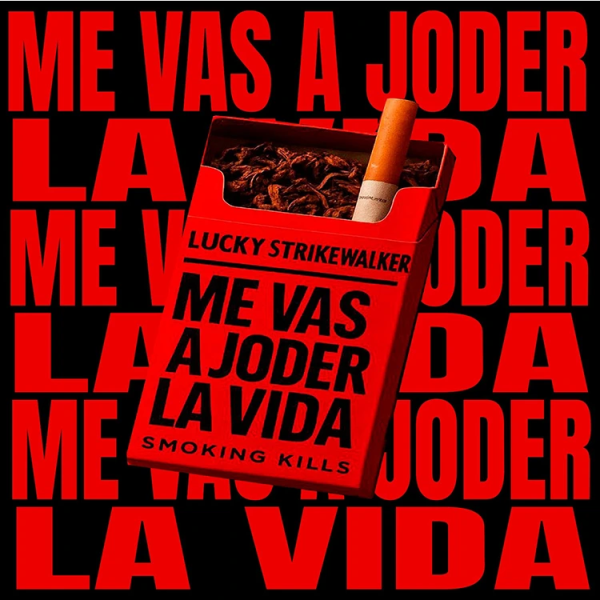
The band’s latest single is “Me vas a joder la vida” (You’re going to ruin my life). You directed the video yourself. The song is powerful, straightforward, and has a certain punk-rock spirit. What can you tell us about it?
It’s a song that comes from personal experiences. It caught me one day while I was out riding my motorbike with a mate. We were in a bar, a Scorpions song came on, and I remembered one of those people who leave a mark on you. Suddenly, here comes a fucking song that she used to sing, and I was like, “Fucking hell, mate“. It stirs things up. And then on the way home, my motorbike chain broke. Suddenly, I was in the middle of the road in Castilla-La Mancha, cold, in December, in the middle of nowhere. And there I was, waiting for the tow truck and remembering that fucking Scorpions song. The chain was broken, and I was like, “What the fuck? Are you going to ruin my life?’” That’s how the song “Me vas a joder la vida” came about.
Those experiences can be tough sometimes.
The song is basically about someone who touches your soul, and you know you’re never going to forget them. There’s no “delete from my mind” button. But in the end, music has something therapeutic about it, and it’s a cure. You let go of all the crap you had inside, and, cool, people like it too.
Lucky Strikewalker has been around for 11 years now. How do you remember those early days in 2015 in your town of La Sagra, less than 40 km from Madrid?
I always say that I was the last one to join the band. It all started with a group of friends who got together to play music and needed a singer. Juan Fran, one of the members, said, “Mate, we could ask Dani, he’s got a great voice”. I arrived and said, “I’m not going to sing in English. Come on, let’s do a cover of Buenas Noches, Rose”. (a Spanish band from the nineties). We got there, we did it, it sounded good, we started playing; one day, Juan Fran came up with a riff, and everything fell into place. There were a lot of breaks in the band, too.
Well, nowadays it’s very difficult to keep a group going. Plus, there was a pandemic in the middle of it all.
Indeed, there are many factors. We had a lot of line-up changes in the band, and it’s not so easy to balance the group with your job, life and relationships. These things happen, but I’m also a fan of Social Distortion, and they take about 15 years to release an album (laughs). But it’s like everything else, we focused on our own songs, we liked them, and so did the people. They say you have to write a book before you die. Well, before I die, I want to have an album. If I have children tomorrow, I want to tell them, “Look, your dad sang in a rock band”. That was my dream, and in the end, that album led to something else, then to a second album, and I’m still here.
What are your plans for 2026?
We will be launching some new things this year. We have new members in the group who have settled in really well. I think this is one of the best periods in the band’s history, in terms of both our level and our live performances. In the first year, we focused on doing live shows, and then we moved on to composing. Nowadays, it’s very difficult for an album to be successful, so we’ve decided to try a different approach: releasing singles and music videos. When there’s synergy, you work with the right people who understand your vision and theirs, and ultimately, that’s what works. At this stage, we’ll basically release music videos and new singles and move forward.
The band’s sound and attitude are somewhat defiant, visceral, without posturing. Is it like the title of Extremoduro’s album, “Iros todos a tomar por culo” (Fuck you all)? Have they been a reference point for Lucky Strikewalker? What other Spanish and international bands have influenced you?
Interestingly, although I have listened to Extremoduro, I would never say that they have influenced me much. If I recall correctly, the first concert that our bassist and I attended was an Extremoduro concert in 2008. It took place at the Palacio de los Deportes in Madrid and the band were presenting their LP “La ley innata”. We were about 15 or 16 years old at the time. My adolescence was obviously influenced by Extremoduro and Spanish punk in some way. As for Lucky Strikewalker, there are traces of Spanish-Argentinian rock bands like Los Rodríguez and Tequila. As I was saying, I listen to all kinds of music: Social Distortion and The Ramones are huge influences on me, as are Buenas Noches, Rose, Pereza and so on. One day I might be listening to heavy metal, and the next, Amy Winehouse.
Since Chaoszine is a Finnish media outlet, I have to ask you about the show you played in Finland in 2015. How did that concert come about?
Finland is a country that plays a significant role in my life, as I have lived there before. I have the word ‘sisu’ tattooed on me. This is a typical Finnish expression that refers to courage and facing adversity. The show came about through a European project in South Karelia, where I lived. They always organised a festival and invited a headline act. At that time, there were several Finnish Justin Biebers, similar to Abraham Mateo in Spain. Before the Finnish Justin Bieber performed, other bands played, including Lucky Strikewalker. This was important because, although our music was in Spanish, I interacted with the audience in English. For me, it was a turning point. I thought, ‘If these people who don’t understand what I’m saying can still connect with and enjoy what they’re seeing, then we should record an album.” So we went back to Spain with the aim of recording the album.
Going for it!
Definitely. Then a record label called us and asked us for money. I was out of work and had no money. I thought record labels would take care of that, but they didn’t. That was a turning point and a disappointment, and that’s where our LP “La gran estafa del rock and roll” (The Great Rock and Roll Scam) came from. Ultimately, it’s all about experiences. Most of the songs are about moments that leave a mark on you.
What is your view of the Spanish music scene today?
I couldn’t say whether it’s the Spanish music scene or the audience too, because in the end there are bands that were very good and didn’t get anywhere. I remember Desvariados, an incredible rock and roll outfit; the guy had a unique charisma. That band signed with Warner Music, and I think the pandemic killed the group. But it also has to do with the audience. You listen to the radio and it’s always the same thing. In Spain, it’s as if there are only two options right now: copies of Extremoduro, Marea, Sínkope, the hoarse voice and all that stuff. I respect that, but I think Extremoduro and Marea are enough. I don’t know, there are lots of bands, but there’s a gap for the Los Rodríguez, Tequila style of fun rock and roll.
Spanish indie is also making a lot of noise.
Indeed. We’re at a very good point. I’ve seen Arde Bogotá live and they’re incredible; they’re not from Madrid or Barcelona. Another really cool band is Sexy Zebras, who I’ve seen a thousand times and even saw playing in front of 10 people in a village in Toledo. This isn’t an exact science; there’s no magic wand. Sometimes you just release a song, and it works. But it depends on the audience, the radio stations and the television. I go to the gym, and they always play the same song, regardless of the style. It’s a very complex problem, and neither you nor I are going to solve it. If more songs were given more visibility, life would be different.
Absolutely.
“Me vas a joder la vida” is proving it to me. It has over 4,000 views on YouTube and has increased our listeners on Spotify. People are liking it, and most of the focus is on Spain, with most people in Madrid or Barcelona, which surprises me. In short, there are no bad songs or bad bands; it’s just difficult to get them out there. There’s a lot of music out there today, with thousands and thousands of songs uploaded to Spotify every day. Luckily, I think rock music is making a comeback. Remember Ozzy Osbourne’s Back To The Beginning event and keep an eye on Yungblud. He’s connecting with new generations. There are festivals, bands, and everything is moving. The thing is that here in Spain, when it comes to festivals, it’s often the same bands that play. It’s very difficult when you’re a self-managed act. You have to believe in your project and enjoy it.
What message would you give to people who aren’t familiar with Lucky Strikewalker?
If you’re looking for music that’s different from what’s currently out there — music with attitude, but no pose — then I invite you to get to know us. Our lyrics are catchy, and we connect quickly with the audience.