
Metal, Hardcore, Indie, Rock
His music blends the best of Argentine pop-rock (the unforgettable GIT, Soda Stereo, Fito Páez and more) with touches of British icons The Police and nods to grunge, funk and other genres.
Eclectic by nature, the subject of this interview is a musician with a long and distinguished career in his hometown of San Lorenzo (in the city of Santa Fe, Argentina) and across the region, standing out for his solid songs, peppered with exquisite arrangements and a discerning eye as the common thread.
Following the release of “Patraix”, his third solo album, Cuti Aradas, the subject of this interview, sat down to chat via Zoom with Chaoszine about the brand-new LP, the songwriting process, the influences behind the tracks and his imminent return to Europe.
Let’s talk about “Patraix”, your new and third album. What was the songwriting process like for the new material?
The process began with bits and pieces left over from pre-production on previous albums. That provided a foundation, and we built on it to give the music a distinct sound. However, the whole process took five years. On the first album, I had a slightly more rock-pop sound, which was very much the direction we explored with producer Diego Fusaro. From the second album onwards, I took charge of the artistic production myself, with very clear objectives regarding the instruments, what I wanted to convey through my songs, and the choruses, which are fundamental to me. This album best represents me in every respect. It’s called “Patraix” in honour of the neighbourhood in Valencia, Spain, where my granddaughter Olivia was born. My daughter Lucía lives there, and, to be honest, my granddaughter’s arrival was a deeply moving experience that really touched me. I don’t consider myself either too young or too old—I’m 53. I’ve been a grandad for almost two years now. It’s absolutely mad (laughs).
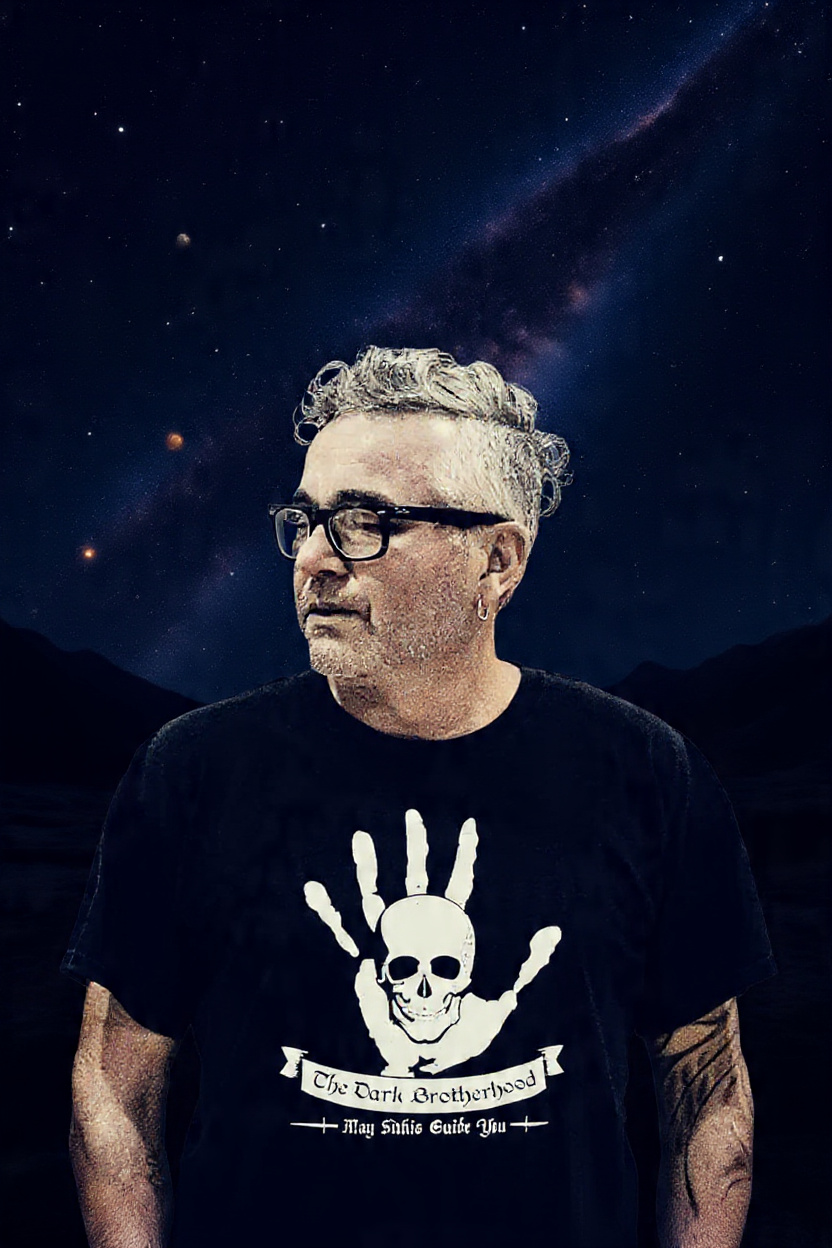
It’s an album rich in nuances and songs. When it comes to performing the material live, I know you’re working with Javier Vega (bass) and Maximiliano Giannazzo (drums). What can you tell us about them? How do you adapt your set to that electric format?
Everything is consistent with the album. I’ve got a band that’s up to the task. Both Javier Vega and Maxi Giannazzo are incredibly dedicated and professional in what they do. They’ve got a brilliant, positive feel for music, which pushes me to give it my all, because I’m playing with guys who are absolute beasts. Renzo Baltuzzi recently joined on electric guitar, and Diego Fusaro is back playing live on guitar as well. The three of us are different guitarists and have different sonic nuances, so it’s going to be brilliant.
All the musicians you mentioned, including yourself, share that sense of self-production. They stick to what the song requires. They set aside their egos and let the track take centre stage.
Yes, I’m very focused on – to put it in football terms – not doing one dribble too many. My songs don’t necessarily need a guitar solo, for example. I don’t know if the LP is polished down to the last millimetre, but it certainly serves the songs. It has to work for it.
Let’s talk about the songs. “Todo en su lugar” has a bit of the Argentine band GIT and the British band The Police about it. Tell me about that track.
I’m so proud to hear you say that! I’m a huge fan of The Police and GIT. I wrote that track after spending a day walking by the sea with my youngest daughter, and it conveys what she gives me and what I soak up from her. It went through many phases: it started out as a funk song in the style of Living Colour, and then someone suggested bringing in Ricardo Vilaseca, a well-known musician from Rosario, on keyboards, and the whole thing took on a different dynamic. At one point, I didn’t know what to do with the guitars, and all the magic you hear on the album is down to Renzo Baltuzzi.
I also really liked “Espacial,” the final track. It has a bit of an early-’90s Fito Páez feel, with ’80s-style guitars and a Hammond organ that gives it a certain progressive, even jazzy, touch. What can you tell us about it?
Sebastián Romero recorded the keyboards for that one. I sent him the song, and he sent me about thirty keyboard tracks. It was a huge responsibility to choose among them because, if you listen to “Espacial,” it’s built around a loop of chords that plays throughout. It was a big challenge, but it turned out beautifully.
What are your plans for the rest of the year?
The album launch is coming up in November in Granadero Baigorria, where I live. At the end of the year, I’m travelling to Spain, so the idea is to do something with Jorge Pastrana and some musician friends from Valencia. I’ll be performing there.
You’ve toured Europe. Do you have plans to continue expanding there?
Yes. Although this is primarily a family trip, I can’t separate myself from the artist I am. I always want to build new communities. I want to make a bigger mark in Valencia—let’s not forget that it has a wonderful music scene and is the birthplace of Nino Bravo and Camilo Sesto, for example. It’s a place with a very special energy. There are lots of authentic artists making music there, people from all over the world. I’d love to play in Finland and elsewhere. I’d also like to play in London, England, as well as Belgium and Norway. We’ll see what life has in store.